Myanmar earthquake: The urgent need for solidarity and humanitarian aid







The devastating earthquake that struck Myanmar on March 28 has caused extensive destruction and a heavy toll of casualties. Mandalay, Myanmar's second-largest city, and its surrounding areas have been the most severely affected. This loss is not only a disaster for Myanmar but also for all of humanity, highlighting the urgent need for global solidarity and cooperation in the face of such disasters.
The damage caused by this earthquake is enormous, especially in the Mandalay region and its surrounding areas where the epicenter was located. Naypyidaw, the capital of Myanmar, is also within the seismic zone and has suffered severe damage. Even government buildings have collapsed, and some federal ministries have reported casualties. Yangon, the former capital and the most populous city in Myanmar, felt strong tremors, but the damage there seems to be less severe than in northern Myanmar.
Although detailed assessments of the disaster situation are still ongoing, we know that the international airports in Mandalay and Naypyidaw have been closed. The earthquake has also damaged key infrastructure, including electricity, energy, and transportation networks. The United Nations World Food Programme has emphasized that the earthquake hit Myanmar at the worst possible time, as one-fourth of the population was already facing food insecurity. Myanmar really cannot afford another disaster.
Myanmar's response: Limited capacity, open to international aid
In response to this disaster, Myanmar immediately declared a state of emergency in six regions and states. Myanmar's leaders announced that at least 1,002 people had died and 2,376 had been confirmed injured, and the numbers are likely to rise. Myanmar's leaders have called for large-scale relief, stating that "Myanmar welcomes any country, any organization, or anyone within Myanmar to come and provide assistance." They have emphasized that they have "opened all channels for foreign aid," recognizing the urgent need for international assistance.
Myanmar's national rescue capacity is limited. Nevertheless, local communities have already started self-organized rescue efforts. Myanmar is a predominantly Buddhist country, and many local charitable groups and religious organizations have stepped forward to provide aid, reflecting the country's profound culture of unity and mutual assistance. The first 24 hours after a disaster are crucial – this "golden period" is when search and rescue efforts are most effective in saving lives.
The role of China and global humanitarian aid
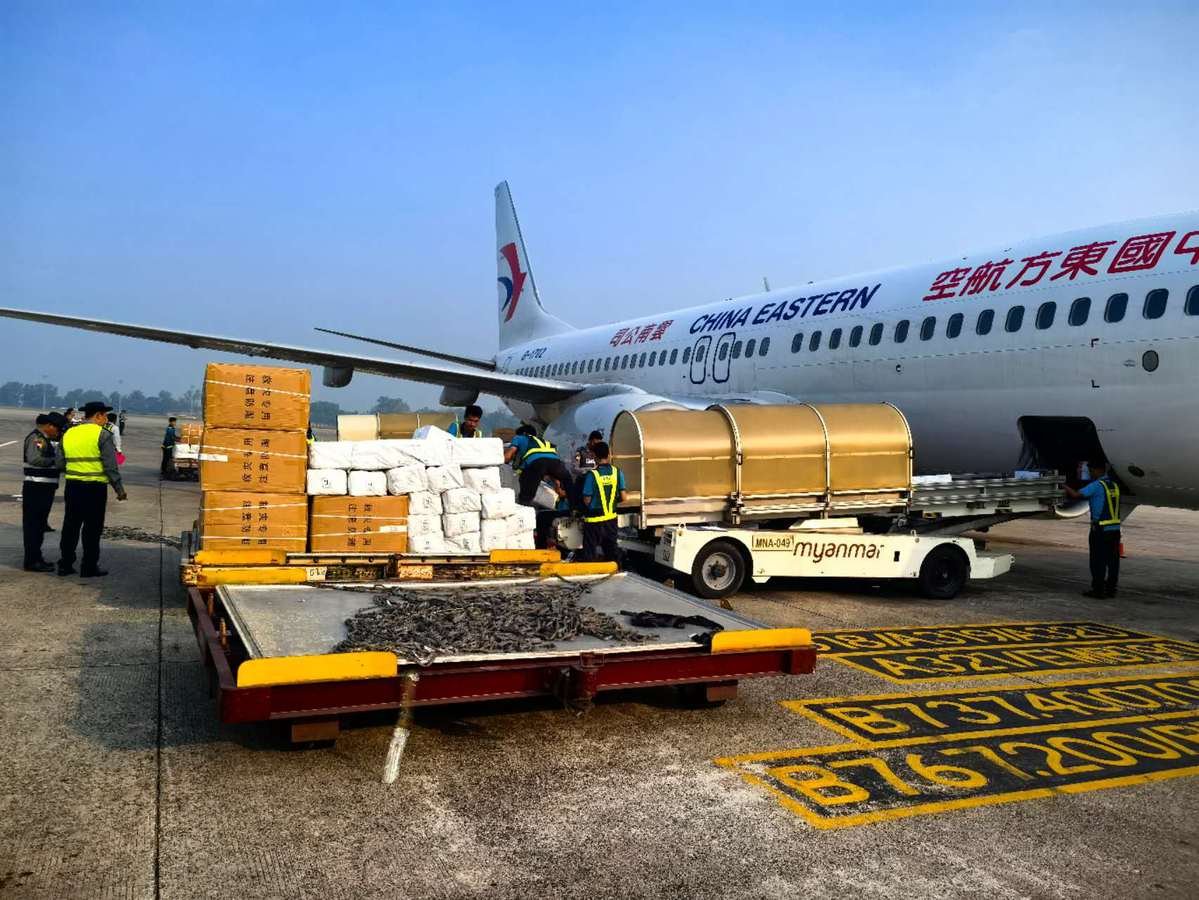
The necessity of international aid is obvious. Overnight, the first international rescue team from China – a 37-member team from Yunnan province – arrived in Yangon at 7 am local time. They brought with them emergency supplies, including life detectors, earthquake warning systems, portable satellites, drones, and other necessary equipment. They are the first international rescue team to reach Myanmar, and more rescue teams from various parts of China are on their way.
China has always been quick and forceful in responding to disasters. Humanitarian aid is an important part of China's foreign aid policy. Over the past six years, China has implemented more than 800 emergency humanitarian aid projects in over 40 countries, becoming the largest provider of humanitarian assistance among developing countries.
China's aid includes dispatching professional search and rescue teams, providing medical treatment, delivering relief supplies, and offering financial assistance. In addition, China also participates in medium- and long-term recovery and reconstruction efforts, disaster prevention and mitigation, and capacity-building projects.
In recent years, Chinese non-governmental organizations have also become an important force in international disaster relief. They supplement the efforts of official aid and play a crucial role in providing on-the-ground assistance, often working together with local and international partners such as the Red Cross.
Challenges in the relief effort and urgent aid needs
Despite the substantial support provided by China and other international actors, the relief work still faces many challenges. One of the most pressing issues is the lack of timely and accurate information. In Myanmar, this is a challenge because communication and transportation infrastructure has been severely damaged.
The second major challenge is the shortage of supplies. The first Chinese rescue team brought 5 tons of emergency supplies, including life detectors, portable satellites, and other key equipment.
However, after the rescue team arrives, they also need to ensure their own basic supplies, such as food and water. The disruption of transportation networks, especially the obstruction of the transportation of gasoline and essential goods, makes it difficult to ensure the sustainability of the relief work.
The disaster has not subsided, and the rescue work continues. It is believed that with the support and assistance of friendly countries like China, the people of Myanmar will surely be able to tide over the difficulties and resume work and normal life as soon as possible. It's hoped that this country, which has long suffered from internal conflicts, can transcend regional and ethnic differences in the face of major natural disasters, truly demonstrate the courage of unity, and jointly build a better homeland. Pray for Myanmar.
By FAN Yiyi, Assistant Research Fellow, Institute of International Development Cooperation, Chinese Academy of International Trade and Economic Cooperation (CAITEC)
The views don't necessarily reflect those of China Daily.
If you have a specific expertise, or would like to share your thought about our stories, then send us your writings at opinion@chinadaily.com.cn, and comment@chinadaily.com.cn.