Nestle completes acquisition of Hsu Fu Chi







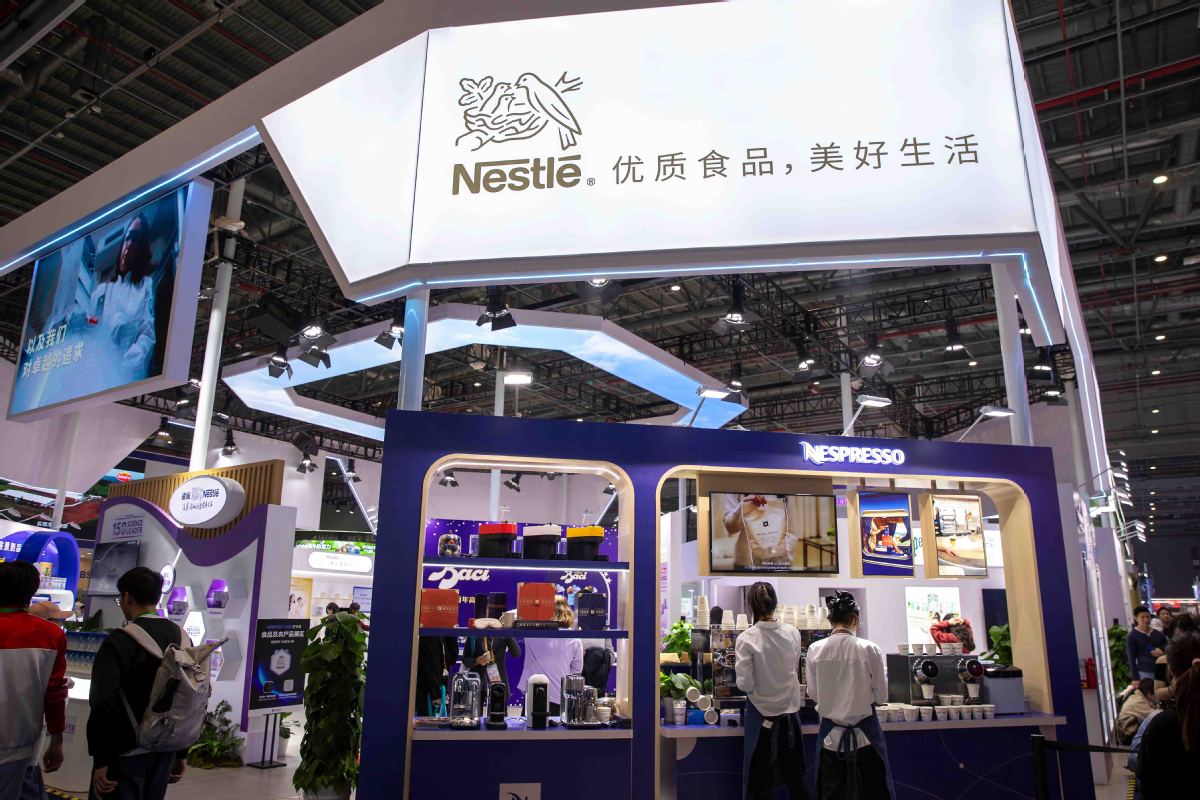
Global food and drink company Nestle has acquired the remaining 40 percent stake in Chinese confectionery company Hsu Fu Chi from the founding Hsu family, giving it full ownership of the brand as part of efforts to expand its footprint in the rapidly growing Chinese snack market.
The Swiss food giant, known for its KitKat and Milkybar brands, initially purchased a 60 percent stake in Hsu Fu Chi in 2011 for $1.7 billion. Since then, it has provided technical and marketing support in areas such as recipe development, R&D and quality control. With this latest transaction, Nestle aims to further integrate Hsu Fu Chi's operations into its broader China strategy.
"This move combines Hsu Fu Chi's efficient operations and entrepreneurship with our proven innovation and renovation capabilities. It accelerates the development of the brand and further reinforces Nestle's presence in China," said Zhang Xiqiang, CEO of Nestle Greater China. "It also demonstrates our long-term commitment to China and enhances our ability to grow our portfolio of international and local brands in this dynamic market."
Nestle said the acquisition will allow Hsu Fu Chi to gain "wider and easier access" to its global brand and product resources, supporting its growth agenda. At the same time, Nestle plans to leverage Hsu Fu Chi's extensive distribution network to expand its snacking and confectionery business across China.
Founded in 1992 and based in Dongguan, Guangdong province, Hsu Fu Chi has grown into one of the country's leading confectionery brands. The company operates a vast distribution network, with eight major branches, 58 districts and over 3,500 dealers, reaching more than 2 million retail outlets across both urban and rural areas.
According to Euromonitor International, China's confectionery market was valued at nearly 58 billion yuan ($8 billion) in 2008, with Hsu Fu Chi holding a 3.9 percent market share at the time, compared to Nestle's 1.6 percent. Nestle's initial investment in 2011 was aimed at tapping into Hsu Fu Chi's strong distribution channels to drive growth in lower-tier markets.
Now, with full ownership, Nestle is expected to have greater flexibility in shaping Hsu Fu Chi's strategic direction, from product development to market expansion, said experts.
Industry experts believe the move will help Nestle optimize resource integration and supply chain efficiency, strengthening its position against local competitors.
"Full ownership of Hsu Fu Chi will allow Nestle to better align its resources, streamline operations and reduce overlapping costs, making it more competitive in the country's confectionery market," said Zhu Danpeng, a leading independent food industry analyst.
Hsu Fu Chi's business has seen steady growth in recent years. Liu Xinggang, president of Hsu Fu Chi International Group, said that the company has achieved annual revenue exceeding 7 billion yuan in 2024, with high growth for four consecutive years. This growth has contributed to Nestle's overall performance, with its confectionery segment in the Chinese market posting mid-single-digit growth, accounting for 16.1 percent of total sales.
Looking ahead, Liu has set an ambitious target for Hsu Fu Chi to reach 10 billion yuan in revenue by 2027, with plans to invest 600 million yuan in expansion.
Nestle has been operating in China for nearly 40 years and currently runs 23 factories, five product innovation centers and three R&D centers across the country, employing more than 21,000 people. The company reported $44.5 billion yuan in revenue from the Chinese market in 2024.
Analysts said that as local competition intensifies, multinational brands must balance global expertise with local market adaptation.
"For global food companies, success in China now depends not just on capital and technology, but on a deep market understanding," said analyst Zhu. "Nestle's ability to execute a 'Chinese-style breakthrough' will determine how well it can navigate and grow in this market."