Tariffs spark consumer boycott
Backlash weakens Washington's global image, causes drop in tourism: Experts







As governments worldwide scramble to navigate the United States' tariff roller coaster, consumers are voicing their discontent by shunning US products and travel destinations. This growing sentiment, experts warn, could undermine US soft power and damage its broader national interests.
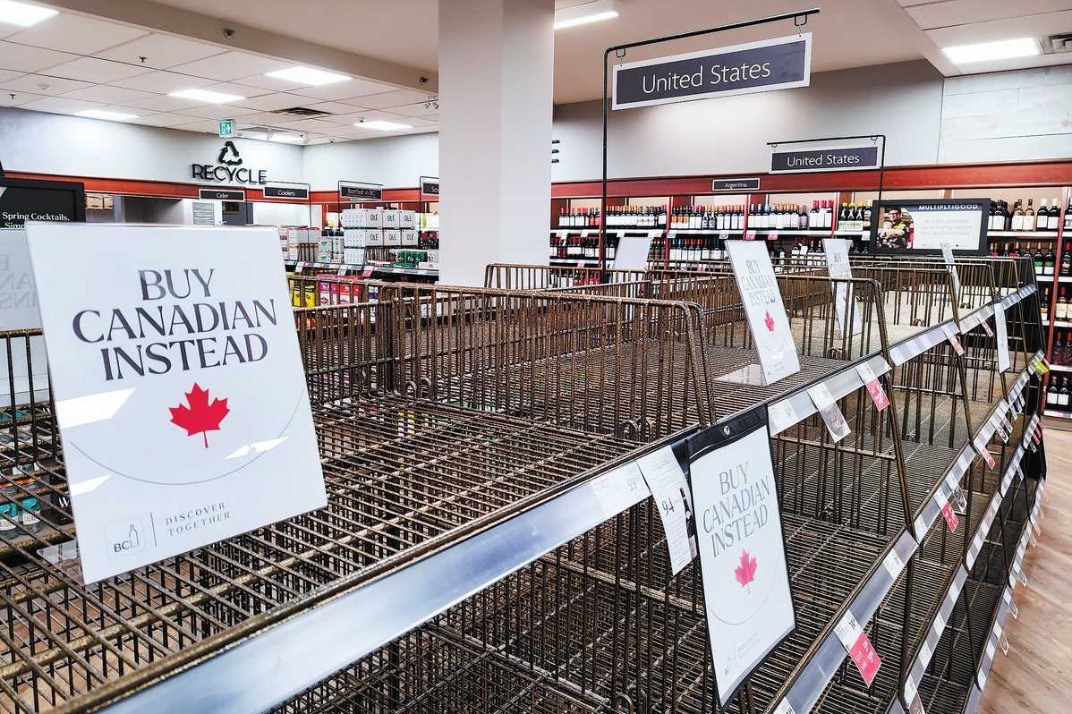
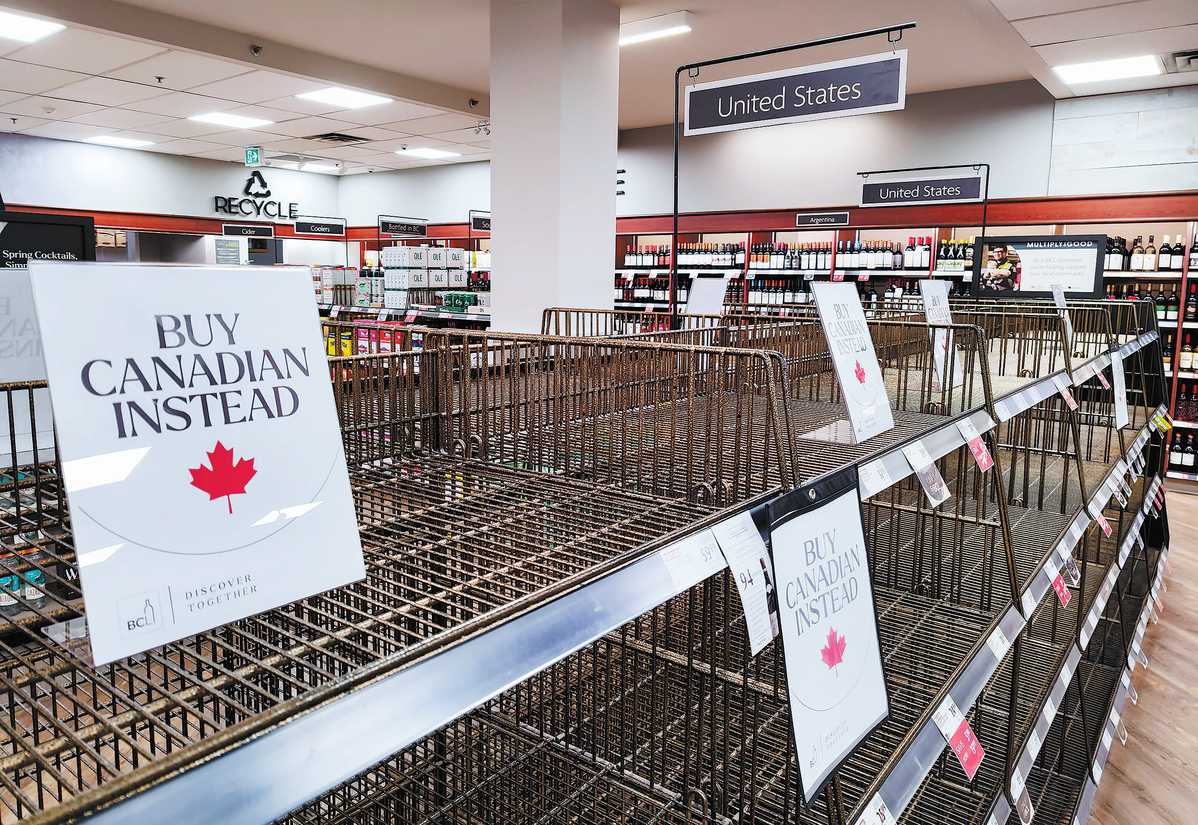
Dissatisfaction with Washington's tariff threats and controversial statements — such as annexing Greenland and turning Canada into its "51st state" — has sparked a grassroots "Boycott USA" movement across Canada and Europe.
The slogan and related search terms have gained traction on social media and search engines, with users sharing lists of US brands to avoid and encouraging the purchase of local alternatives. According to Google Trends data, searches for "Boycott USA" have surged notably in Canada, Denmark, France and Switzerland.
In Denmark, a Facebook group called "Boykot varer fra USA" (Boycott goods from the USA) has attracted nearly 100,000 members — an impressive number in a country of just 5.9 million. In France, a recent survey by the French Institute of Public Opinion found that 62 percent of respondents expressed willingness to boycott US products.
Similar sentiments are rippling across Europe. On Reddit, the Buy-FromEU group, which has grown to more than 219,000 members, shares tips on replacing US brands such as Netflix, McDonald's and Apple with European options. Even everyday essentials including socks, ketchup and headphones are being reconsidered.
While shifting consumer habits may take time to show economic effects, the decline in international travel to the United States is already noticeable.
In Canada, where tensions flared over US tariff policies and perceived threats to sovereignty, travel to the US has dropped sharply. Statistics Canada reported that last month saw a year-on-year decline of 13.5 percent in air travel and a 31.9 percent drop in automobile trips by Canadians returning from the US.
This month, the consultancy Tourism Economics in Oxford predicted that the US would see a 9.4 percent decrease in international visitor arrivals this year, led by a 20.2 percent drop in Canadian visits. The company estimates this could cost the US $9 billion in lost visitor spending this year alone.
According to a March 4 poll published by YouGov, European favorability toward the US has declined significantly following Donald Trump's return to the White House in January. This decline has resulted in record-low favorability ratings in countries including the United Kingdom, Denmark and Italy — marking the lowest levels recorded by the firm in these nations.
Drivers of discontent
Sun Chenghao, head of the US-EU program at the Center for International Security and Strategy, Tsinghua University, identified several drivers of discontent in Europe.
"The Trump administration has often shown a lack of respect for Europe," Sun said, citing US Vice-President JD Vance's open criticism of European policies at the Munich Security Conference in February.
"Also, the US government's repeated desire to annex Greenland and its tariff pressures on Europe have alienated many Europeans, particularly Danes."
Yet, Sun cautioned that the boycott's economic effects may be limited. "This is primarily an emotional reaction. Its duration and scale will depend heavily on future tariff negotiations between the US and these nations."
While grassroots boycotts rarely reshape economies, Goldman Sachs estimated in a note on April 1 that foreign boycotts could reduce the US GDP by 0.1 percent to 0.3 percent this year, resulting in a loss of between $28 billion and $83 billion based on the current growth estimation of $27.7 trillion.
Sun Xihui, an associate research fellow at the National Institute of International Strategy, Chinese Academy of Social Sciences, said the current US administration has been misusing tariff policies by politicizing and weaponizing them, which has sparked international resistance and criticism, damaging its global image and national interests.
"The Trump administration's so-called reciprocal tariff policy used the US' position as a major global consumer market to pressure other countries into making concessions by imposing tariffs. This behavior is essentially an act of hegemonism," he said.
"Even US scholars acknowledge that this approach erodes the soft power of the US. Since soft power plays a crucial role in safeguarding national interests, undermining it inevitably harms those interests."
Agencies contributed to this story.
yangran1@chinadaily.com.cn