Stability and growth shared regional responsibility







Globalization enabled most nations to benefit from extensive trade networks and mutual reliance. However in recent years, a quiet resurgence of protectionism has sought to reshape global trade, with some countries, notably the United States, increasingly adopting restrictive measures. The Global Trade Alert database suggests a surge in discriminatory policies, with the United States leading the charge through policy interventions often claimed to be "shielding domestic markets" but perceived as "discriminatory" from a global free trade perspective.
Perhaps the most striking development in this context came in early April, when the US administration announced its so-called reciprocal tariffs. These were framed as defending domestic US industry and improving trade deficits, but in reality they have unleashed widespread disruption across global markets that would adversely impact both the US and its trading partners.
Economies in the Southeast Asian region were among those hardest hit with the punitive tariffs, exacerbated by the nature of their export-driven markets with some industries still highly dependent on the US market. While the 90-day pause on most levies (except for China) offers temporary breathing room — the uncertainty risks unraveling decades of free trade norms.
Amid these developments, Southeast Asian nations face a pressing need to explore alternative trade strategies to cushion or hedge potential adversities stemming from such uncertainty and trade shocks. In this context, diversification, both by exploring new partnerships and strengthening existing ones, has emerged not only as a shield but as a powerful strategy to unlock new opportunities while building resilience.
For the Association of Southeast Asian Nations, alternative global powers such as Russia, emerging groupings such as BRICS or even Central Asia (which remains relatively untapped) hold promise, but China emerges as a natural partner for ASEAN due to its geographic proximity and deep existing economic ties.
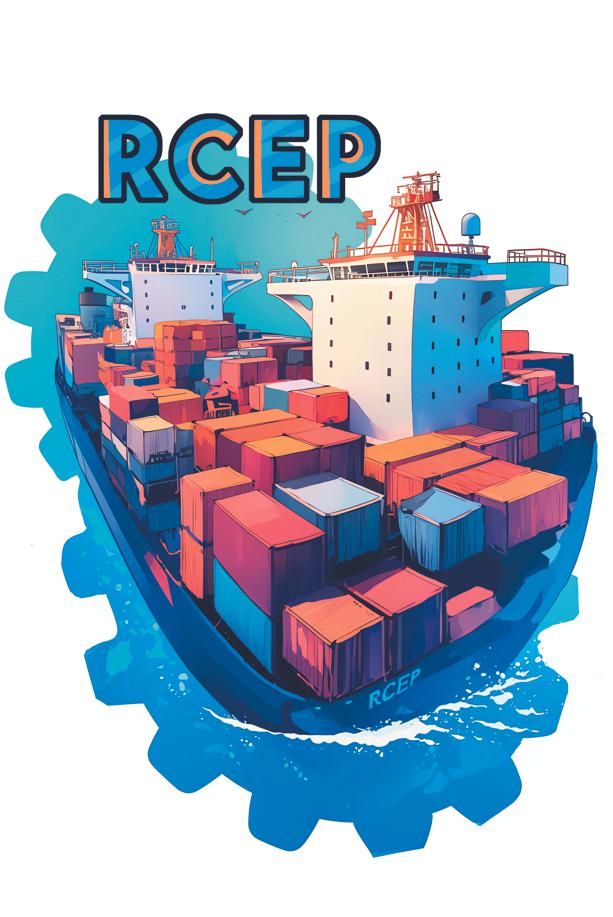
Frameworks such as the Regional Comprehensive Economic Partnership and China's Belt and Road Initiative have increasingly woven their economies into a mutually beneficial trade network. In fact, China and ASEAN have been each other's largest trading partner for five consecutive years with bilateral trade in goods reaching $982.34 billion in 2024, marking a year-on-year growth of 7.8 percent.
Given that cooperation between ASEAN and China is already built on relatively strong foundations, what's next? On the economic front, one compelling avenue to explore is deeper cooperation in their digital economies. ASEAN has the world's fastest-growing internet market and it is poised to double its digital economy to nearly $2 trillion by 2030 through the ASEAN Digital Economy Framework Agreement, targeted for finalization late this year.
Leading ASEAN's 2025 chairmanship, Malaysia's Prime Minister Anwar Ibrahim has consistently stressed the need for greater digital collaboration. China's strengths in technological advances such as artificial intelligence, e-commerce platform solutions and robust manufacturing expertise would prove useful to both Malaysia and ASEAN in building the necessary soft and hard infrastructure for their digital economy.
With this in view, a strategic alignment between the pillars of complementary needs under China's Digital Silk Road strategies and DEFA could amplify such efforts, particularly in fostering an environment conducive to the development of cross-border e-commerce, advanced infrastructure investments, and seamless digital transactions, extending cooperation beyond the traditional goods trade.
In such turbulent times, achieving economic resilience remains imperative. However, the role of soft power diplomacy and the cultivation of mutual understanding is equally critical in bridging global divides. ASEAN and China have the opportunity to serve as champions of global dialogue by establishing platforms for inclusive engagement of larger magnitudes.
Why ASEAN-China? China has demonstrated a relatively mature approach to managing complex issues through measured responses and restraint, often without triggering unnecessary escalations. Together with ASEAN's rich cultural tapestry and its longstanding commitment to centrality and consensus-building, this crossover provides a robust foundation to reinvigorate the "waning spirit of multilateralism".
Nevertheless, challenges still remain. Economically, there are genuine concerns among ASEAN member states, particularly among companies in the manufacturing sector that a greater influx of lower-cost Chinese goods could seek alternatives to the heavily tariffed US.
There could be potentially adverse effects for domestic markets while this may benefit consumers with wider variety, especially in the context of heightened trade tensions linked to recent tariff escalations.
Setting aside its relationship with China, ASEAN itself has pressing internal work that must not be overlooked. While ASEAN's commitment to neutrality, consensus-building, and centrality has been widely praised (and very rightly so), recent shocks raise a fundamental question — Does the bloc actually possess the operational synergy required to act cohesively in the face of major global disruptions such as the tariff war?
Perhaps, this moment should serve as a catalyst for greater ASEAN synergy, compelling the bloc to harness its collective strength with greater decisiveness. But achieving this is no simple task. Conflicting national interests at times, varied levels of economic development and procedural "inertia" to some extent will challenge efforts for greater integration. This is an opportunity for leadership. As ASEAN's 2025 Chair, Malaysia is well-positioned to take the lead in striving to bridge divides, align strategic priorities and drive the bloc towards greater integration, both horizontally and vertically.
Despite ASEAN-China's strong potential for greater cooperation along with the emergence of Trump administration's tariff war, ASEAN's traditional partnerships with Western nations, such as the United States, Australia or even the European Union have long been and will continue to be, strong cornerstones of ASEAN's diplomatic and economic landscape. There is no need for it to choose sides.

The author is an analyst and head of External Relations at Center of Advanced Studies and Research (CASR) Malaysia. The views don't necessarily reflect those of China Daily.
If you have a specific expertise, or would like to share your thought about our stories, then send us your writings at opinion@chinadaily.com.cn, and comment@chinadaily.com.cn.