In times of turmoil, true leadership shines







Amid an increasingly volatile global landscape rife with crises, the world is yearning for genuine leadership that provides stability, reliability, and a clear sense of direction. In contrast to the US, which has imposed tariffs indiscriminately on its trading partners, China has positioned itself as a stabilizing force. To its neighbors and beyond, China promotes dialogue over coercion, win-win cooperation over narrow self-interest, and open, inclusive development over unilateralism.
China advocates dialogue, while the US resorts to coercion
China stands ready to work with its trading partners, including neighboring countries, to enhance communication and coordination, address respective concerns through equal-footed dialogue and consultations on the basis of mutual respect, and jointly uphold the multilateral trading system.
In stark contrast, the US has increasingly relied on pressure tactics, sanctions, and coercion in its diplomatic dealings. Under the guise of "reciprocity", it has imposed sweeping tariffs on its trade partners and pressured them into negotiations that primarily serve its own agenda. The US imposed a 24 percent tariff on Japan and a 25 percent tariff on South Korea. These actions seem designed not to address trade imbalances, but to boost their defense spending, using economic leverage to extract concessions in the security domain. A 46 percent tariff on Vietnam, 24 percent on Malaysia, and 49 percent on Cambodia were also announced—though temporarily suspended for 90 days.
Furthermore, the US Commerce Department has proposed tariffs as high as 3,521 percent on solar panel imports from these three countries and Thailand, threatening regional supply chains and clean energy cooperation. Even countries like Singapore, which have trade surpluses favorable to the US, were not spared; a 10 percent baseline tariff was applied indiscriminately. This highlights the arbitrary and unreasonable nature of Washington's actions. This is not true reciprocity — it is a form of hegemony disguised as fairness, a form of unilateral bullying in the name of balancing.
China shares benefits, while the US seeks self-serving profit
In Vietnam, a key outcome was the launch of the China-Vietnam railway cooperation mechanism, aimed at helping Vietnam align its railway gauge with China's standardized system, thereby enhancing regional connectivity and fostering economic development. According to Vo Dai Luoc, former head of the Institute of World Economics and Politics under the Vietnam Academy of Social Sciences, the agreements reached provide strong momentum for deepening practical cooperation between the two countries.
In Malaysia, one of the most significant developments was the agreement to promote the upgrading of the "Two Countries, Twin Parks" cooperation, support the high-quality development of the economic and trade cooperation zones, and provide a more enabling business environment for enterprises.
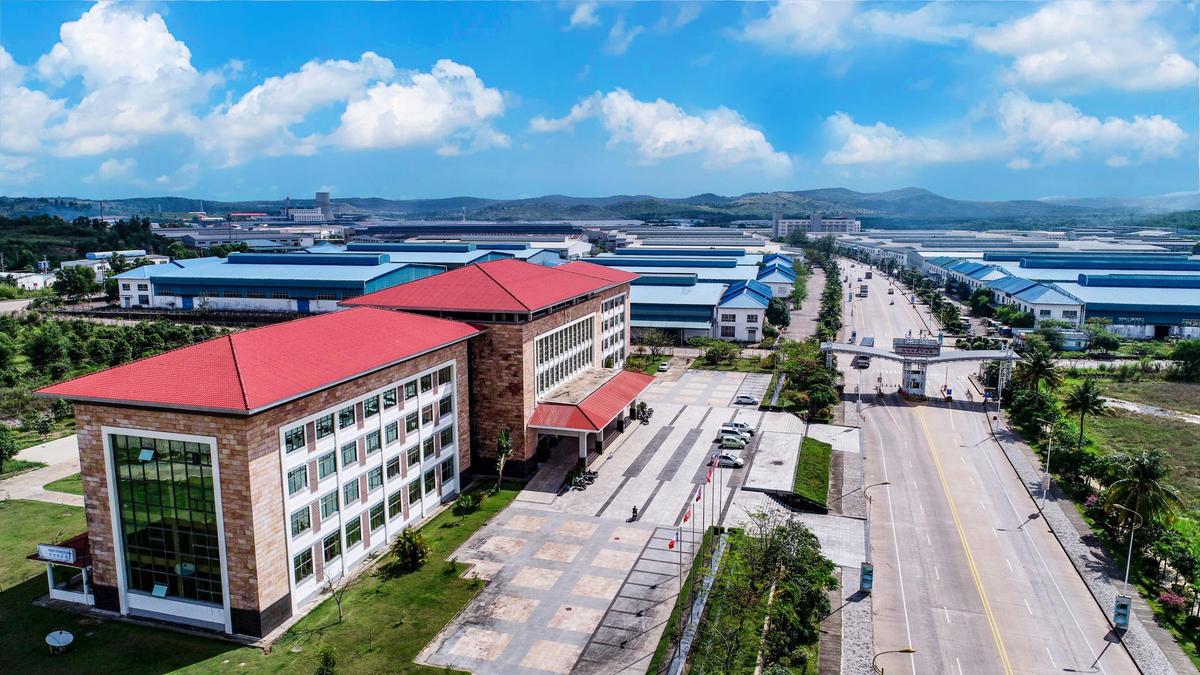
Meanwhile, in Cambodia, the Chinese-invested Sihanoukville Special Economic Zone (SSEZ) now hosts approximately 202 factories, generating nearly 30,000 jobs for local workers.
These achievements underscore the deepening of strategic partnerships and the expansion of socio-economic cooperation between China and its neighbors. Despite the headwind of mounting protectionism, China will pursue high-quality development, expand high-standard opening-up and share development opportunities with neighboring countries.
By comparison, the self-serving nature of US foreign policy has been laid bare through protectionist trade measures and its rhetoric and treatment of long-standing allies. US president Donald Trump repeatedly pushes the narrative that the entire world is taking advantage of the US, wielding this claim to justify sweeping tariffs and a transactional approach to diplomacy. He complained that South Korea's average tariff rates were four times higher than those of the US, despite America "helping Korea in so many ways".
Similarly, his dissatisfaction with the Japan-US Security Treaty was made clear when he criticized Japan for allegedly giving too little in return, saying that "We have to protect them, but they don't have to protect us." Vietnam reportedly offered to cut its tariff rates on US goods to 0 percent, yet Washington coldly responded that such gestures were "not enough". This pattern reinforces the perception that US foreign policy is driven by the pursuit of unilateral gains.
While China advocates for inclusive development, the US continues to lean toward protectionism and profit-driven diplomacy. In the increasingly discerning Asia-Pacific region, nations are beginning to ask: who is a reliable partner, and who is merely an opportunistic "ally" with shifting priorities?
China builds regional harmony, while the US fuels division
In an era marked by frequent cultural and civilizational exchange, a country's moral authority is becoming a vital element of its international standing. Rather than using pressure tactics or geopolitical posturing, China prioritizes dialogue and partnership. China's recent Central Conference on Work Related to Neighboring Countries highlighted that to jointly create a better future with neighboring countries, China will hold high the banner of a community with a shared future for mankind. This approach has resonated strongly with many countries in Asia and beyond, who seek reliable partners rather than ideological patrons.
In contrast, the US' "America First" strategy has time and again eroded its global trust. Its embrace of protectionism, damage to multilateral systems, and abuse of sanctions signal a self-serving, short-sighted, and morally questionable foreign policy. Seeking gains at home at the cost of harming others has increasingly isolated the US and diminished its support base.
Singapore's Prime Minister Lawrence Wong offered a candid assessment of the US tariff strategy and its broader implications. As he observed, "What the US is doing now is not reform — it is a rejection of the very system it once built." While the US may have chosen a protectionist path, the rest of the world need not follow suit. Instead, countries will seek out alternative partners and work around these obstacles — preserving the resilience of critical elements of the multilateral system, while laying the groundwork for a future global order that can be more inclusive and sustainable.
In turbulent times, leadership is tested by responsibility, and trends are shaped by people. China's path is one of stability, development and peace. Facing the future, the nations are increasingly clear-eyed: Who resorts to coercion, and who pursues dialogue? Who seeks profits alone, and who offers mutual benefits? Who loses support due to selfishness, and who gains it by adhering to principles? The obvious answer is itself the clearest proof of China's role as a source of certainty and stability in a chaotic world, and a responsible stakeholder in the region.
The authors are research fellows at the Department for American Studies of the China Institute of International Studies. The views don't necessarily reflect those of China Daily.
If you have a specific expertise, or would like to share your thought about our stories, then send us your writings at opinion@chinadaily.com.cn, and comment@chinadaily.com.cn.