Fail safe
Southeast Asian countries should seek cooperation with China to tackle the impacts of US' 'reciprocal tariff' policy








The increasing frequency of extreme weather events worldwide signals the urgency for climate action, and the green and low-carbon transition. However, the international landscape has grown increasingly volatile, with overlapping geopolitical conflicts and a prolonged escalation of tensions. Simultaneously, the global economic slowdown is exerting a profound influence on international climate governance. The United States has repeated its withdrawal from the Paris Agreement, exacerbating global climate governance uncertainties and delivering a more substantial setback to international climate cooperation than its 2017 exit decision. It has also seriously undermined green finance and weakened global confidence in mitigation efforts, leading to a decline in international consensus and willingness to cooperate on climate issues.
Against this backdrop, China and other responsible nations need to establish cooperative mechanisms to offset the systemic impacts of US disengagement from multilateral climate frameworks.
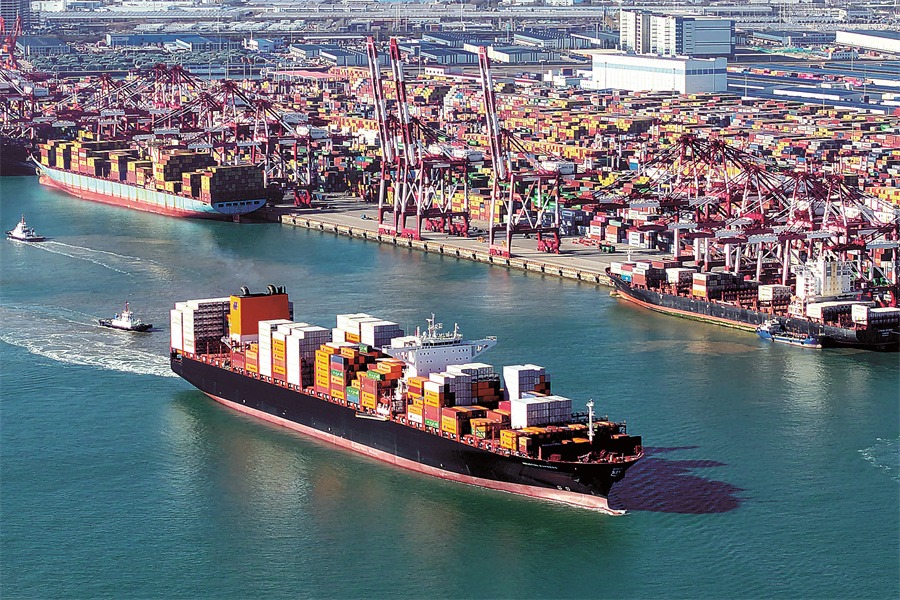
On April 2, the US government issued an executive order implementing the "reciprocal tariffs" policy, recalibrating tariffs against the countries with which the US holds largest trade deficits. This tariff policy aims to address what the US has called the imbalanced trade by applying differentiated tariff rates. Emerging Asian markets are facing severe setbacks. Although the US administration has announced a suspension of imposing "reciprocal tariffs" on more than 75 trading partners for 90 days, it did not revoke the minimum 10-percent baseline tariff on all goods exported to the US. This means that while Southeast Asian countries are temporarily safe for the next 90 days, their industries will inevitably suffer significant long-term damage due to the lack of commercial confidence.
Given the "unpredictable" nature of the current US administration, the "reciprocal tariffs" may not ultimately be enforced. However, if they do take effect, the impact on Southeast Asian countries would be enormous.
These "reciprocal tariffs" will trigger a triple crisis in Southeast Asia. First, they will directly destabilize export performance, particularly devastating export-oriented economies such as Vietnam and Cambodia. Second, by eroding foreign investor confidence and constraining industrial upgrading capacity, they will hold back regional industrialization. Most critically, the tariff barriers will inflate import costs for green technologies and equipment, not only obstructing the energy transition but potentially derailing the Association of Southeast Asian Nations members from their carbon neutrality road maps. This direct collision between trade policy and climate objectives exposes deep structural flaws in the current global economic governance system.
As the most stable factor in an unstable world, China upholds the rules of the World Trade Organization as well as those of other organizations such as the United Nations, stabilizing the development expectations of the Global South countries and providing a stable international environment for the development cooperation efforts of all countries. Climate cooperation between China and Southeast Asian countries has developed through long-term partnerships across multiple fields. China and ASEAN actively engage in the global multilateral climate governance framework, deepening collaboration under multilateral systems. Within the UN-led governance framework, both parties have formalized climate cooperation by accelerating implementation of the United Nations Framework Convention on Climate Change and related environmental treaties, while advancing sectoral collaboration in agriculture, the energy transition, and ecological conservation through the WTO-embedded China-ASEAN Free Trade Area. As an intrinsic member of the Global South, China facilitates climate technology transfer to Southeast Asian countries through South-South cooperation frameworks.
Historically, Southeast Asian countries have depended on external cooperation in key areas such as the energy transition and clean technology, with China serving as a particularly important partner. However, the US' "reciprocal tariffs "policy will significantly constrain Chinese investment and technology transfers in Southeast Asia. By increasing production costs, the tariffs will raise financing and operational expenses for green projects, undermining the long-term viability and execution of clean energy and low-carbon infrastructure plans. In the face of obstructed external capital and technological collaboration, Southeast Asian countries may encounter greater uncertainty in fulfilling their climate commitments.
China has emerged as a key driver of the Global South's energy transition. For Southeast Asian nations, sustained collaboration with China represents a strategic imperative to mitigate tariff-related pressures — especially given China's dual role as both a trading partner and a catalyst for the infrastructure development essential to green industrialization. While export sectors may experience short-term disruptions, China-driven infrastructure investments bolster long-term productive capacity and resilience.
The China-Vietnam partnership exemplifies this dynamic. Chinese investments in Vietnam have grown markedly in both scale and strategic value, accounting for an expanding share of the country's total foreign direct investment. This cooperation has generated tangible dividends: Chinese strategic investments have enabled Vietnam to develop a vertically integrated photovoltaic cluster, transforming the country into a solar manufacturing hub. Beyond industrial upgrading, Chinese engagement has addressed critical energy bottlenecks, through not only localized production but also cross-border electricity transfers that have stabilized Vietnam's power grid for years.
The looming enactment of "reciprocal tariffs" risks triggering systemic destabilization across Southeast Asia, which is a challenge demanding innovative, coordinated solutions. Facing structural constraints, regional states must prioritize reinforced global and regional cooperation as a strategic imperative. Beyond strengthening its partnership with China, the region stands to benefit from a trilateral China-European Union-ASEAN alignment, which could serve as a breakthrough framework to navigate the trade deadlock. By establishing a joint "green trade" mechanism, China and the EU could extend certification and tariff preferences for Southeast Asia's renewable energy exports, directly countering US trade barriers. Parallel to this, the creation of a China-EU-Southeast Asia Climate Investment Fund would strategically combine China's infrastructure expertise with European green finance standards, targeting energy transition initiatives in severely affected nations such as Cambodia and Laos. This "Chinese manufacturing+European standards+ASEAN markets" trilateral cooperation framework offers dual benefits: providing an effective buffer against US tariff-induced supply chain disruptions, and charting an innovative course for Global South nations to harmonize climate objectives with economic growth imperatives.


Yu Hongyuan is a professor at the Shanghai Institutes for International Studies. He Jing is a climate and energy campaigner of Greenpeace East Asia. The authors contributed this article to China Watch, a think tank powered by China Daily. The views do not necessarily reflect those of China Daily.
Contact the editor at editor@chinawatch.cn.