History of anti-fascist war still inspiring today







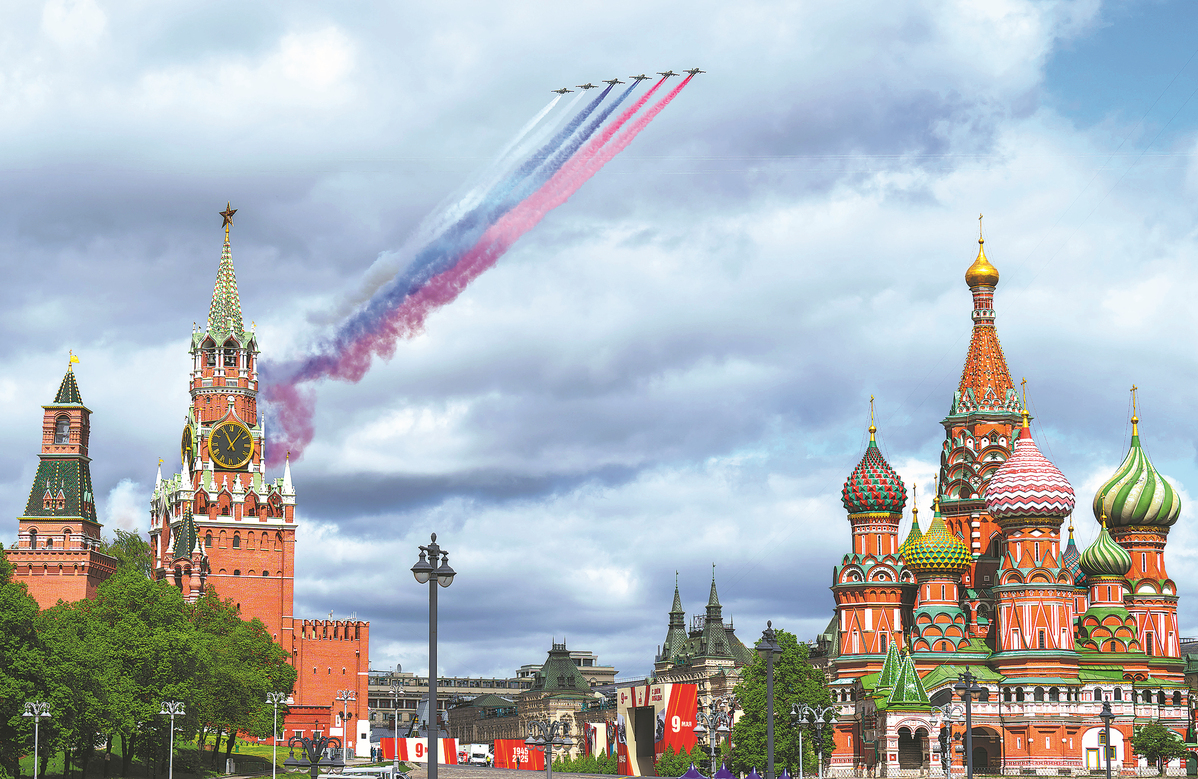
Eight decades since the victorious events of 1945, the memory of World War II is fading with the passing of the heroes who fought the fascist forces. However, there has been no letup in the debates on the war's history. In fact, the debates are flaring up with renewed vigor, as the memory of World War II is being increasingly used as a tool of political pressure, and to shape alternative historical narratives and escalating confrontation.
Today, trade wars, sanction regimes and bloc rivalries, which remind us of World War II, are further alienating nations, eroding trust, and raising international tensions. These "historical wars" often involve former adversaries as well as former allies.
The experiences of World War II offer a different path, a path of solidarity, mutual assistance, and joint resistance against external aggression. An apt example of joint resistance is the cooperation between the Soviet Union and China during the Chinese People's War of Resistance Against Japanese Aggression (1931-45).
China and the Soviet Union joined the fight against fascism and militarism as early as August 1937, by signing a non-aggression pact. The Soviet Union provided military aid for China, and after the end of the European campaign, joined the Chinese people's resistance against the Japanese aggressors. Chinese soldiers fought heroically under extreme circumstances, tying down significant Japanese forces that also posed a threat to the Soviet Union in the Far East.
Despite China's internal challenges, the Chinese people's resistance was a key factor in the defeat of Japan in World War II. China suffered huge losses but did not capitulate, setting an example of national resilience. While Soviet assistance bolstered China's anti-fascist struggle, China prevented a substantial number of Japanese forces from advancing toward the Soviet Union's borders. The two sides' mutual support was a genuine partnership, free of colonial dominance or coercion, and remains one of the few examples of relations based on equality between major powers during a major war.
Respectful, pragmatic and strategic interaction and cooperation between the two major countries should be seen as a prototype for a new kind of major-country relations built on mutual respect, mutual benefit, and mutual recognition of each other's core interests.
The cooperation between the Soviet Union and China extended well beyond the military sphere. The two sides engaged in political exchanges, joint economic projects, and cultural diplomacy. Among other things, this gave rise to shared higher education initiatives that laid the groundwork for intergenerational understanding.
A logical continuation of this partnership was the participation of the two sides in the anti-fascist alliance, which was followed by the establishment of the United Nations in 1945. Also, the Soviet Union and China became two of the five permanent members of the UN Security Council, which affirmed their status as victors and institutionalized their influence in the new international security framework. And their military cooperation evolved into long-term political alignment, embedded in the architecture of the postwar world.
In the 21st century, as fierce debates on the interpretation of wartime history become part of global confrontations, the Soviet-Chinese cooperation during World War II offers a compelling alternative, because it united rather than divided countries. It demonstrated how the joint fight against fascism and militarism can serve as the foundation of long-term mutual trust — even between countries with different political systems and cultures. The legacy of such cooperation can act as an antidote to "memory wars", a tool for forging shared narratives, and a platform for cultural and humanitarian dialogue.
Continuing this dialogue is essential through joint research initiatives, intergovernmental academic commissions, co-produced documentaries, and shared commemorative events. Such collaboration can transform our shared historical legacy into a resource for cooperation rather than conflict, leading to the restoration of lasting peace.


The views don't necessarily reflect those of China Daily.
If you have a specific expertise, or would like to share your thought about our stories, then send us your writings at opinion@chinadaily.com.cn, and comment@chinadaily.com.cn.