



Significant steps taken to protect minors from digital world harms







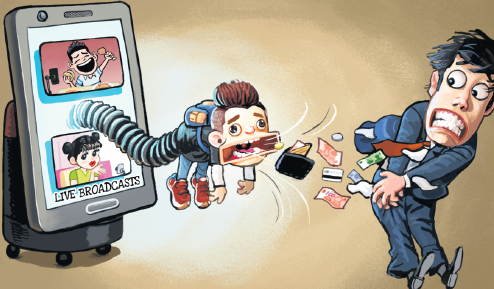
Children are spending a lot of time online as the internet has become an integral part of daily life. While the internet offers vast opportunities for learning and entertainment, it also exposes the young to harmful information and potential exploitation.
Alarmed by increasing incidents of online victimization of minors, China has taken a series of measures, such as revising the Minor Protection Law, which came into effect on June 1, 2021, to strengthen the protection of minors in cyberspace.
Later, on Jan 1, 2024, the State Council, China's Cabinet, unveiled a specialized regulation on online protection for minors, making clear the responsibilities and duties of schools, families and internet service providers, with specifics on limiting the time minors spend online, removing harmful content, establishing child-friendly modes and introducing one-click protection against cyberbullying.
Teachers are now required to educate students about the online risks, while internet platforms need to implement robust content-filtering systems to block harmful content while providing age-appropriate content. Additionally, many smartphone brands, including Huawei and Oppo, apps, and mobile programs have integrated the child mode into their software and hardware.
Thanks to this ability to control daily total internet usage and set usage period, parents can now feel more at ease when their minor children use mobile phones.
China is also intensifying the crackdown on crimes against minors by adopting a "zero-tolerance "stance against offending adults. In some cases, the offending adults have coerced minors, particularly girls, into sending explicit photos, and then used those photos to blackmail, or even sexually abuse or rape them.
In recent days many such offenders have been sentenced to death. On May 16, three child rapists were executed after the Supreme People's Court approved their death penalties.
One of the executed individuals, surnamed Chen, was a repeat offender who had previously been imprisoned for rape. Between January and April 2022, he was found to have posed as a peer and joined more than 20 QQ and WeChat groups created by middle-school students. He befriended girls in those groups and lured some of them to meet him in person, before raping them.
Chen raped three girls below the age of 14, and attempted to rape another. He also filmed the heinous acts to blackmail the victims, causing some to attempt suicide or drop out of school. He even orchestrated the gang rape of a girl below 14 on three occasions and made money by facilitating others to rape her.
The top court has also worked with the Supreme People's Procuratorate to address this problem at the root. In 2023, the top judicial authorities interpreted the Criminal Law to say those who encourage or force minors to expose online, ask for nude photographs or videos, or ask them to chat nude should be categorized as molesters.
This answered a vital question — whether enticing someone to post nude pictures online without making any physical contact amounts to molestation. It also sent a strong signal that the country is determined to strengthen the protection of minors online.
Moreover, with the rapid growth of livestreaming and the short video-sharing industry, since the start of this year the Cyberspace Administration of China has tightened the supervision of internet platforms to prohibit the exploitation of children. By April, more than 11,000 accounts had been suspended or permanently closed.
It's encouraging to see these significant steps being taken to ensure the safety of children online, but child protection remains a long and ongoing journey, demanding greater efforts from all walks of life.


















