50% levy threat looms on pharma products from EU







US President Donald Trump on May 23 threatened to impose a 50 percent tariff on all imports from the European Union. Medicinal and pharmaceutical products — EU's top exports to the US in 2024 — are in the firing line.
For the EU's pharma industry, especially branded drug manufacturing, experts said an increase in capital expenditure in the US and some reshuffling in supply chains is likely, but tariffs will not lead to a sudden, massive reshoring of production as Trump expects.
Some European drugmakers have already announced plans to expand their presence in the US as tariffs hang over their heads.
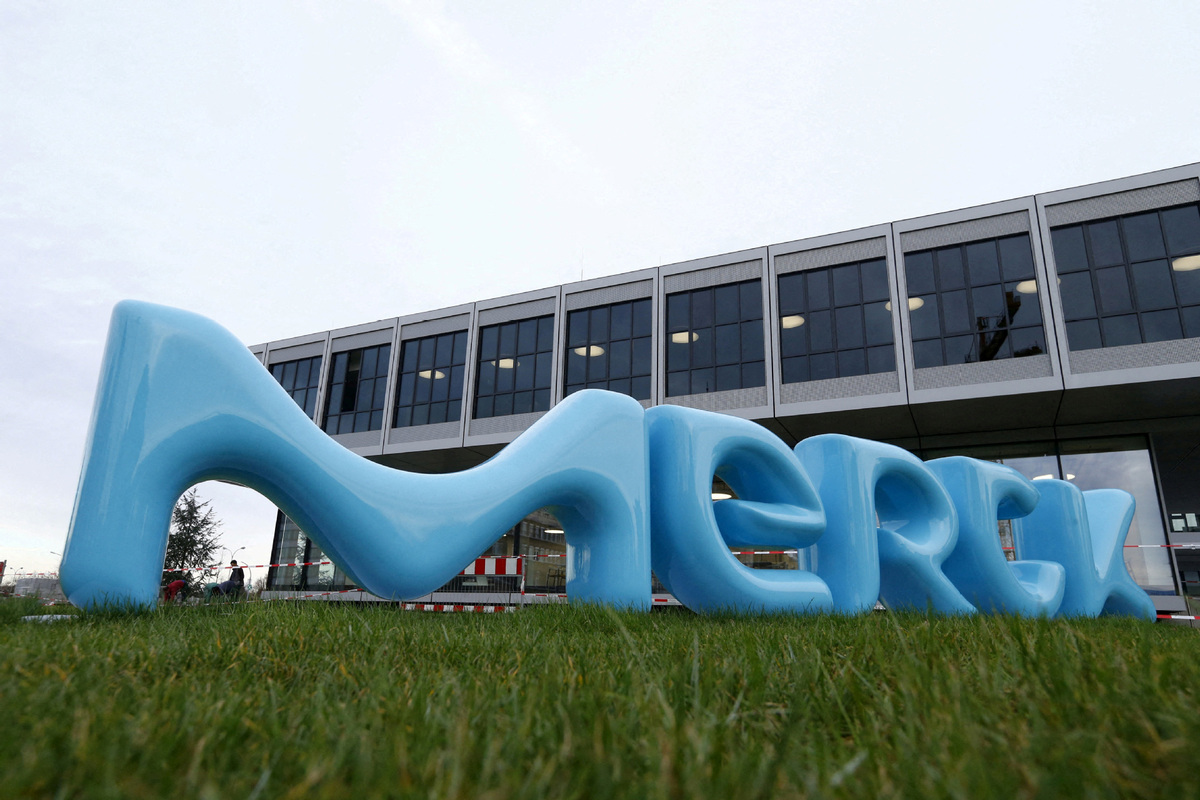
Merck, a German life-sciences giant, recently opened a $1-billion facility in North Carolina, where the Swiss healthcare company Roche Group is also planning to build a new plant, with an investment of more than $700 million, Reuters reported. UK's AstraZeneca said it was shifting the production of some medicines sold in the US from Europe to the US, the Guardian reported in April.
Diederik Stadig, a sector economist specializing in TMT and healthcare at ING Think, the research division of Dutch bank ING, said in an April article that the adaptation, pushed by tariffs, is reasonable, given that the manufacturing of branded drugs happens across the globe, and profit margins are high.
"Both the US and Europe are important manufacturing hubs for branded pharmaceuticals. The US is also the biggest market for pharmaceuticals and has a relatively short time-to-market for innovative medication. This means that branded pharmaceutical companies need to be present in the US," he said.
Yet, a large-scale exodus is unlikely, Gayle Allard, a professor of economics at IE Business School in Spain, told China Daily.
"Moving production is slow, probably takes three to five years, and is also expensive. The cost of moving, and the additional cost of building facilities in the US that is caused by other Trump tariffs, such as the ones on steel, make an exodus unlikely," she said.
"And the uncertainty Trump has sown by changing his tariff plans from one day to the next will make companies reluctant to make plans for major change in the short term," she added. "Absorbing tariffs into profits is a more likely outcome."
Jeremy Leonard, managing director of global industry services at UK think tank Oxford Economics, told the Politico news website that companies might even choose to reduce investments in research and development, rather than switch production, as they calculate that tariffs may not be permanent.
In fact, what will attract drugmakers to the US isn't tariffs, but rather a more favorable environment for medicines development compared to Europe, Ned Hux, a pharmaceutical and life-sciences tax leader at PwC US, told Politico.
The European Federation of Pharmaceutical Industries and Associations warned in an April letter sent to European Commission President Ursula von der Leyen that the US now outpaces Europe on "every investor metric", from the availability of capital, intellectual property, speed of approval to rewards for innovation.
However, branded drugs are only part of this tariff dispute.
Earlier in April, Trump signaled a "major", forthcoming tariff on pharmaceutical imports. He claimed that drugmakers will leave China and other places because they have to sell in the US.
"A very large proportion of US drugs are generics (cheaper versions of branded-name medications), and many of these are imported from India and China," Allard pointed out.
Nearly half of all generic medicines taken in the US come from India alone, while India depends on China for 80 percent of the active pharmaceutical ingredients, or APIs, in final products that deliver the desired therapeutic effect, Al Jazeera reported in April.
But unlike branded drugs, generics manufacturing relocation has little chance of happening as a result of tariffs, and if such duties are imposed, the costs will only be passed on to US consumers, Allard noted, adding that drug shortages are also likely.
Stadig explained that it's simply cheaper to manufacture generics in India than in the US, even with tariffs around, and the industry's low profit margins are not enough to compel a relocation.
"Tariffs will increase prices for generic medication substantially at the expense of American consumers, and they will hit the most vulnerable US citizens the hardest. This outcome contradicts the goal of the US administration to make pharmaceuticals more affordable and accessible."