Universities rush to offer AI majors
Experts warn that quality not quantity must be the focus for educators







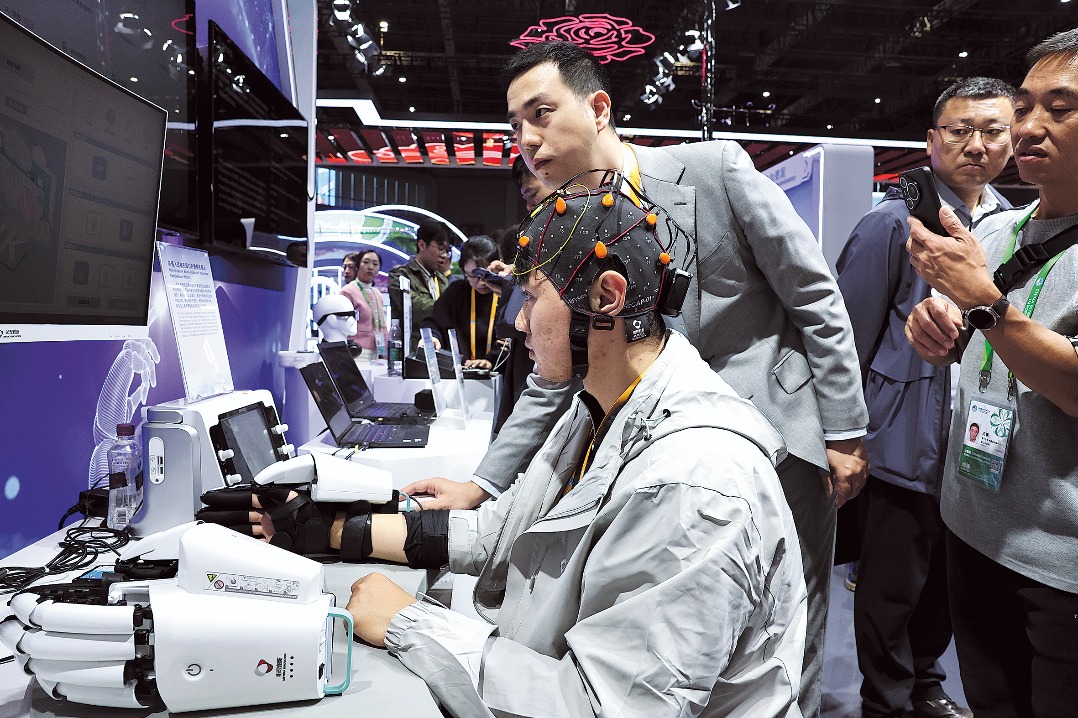
The rapid rise of artificial intelligence as a discipline is reshaping China's higher education landscape, with universities scrambling to adapt to national strategies and industry demands.
Since 2018, when the first 35 Chinese universities introduced undergraduate AI programs, the field has exploded. As of this year, over 626 institutions nationwide offer AI-related degrees, however, educators have shown a mix of enthusiasm and caution with regard to balancing quality and quantity.
Since the State Council, China's Cabinet, outlined its three-step AI development plan in 2017, national and local policies have prioritized AI innovation. The Ministry of Education's 2022 decision to categorize intelligent science and technology as a first-tier interdisciplinary discipline further institutionalized AI education.
Changsha University of Science and Technology's School of Artificial Intelligence, established in January in Changsha, Hunan province, epitomizes this trend.
Dean Fan Shaosheng explained that the school was created by merging automation, robotics and AI programs to foster interdisciplinary talent. "Our goal is to serve regional economic development and industries such as transportation, power and water conservancy, aligning with Hunan's development strategy," he said.
The school's "undergraduatemaster's-doctorate" integrated model shortens training cycles for top students while emphasizing innovation. With 60 faculty members — 80 percent of which hold PhDs — and 1,400 undergraduates and 280 graduate students, the school leverages policy incentives, industry collaboration and dynamic curriculum updates to maintain educational quality, he said.
Employment prospects remain a key driver. Fan noted that 90 percent of the school's AI and automation graduates secured jobs, outperforming institutional averages. The dean highlighted the "high demand, salary premiums and diverse applications" for AI, but stressed the importance of aligning personal aptitude with professional choice. "Strong math, logic and a passion for technology are prerequisites," he said.
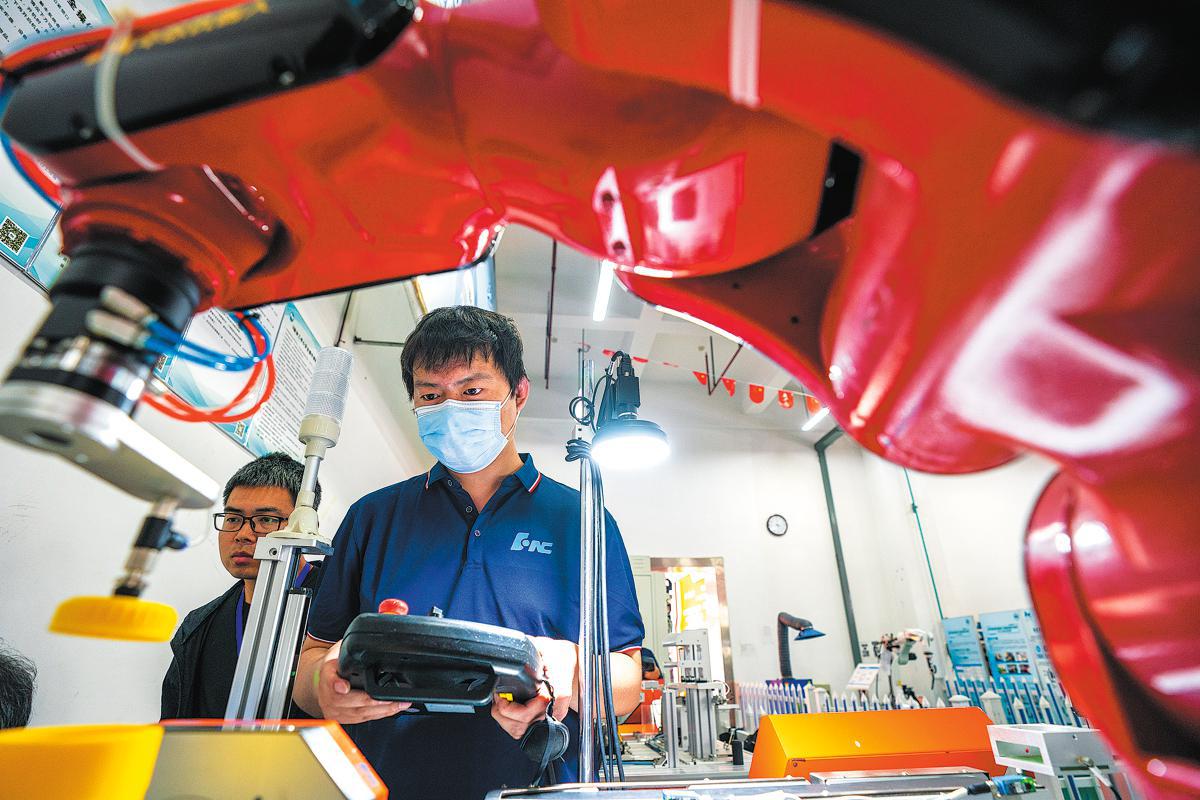
At Beijing Jiaotong University, the integration of AI into traditional engineering reflects a broader shift. Liu Yueming, vice-dean of the School of Mechanical, Electronic and Control Engineering, detailed how programs like intelligent vehicle engineering and robotics engineering have emerged from upgrades to meet smart manufacturing and rail transit demands.
"High-speed trains are now intelligent entities, requiring expertise in AI-driven design and maintenance," he said. The school's four AI-related majors, enrolling 320 students annually, blend mechanical engineering with AI, big data and the internet of things. With a 70 percent postgraduate enrollment rate and 97 percent employment rate, graduates often join State-owned enterprises like China Railway and CRRC Corporation, he said.
Industry alignment remains critical. The university has revamped its curriculum to emphasize cross-disciplinary foundations, delaying specialization until junior year to broaden student adaptability, Liu said. This approach, combined with hands-on innovation platforms and industry-linked research, ensures graduates meet labor market needs.
Zhang Haibin, a mechanical engineering student at Beijing Jiaotong University and a robotics enthusiast, highlighted the program's interdisciplinary rigor. "Robotics isn't just stacking disciplines — it's integrating hardware, algorithms and control systems," he said. His team's yam planting robot, developed through coursework and competitions, exemplifies practical skills prized by employers.
He said robotics competitions and industry projects bridge theory and practice. Zhang credits contests like the National Undergraduate Mechanical Innovational Competition with sharpening his skills.
The greatest appeal of studying robotics engineering lies in handson practice. Whether in research or competitive events, students have numerous opportunities to engage in practical work — building a learning framework from scratch, replicating the latest models for robots or robotic dogs, or starting with a simple circuit board and a handful of screws to ultimately create a functioning robot, he said.
"Through these experiences, you are bound to discover your passion, whether it be mechanical design, embedded systems development, deep learning, reinforcement learning, or other areas. Driven by these interests, you will dive deeper into specialized fields, continually expanding your expertise," he said.