Sharjah's Faya Palaeolandscape marks 11 years in UNESCO HEADS program







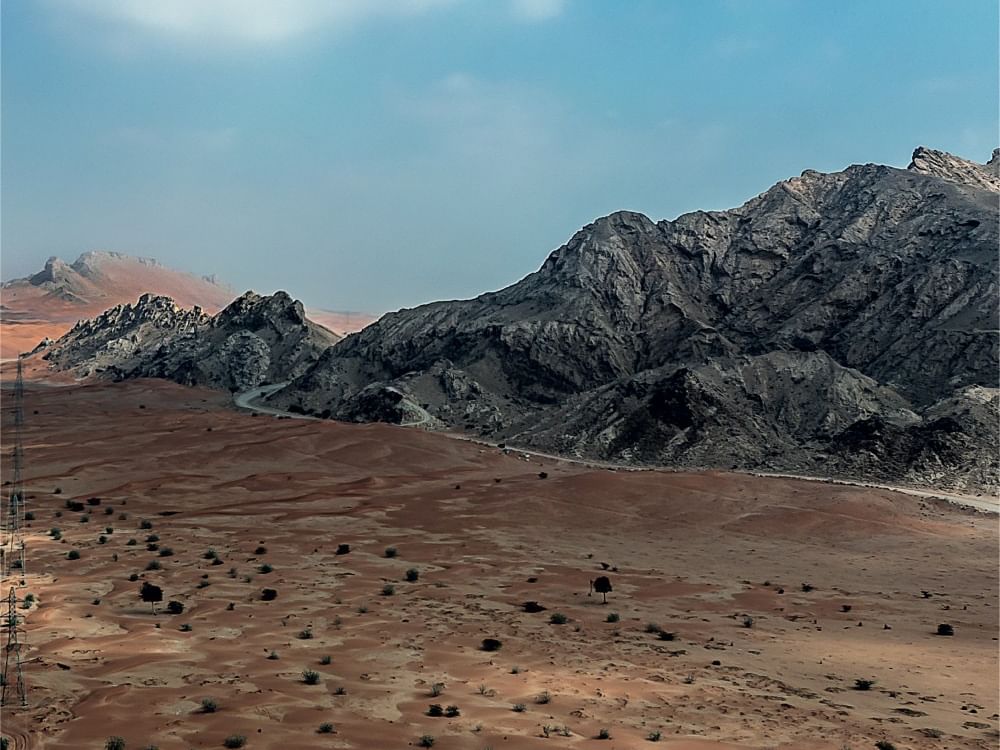
SHARJAH - Sharjah's Faya Palaeolandscape, one of the most scientifically significant prehistory archaeological sites in Arabia, continues to serve as a cornerstone in UNESCO's Human Evolution, Adaptations, Dispersals and Social Developments (HEADS) program.
For 11 years, the site has played a vital role in advancing global understanding of early human migration, adaptation, and survival in desert environments.
This long-term collaboration between Sharjah and UNESCO HEADS program has established Faya as a global reference point in palaeoanthropology and archaeology, placing the UAE at the centre of international scientific discourse on human origins. The property's uninterrupted record of over 210,000 years of human habitation has made it a key contributor to the evolving narrative of early life in Southeast Arabia.
"Faya's recognition in the HEADS program for more than a decade is a testament to the UAE's commitment to safeguarding its ancient heritage," said Sheikha Bodour bint Sultan Al Qasimi, the official ambassador for Faya Palaeolandscape ongoing UNESCO World Heritage nomination.
"Sharjah has never viewed archaeology as merely a glimpse into the past, but as a vital part of our national identity and a platform for international cultural dialogue. Faya stands as evidence of how Sharjah combines scientific research with cultural vision, elevating the emirate as a leading contributor to global heritage. The site strengthens our cultural identity, supports cutting-edge research, and invites the world to explore how deeply rooted our region is in the story of human civilization."
According to Eisa Yousif, Director-General of the Sharjah Archaeology Authority (SAA), Faya has played a pivotal role in shaping international scientific discourse on early human life.
"Faya has long been a cornerstone in the global understanding of how early humans adapted, survived, and evolved in arid landscapes," he said.
"Its archaeological record — spanning more than 210,000 years — reveals unprecedented insights into toolmaking, burial practices, and shifting lifestyles in response to climatic extremes. Faya challenges long-held assumptions and affirms that the Arabian Peninsula was not merely a corridor, but a cradle of human evolution in its own right. It demonstrates that early societies did not just pass through this region — they thrived here, innovated, and laid cultural and social foundations that deepen our understanding of human resilience."
As one of the few documented Stone Age desert landscapes in the world, Faya provides exceptional evidence of early modern human adaptation to hyper-arid environments over tens of thousands of years. From the earliest hunter-gatherer communities to pastoral nomadic herders with funeral practices, the archaeological record at Faya reveals how humans evolved socially, technologically and spiritually in response to extreme and changing climates.
Beyond its regional significance, the property contributes to a larger global understanding of how early humans navigated survival, resource management, and social development in some of the harshest conditions on Earth. The sediment layers and preserved palaeoenvironmental features at Faya have made it a key site for understanding water availability, vegetation distribution, and climatic shifts during the Late Pleistocene and Holocene epochs.
These findings offer invaluable insight not only into human resilience but also into wider environmental transformations that shaped early civilizations.
Faya is part of key sites recognized by the UNESCO HEADS program for their critical contributions to human evolutionary studies, including Klasies River Caves, Border Cave and Wonderwerk Cave in South Africa, and the Tchitundo-Hulu Rock Art Site in Angola. What distinguishes Faya, however, is its location within the Arabian Peninsula - a region previously understudied in global narratives of human migration. Faya is now helping reshape that narrative, anchoring Arabia as a key locus in the shared history of species.
In support of this global effort, Dr. Knut Bretzke, one of the lead researchers on the Faya site, recently presented the findings and significance of the landscape at a UNESCO HEADS program meeting in Cairo, underscoring the international importance of the site and Sharjah's continued leadership in heritage-based research.
As the Faya nomination for World Heritage inscription progresses, the property's legacy is already firmly established: a pivotal source of scientific inquiry, international cooperation and national pride. Faya continues to show the world that the answers to humanity's oldest questions are not only written in stone but preserved in the land.
WAM