What US-China standoff means for the world







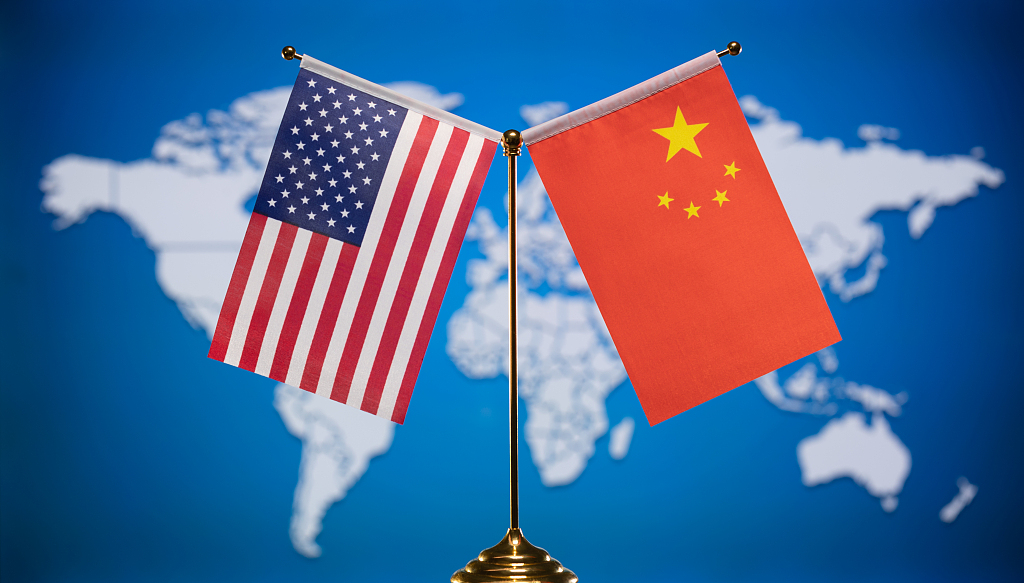
Leverage without a road map is pressure without direction. That's what the United States has been doing by staring down its third-largest trading partner from the tariff wall it is building — and calling it strategy. As the United States presses ahead with its devastating China policy, markets slide, shelves thin out, and pressure builds from inside the boardrooms of the US' largest companies.
What began as the US tactical escalation is now bordering on economic siege. More than $10 trillion has been wiped off from the stock market since the US ramped up its policy. Retailers, manufacturers, and supply chain leaders — from automobiles to technologies — have warned that critical inventory is slowing. Tesla and SpaceX founder Elon Musk and other once-aligned CEOs have sounded alarms. The public line remains firm, but the private consensus is shifting.
Inside the White House, there are signs of recalibration. Media reports confirm the US administration has reduced tariffs, bringing levels down from 145 percent to 30 percent, with Treasury Secretary Scott Bessent acknowledging the previous rates were "unsustainable". Pressure works.
Instead of public provocation, Beijing has moved strategically: President Xi Jinping has spent the past month touring Southeast Asia, deepening ties with Cambodia, Vietnam and other countries, while laying the groundwork for expanded economic partnerships across Europe. These are not symbolic gestures. They are structural shifts.
While the trade talks between China and the US in Geneva yielded a temporary tariff truce, both sides remain cautious. High-level engagement is still limited, with major sticking points, such as critical mineral exports and tech restrictions, left unresolved. Not surprisingly, both sides seem to be positioning for leverage rather than compromise. In the meantime, global supply chains remain under strain, inflationary pressure persists, and investor confidence continues to waver due to rising uncertainties.
What's missing is an endgame. Washington has not articulated a specific requirement or demand apart from expressing broad concerns over intellectual property rights protection, China's "industrial overcapacity", and the reshoring of sensitive supply chains. Beijing has not imposed broad counter-embargoes on the US, but it has made clear it will not back down or allow itself to be bullied or isolated on the economic front.
This is not a question of who wins a trade war. In many Western experts' eyes, it's whether the world's two largest economies pursuing global leadership can navigate volatility without confrontation. Strategic competition does not require antagonism but discipline, coherence and goal clarity.
The economic toll of the US' tariff policy is already high. In early April, significant losses were reported from global markets over a brief period of trading. Inflation pressure is mounting, with core costs expected to rise partly due to the effects of the tariffs, while consumer prices are projected to increase over the next 18 months as higher import costs and domestic production expenses take their toll.
Many small manufacturers in the US, which account for the majority of the country's manufacturing sector, are facing closures, with employment in the sector sharply declining, reflecting the broader challenges faced by the industry. Chinese online retailers such as Temu and Shein are either exiting the market or raising prices, because by ending the customs exemption which allowed duty-free entry to goods worth less than $800, the US administration has dented the business models of such retailers.
On the other hand, Europe is preparing digital taxes in retaliation, with several countries implementing or proposing levies targeting major US tech companies. And behind the curtain, key Southeast Asian economies have quietly signaled the US to now ask them to choose sides. They want continuity and stability.
This isn't about trade alone. It's about posturing, too. And it's happening against a backdrop of something larger: a global reassessment of how free societies respond to pressure. Democratic systems are being tested, not because they're weak, but because they work. In contrast, authoritarian models of control thrive in chaos. That's why the stakes here are higher than pricing indexes and shipping costs.
When economic tactics lack clarity, they metastasize into governance breakdowns. When foreign policy becomes personal performance, institutions fracture. The line between strategy and spectacle becomes too thin to hold. We've seen this before and know how it ends.
This is not a call to step back. It's a call to step up — with precision, not posturing. With terms, not theater. With leadership, not improvisations. We need leverage, but we also need a compass. Without one, the world doesn't follow; it fractures.
The next move matters. It should be measured, principled, and smart.
Let's fix the tone.
Let's define the terms.
The author is a fellow at the Institute of Electrical and Electronics Engineers and the American Society of Mechanical Engineers, chairman and president of Energy Policy and Security Associates, and a professor emeritus at the University of Minnesota. The views don't necessarily reflect those of China Daily.
If you have a specific expertise, or would like to share your thought about our stories, then send us your writings at opinion@chinadaily.com.cn, and comment@chinadaily.com.cn.