A cross-cultural culinary journey from Beijing to Yunnan packed with taste







During my years in China, I was fortunate to explore its rich history, diverse cultures, and incredible cuisine. My journey began in 2017 when I moved to Beijing to pursue my bachelor's and master's degrees at Beijing Normal University.
As a student of Chinese language and culture, I was introduced to many fascinating aspects of the country's culinary heritage. One dish that particularly stood out in my studies was Crossing Bridge Rice Noodles, a specialty from Yunnan province. Although I learned about its history and significance in the classroom, I never had the opportunity to taste it during my student years. However, in 2024, when I traveled to Yunnan, I finally experienced this famous dish firsthand. The experience was nothing short of extraordinary.
Crossing Bridge Rice Noodles has a history that dates back several centuries, with a touching legend behind its name. According to popular folklore, a scholar was preparing for the imperial examination and lived in solitude on an island to avoid distractions. His devoted wife would bring him meals daily, but by the time she arrived, the food had often gone cold. One day, she discovered that if she covered the hot broth with a layer of oil, it retained its heat for a longer period. She would then add fresh ingredients upon arrival, ensuring her husband enjoyed a warm and nourishing meal. Thus, the name Crossing Bridge Rice Noodles was born, symbolizing both devotion and ingenuity.
While studying in Beijing, I often heard about the dish, but the bustling capital was far from its place of origin. My professors spoke of its unique preparation, the smoothness of the rice noodles, and the flavorful broth, but I had no reference point to truly understand their excitement. It wasn't until 2024, during my visit to Yunnan, that I finally had the chance to immerse myself in the authentic experience.
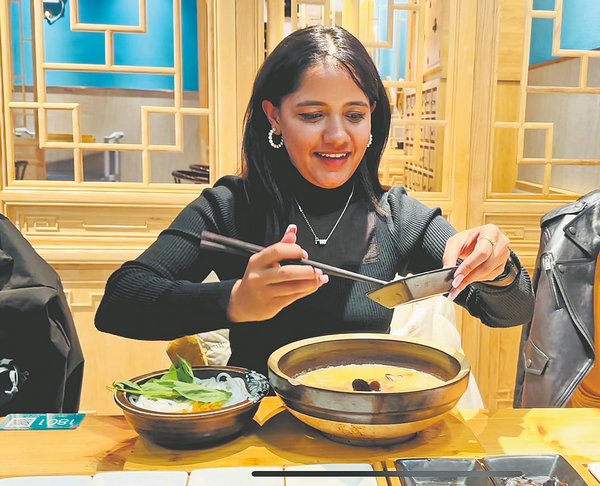
Walking into a traditional Yunnan restaurant, I was captivated by the sight of large bowls of steaming hot broth, trays of fresh ingredients, and the delicate, silky rice noodles. The restaurant had a rustic charm, filled with the rich aroma of simmering chicken broth infused with herbs and spices. As I took my seat, I felt an anticipation that only a long-awaited experience can bring.
The dish was served in a traditional manner — each component presented separately, allowing me to assemble my bowl according to my preference. The waiter placed a large bowl of piping hot broth in front of me, followed by thinly sliced meats, fresh vegetables, quail eggs, tofu skin, and aromatic herbs. Then, came the highlight: the rice noodles, pristine white, smooth, and silky.
Following the traditional method, I first added the raw meat slices into the hot broth, watching them cook instantly. Then, I added the vegetables, tofu and eggs, letting them blend into the rich, golden liquid. Finally, I carefully placed the rice noodles into the bowl. As I lifted the noodles with my chopsticks, their delicate texture was evident — soft, yet firm enough to hold their shape.
The first bite was an explosion of flavors. The broth, made from slow-simmered chicken and pork bones, was rich and deeply comforting. The rice noodles were incredibly smooth, almost jellylike, yet with a satisfying chewiness. The combination of fresh ingredients created a balance of textures — tender meat, crisp vegetables, and silky noodles, all coming together harmoniously. What amazed me the most was how familiar the flavors felt. The umami depth of the broth, combined with the fresh herbs and spices, reminded me of certain Nepali dishes. The comforting warmth of the soup evoked memories of home-cooked meals, making the experience even more meaningful.
As I savored each bite, I reflected on the similarities between Yunnan cuisine and Nepali flavors. Both cultures emphasize fresh ingredients, slow-cooked broths, and the balance of textures in their dishes. The use of ginger, garlic, and fragrant herbs in the rice noodles resonated with the flavors I grew up with in Nepal. It was fascinating to see how food can bridge cultural gaps, creating a sense of familiarity even in a foreign land.
Trying the dish in Yunnan was more than just a meal; it was an experience that connected me to China's rich culinary heritage and reaffirmed the deep bond between food and culture. Having studied this dish academically years ago, finally tasting it in its authentic form was a full-circle moment. The dish exceeded my expectations, not only in flavor but also in its ability to evoke emotions and memories.
Food is more than sustenance; it tells stories, carries history, and creates connections. My journey from learning about Crossing Bridge Rice Noodles in a Beijing classroom to experiencing it firsthand in Yunnan was a testament to the power of culinary exploration. This dish, with its rich broth, silky noodles, and heartwarming legend, is a perfect representation of the beauty of Chinese cuisine. And now, it holds a special place in my personal journey as well.
The author is a media professional from Nepal. She completed both her bachelor's and master's degrees at Beijing Normal University, where she gained deep insights into Chinese culture, media, and international relations. Currently, she is the deputy director of South Asia Network TV, a media platform dedicated to enhancing cultural and tourism exchanges between Nepal and China.