China's HSR technology a boon for the world







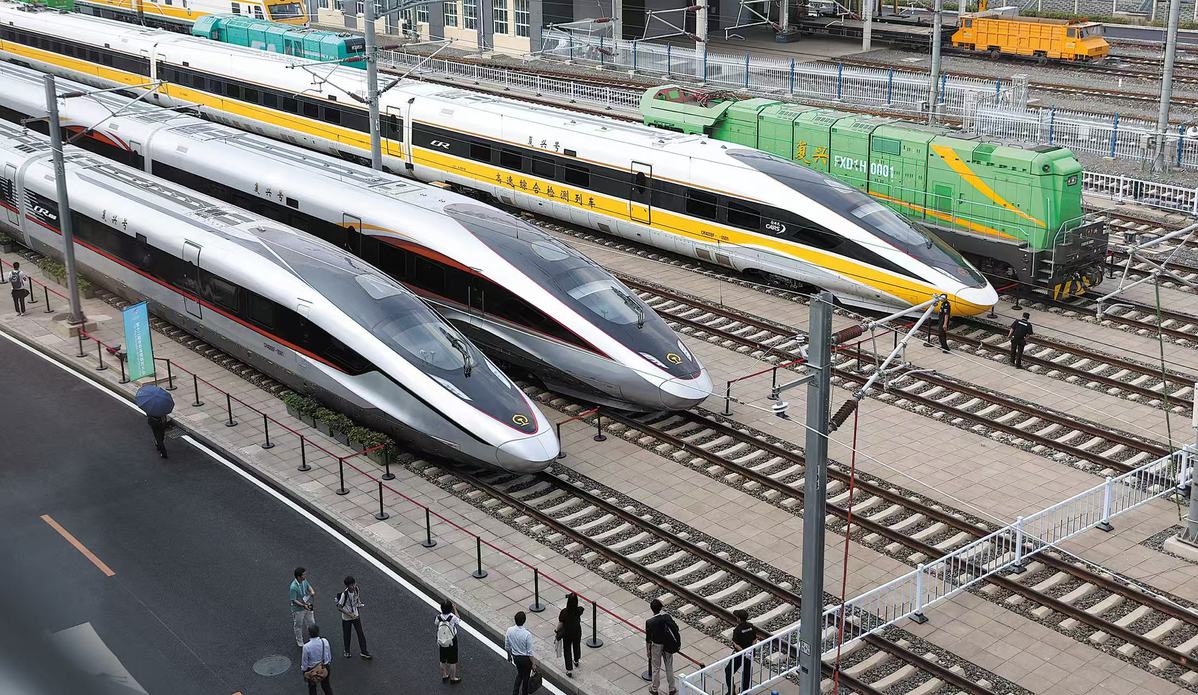
BEIJING — China's fast-evolving high-speed rail technology is not only reshaping domestic mobility, but also playing an increasingly significant role in enhancing global connectivity and driving infrastructure development, experts said at the 12th World Congress on High-Speed Rail in Beijing recently.
The event, cohosted by China State Railway Group and the International Union of Railways, drew more than 2,000 participants from over 60 countries, regions and international organizations.
"In less than two decades, China has created the largest and most advanced high-speed rail system in the world, reshaping mobility, the economy and regional development," said Alan Beroud, chairman of the UIC, during his keynote speech at the opening ceremony on July 8.
China's achievement is all the more remarkable given that at the beginning of this century, the country had no high-speed railways. Back then, passengers relied on slow and often overcrowded trains, making cross-country journeys time-consuming and exhausting.
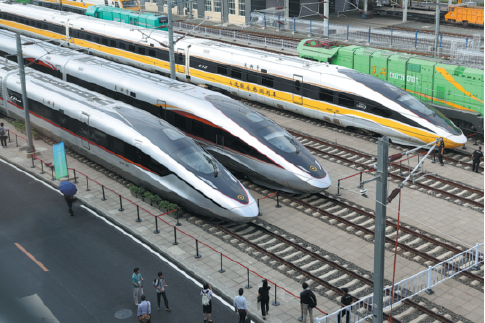
Today, the country operates about 48,000 kilometers of high-speed rail, more than twice the length of all other countries' networks combined. The system links 97 percent of cities with populations of 500,000 or more.
Guided by an innovation-driven strategy, China has emerged as a global front-runner in the sector. The country has spearheaded the development of all 13 system-level international standards for high-speed rail set by the UIC. Its flagship models, such as the CR450 electric multiple unit, the world's fastest high-speed train with a test speed of 450 kilometers per hour, have redefined new global benchmarks for speed and safety.
For many countries, especially those still developing their infrastructure, China's story is more than a feat of modernization — it serves as a practical pathway to achieving broader development.
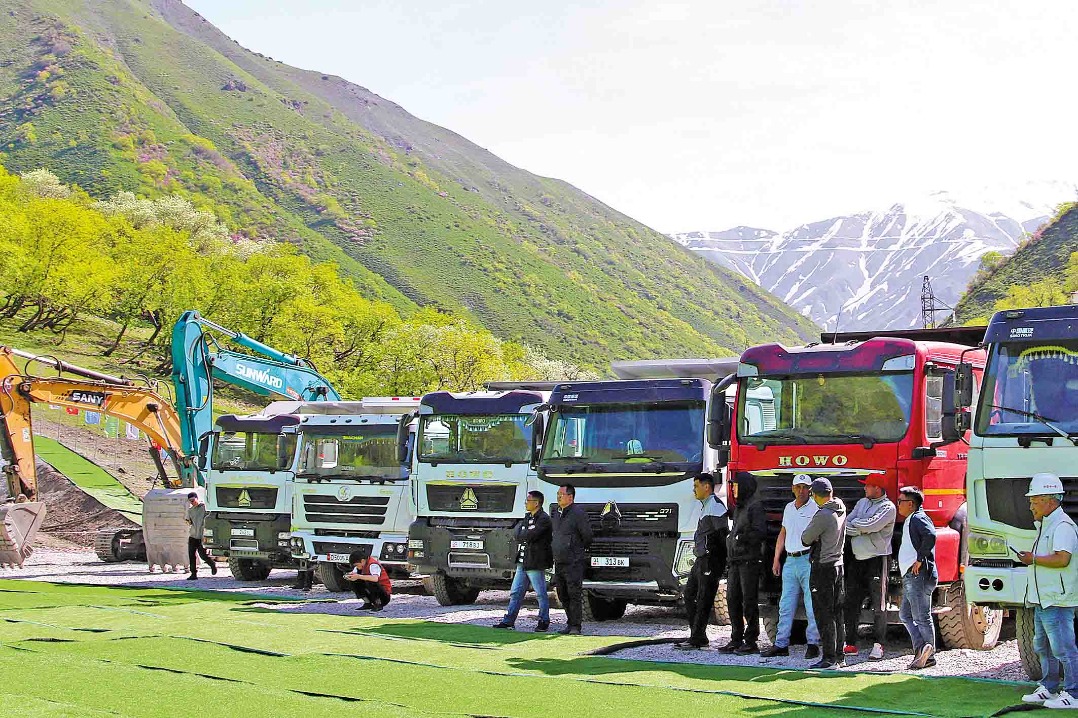
"Most countries experience the same starting point like China," said Ulan Kulov, deputy general manager of the China-Kyrgyzstan-Uzbekistan Railway Co. "We can go this way faster if we learn from China, because we don't have to reinvent it, and we can use existing technologies and go fast forward."
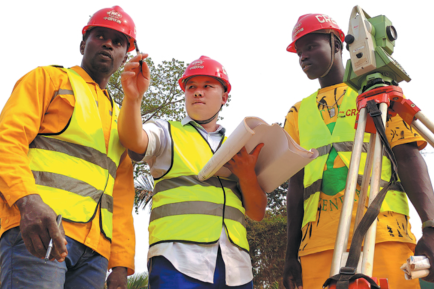
While leading in development at home, China is also exporting its expertise abroad, partnering with more than 40 countries and regions. From Asia to Europe and beyond, its high-speed rail projects are leaving a growing global footprint.
The Jakarta-Bandung High-Speed Railway in Indonesia, built entirely with Chinese technology and standards, slashed travel time between the two cities from more than three hours to just 46 minutes. In Europe, the China-backed Hungary-Serbia Railway has cut travel time between Budapest and Belgrade from eight hours to three, benefiting more than 11 million passengers since operation.
The China-Laos Railway stands as a key project promoting regional connectivity and trade. As of May, the railway had transported more than 52.7 million passengers, including over 510,000 cross-border travelers, and carried more than 59.4 million metric tons of cargo, with cross-border shipments exceeding 13.7 million tons.
Daochinda Siharath, managing director of Lao National Railway Authority, said the China-Laos Railway is the first railway built to modern technical standards that Laos has operated. "The railway has directly and indirectly supported the socioeconomic development in Laos, and also boosted the incomes of people living along the route," the official said.
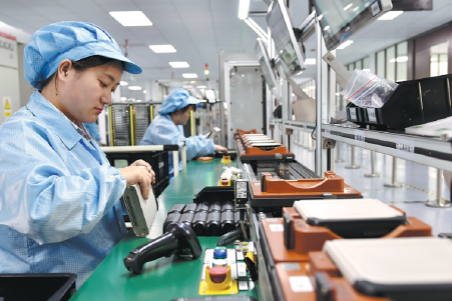
Beyond advancing infrastructure in developing nations, China's high-speed rail is also creating new opportunities for traditional railway players.
When attending a parallel exhibition on modern railway technology, Hitachi NICO Transmission Co Ltd, a Japanese company that entered the Chinese mainland market in 1980, highlighted the importance of joint innovation.
"In the past 40-plus years, it was through our development in China that we seized unprecedented opportunities," said Matsui Shiro, president of the company. He noted that Japanese and Chinese companies are highly complementary in areas such as specialized components, co-development and integrated solutions.
"The Belt and Road Initiative has opened new doors for China-Japan joint ventures in third-party markets," Matsui said. "We see great prospects for effective partnerships in many areas."
Xinhua