Humanoid robots demonstrate industrial capabilities in live factory test







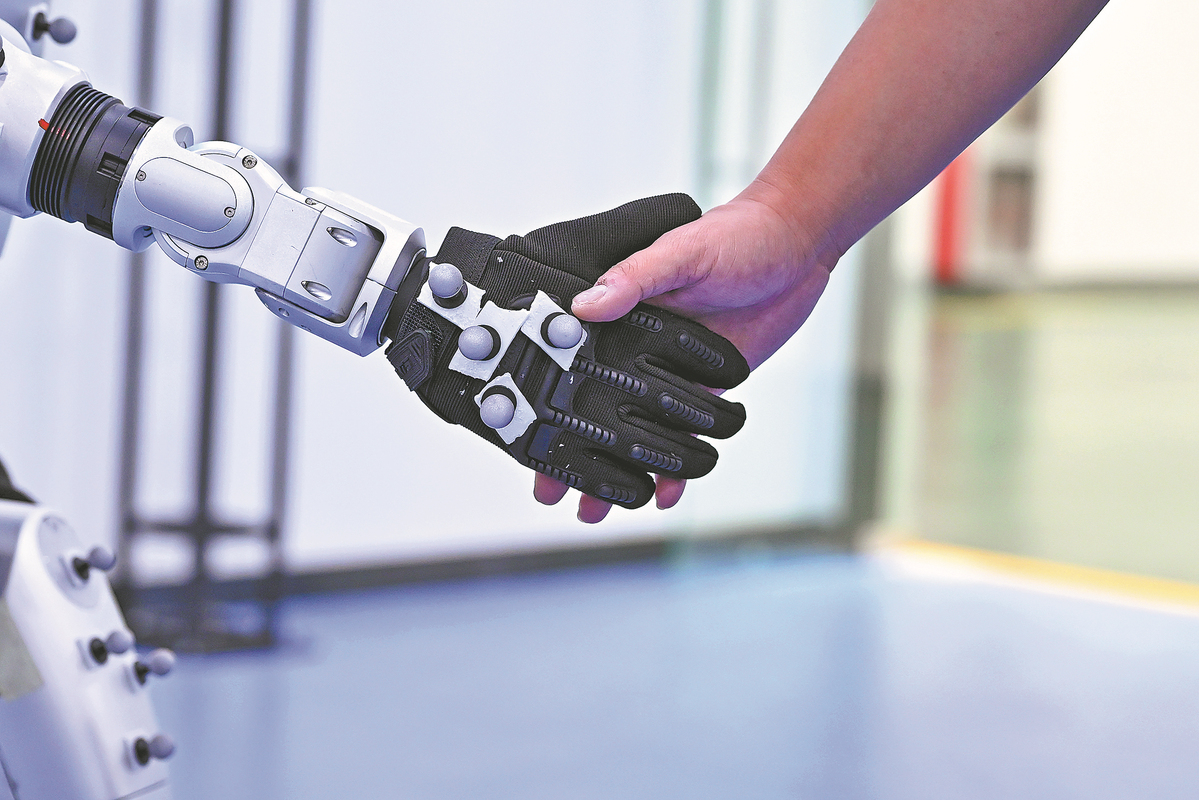
CHENGDU — At an auto parts factory in the southwestern Chinese city of Mianyang, Sichuan province a group of humanoid robots undertook an unscripted, real-world stress test: identifying pallets and bins on the factory floor, autonomously planning their routes and transporting the bins to their designated shelves.
In this groundbreaking demonstration of the industrial potential of embodied AI, Shanghai-based robotics firm AgiBot and its partners livestreamed their dual-armed, wheeled robots performing real factory tasks for three uninterrupted hours.
The livestreaming earlier this month marked an advancement in the global robotics industry, showcasing how adaptive machines are poised to become standard collaborators in manufacturing.
The A2-W robot team, which was deployed about a month before the live test, completed two full logistics shifts during the broadcast, moving over 800 cargo boxes per shift between assembly stations with virtually no errors.
Their performance demonstrated their ability to navigate the dynamic chaos of a real factory environment. They deftly avoided moving obstacles like forklifts, recalculated paths when workers crossed their trajectory and even adjusted their grip to handle misaligned boxes.
At present, even on highly automated production lines, flexible tasks like handling bins still rely on human workers who are prone to errors, said Deng Yang, engineering director of Fulin P.M., an auto parts supplier in Mianyang, whose clients include Volkswagen, General Motors, BYD, NIO and XPeng.
"Robots, by contrast, can operate 24/7 with significantly higher accuracy in visual recognition," Deng said.
The A2-W robots outperformed traditional automation in resisting interference and correcting errors, according to Deng. Additionally, they can adapt to non-standard tasks and handle repetitive, hazardous work.
Behind the adaptability of these robots is neural-network architecture designed by A.N.U., a Chengdu-based startup. "This demonstration is a small step, but it may represent a giant leap for the global commercialization of embodied AI," said Yang Zeng, A.N.U.'s algorithm director.
Many Chinese manufacturers are now facing labor shortages, rising costs and demand for flexible production. While traditional industrial robots are efficient, they lack adaptability for small-batch, multiproduct manufacturing. Humanoid robots are believed to be a solution to this problem.
Humanoid robot firms such as UBTECH in Shenzhen and Kepler in Shanghai have previously conducted factory training, but the demonstration earlier this month was China's first live broadcast of a real-world industrial trial.
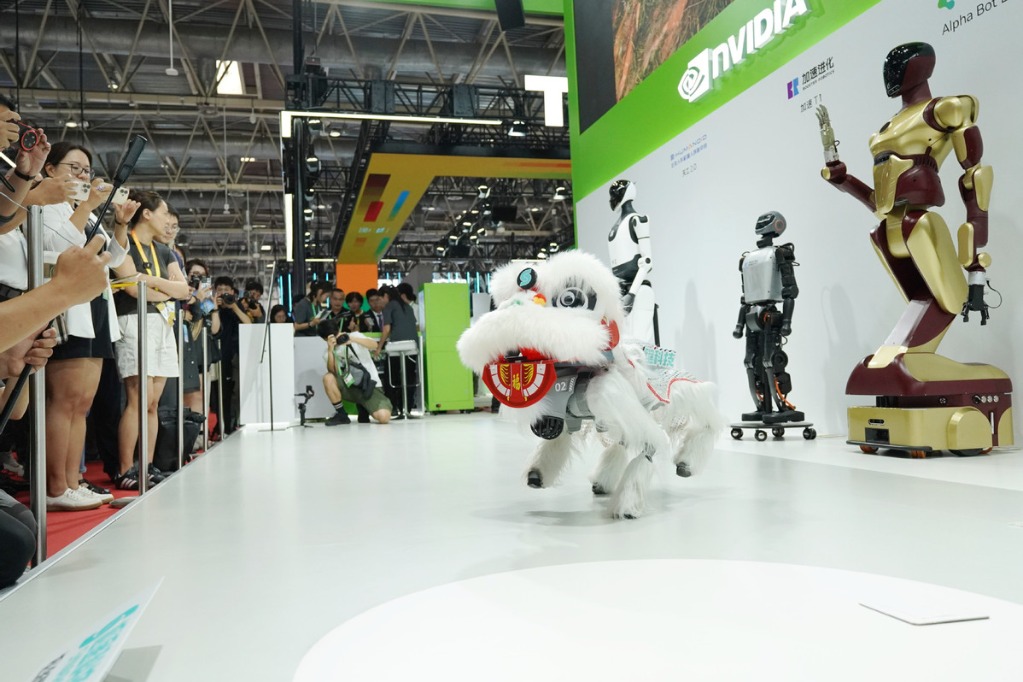
Chinese startups have gained global attention by showcasing robots performing impressive stunts like dancing, backflips and tai chi, and more robotics companies are now focusing on making these machines even smarter so that they can handle more practical tasks in factories.
AgiBot sends its robots to a "technical school". In a 4,000-square-meter space in Shanghai, locations like restaurants, bubble tea shops and homes have been recreated, with over 100 data collectors teaching robots daily chores.
The Beijing humanoid robot innovation center recently open-sourced its Tien Kung-Lab motion control framework, providing critical technological support for potential applications in industrial logistics, hazardous environments and other high-complexity scenarios. In April, Tien Kung made history by winning the world's first half-marathon for humanoid robots.
"In the future, robots will collaborate with automated production lines, AGVs (automated guided vehicles) and on-site engineers, enabling factories to move toward truly unmanned operations," Deng said.
"We're at a transformative stage for industrial humanoid robots. In the next year or two, AgiBot will scale its general-purpose embodied robots across more industrial applications," said Wang Chuang, an executive at AgiBot.
Xinhua