Hainan's independent customs operations deepen opening-up







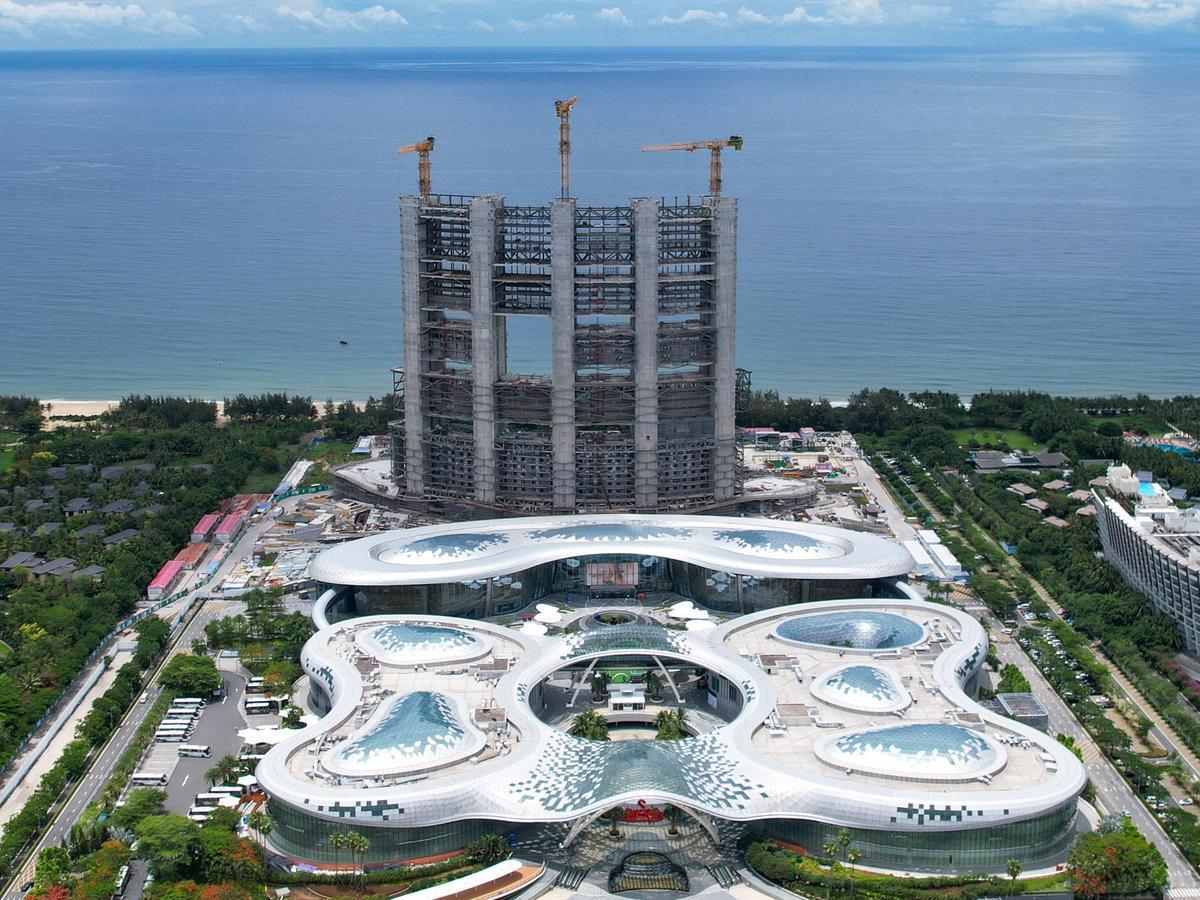
As China steadily deepens reform and high-standard opening-up, the spotlight is once again on the island province, Hainan. On Wednesday, authorities announced at a news conference in Beijing that the Hainan Free Trade Port will launch its independent customs operations on Dec 18. The date is symbolic, given that it marks the anniversary of the third plenary session of the 11th Communist Party of China Central Committee in 1978, which ushered in reform and opening-up.
As one of the major special economic zones in China, Hainan possesses unique advantages to serve as the nation's testing ground for the operations. The island-wide independent customs operations and its implementation of high-standard opening-up measures hold profound significance, not only for the high-quality development of the free trade port itself but also for pioneering new pathways for the country's reform and opening-up.
Moreover, this move demonstrates to the world China's unwavering commitment to exploring new frontiers in the process of expanding its high-standard opening-up.
The institutional design was not intended as a replication of free trade zones in other parts of the country. It reflects a balance between innovation and risk management.
Under the plan, a "first line" will be established between the Hainan FTP and other economies outside China's customs territory, implementing a series of policies to facilitate the entry and exit of zero-tariff goods. A "second line" is to be set up between the FTP and the Chinese mainland, applying targeted management to safeguard the vast domestic market. Within the FTP itself, zero-tariff goods and their processed products face no storage time limits and can be freely stored anywhere, allowing businesses to thrive under a low-intervention, high-efficiency regulatory environment. This integrated institutional framework aims to balance openness with security, positioning the FTP's island-wide independent customs operations as a landmark move in China's high-standard opening-up.
From a global perspective, the timing is significant. As rising protectionism and geopolitical tensions rattle global supply chains, China is proactively creating new mechanisms to strengthen its connections with the world. Experts told China Global Television Network that the FTP serves as China's gateway to deeper global engagement. By attracting international resources, it facilitates the market-driven allocation of key production factors to enhance economic efficiency. Hainan is expected to become an example and some of its practices can be replicated on the mainland in the future.
That said, the independent customs operations represent a new beginning. As the process unfolds, practical challenges will inevitably arise, from infrastructure bottlenecks to capacity gaps in regulatory oversight. However, with continuous institutional innovation, these hurdles can be overcome.
The introduction of the independent customs operations for the FTP is far more than simply "opening the gates", it represents a systemic transformation encompassing regulation, industry and the market.
In April 2018, China unveiled a plan to transform Hainan into a pilot free trade zone, marking the first step toward establishing an FTP with Chinese characteristics. In June 2020, a master plan was released to build the island into a high-level FTP with global influence by the middle of the century.
The institutional design demonstrates respect for conventional international practices while maintaining Chinese characteristics. The latest move will not only shape Hainan's developmental trajectory, it will also test governance capabilities while exploring high-standard openness.