Building smarter cities for an AI century







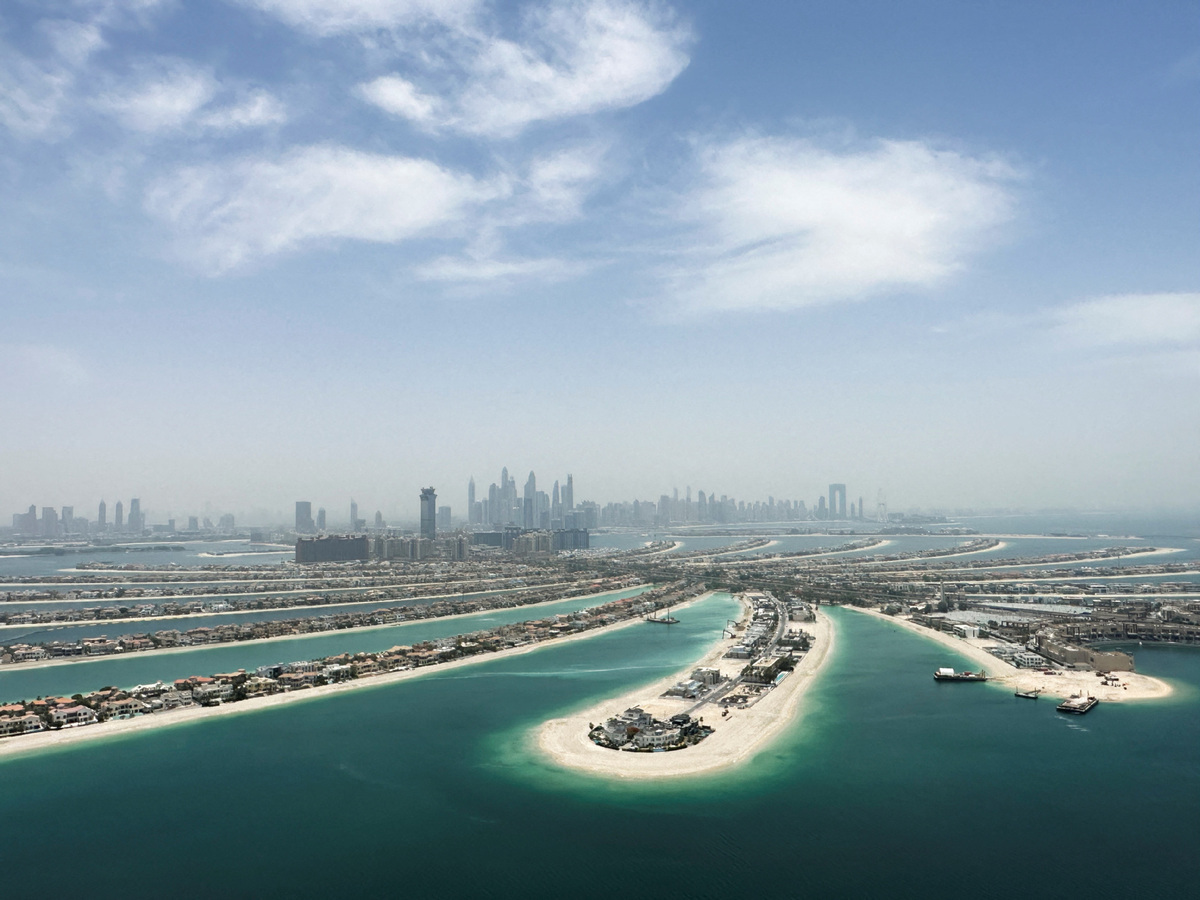
The future is no longer a destination; it is in daily operation. In Dubai, we have spent the last decade moving from strategy to execution, embedding digital transformation into the city's DNA. From AI-enhanced healthcare to real-time mobility systems, we are not preparing for the next era of cities; we are already living it.
At the heart of this transformation is Digital Dubai, with which I am intricately involved. Digital Dubai was launched to leverage technology to build a globally competitive digital city, bolster the emirate's digital economy, and nurture national talents for the future. In recent years, Dubai has emerged as a practical case study on how digital vision can become tangible value, both for governments and the communities they serve.
What makes Dubai's approach unique is the operational agility behind its ambition. Initiatives don't remain on paper for long; they are swiftly turned into action across public services, infrastructure, and business processes. Through public-private collaborations, we are building privacy-first AI applications and equipping civil servants with tools to make data-driven decisions.
Dubai's AI deployment is guided by the UAE National Strategy for Artificial Intelligence 2031 and the recently unveiled Dubai Universal Blueprint for Artificial Intelligence. Already, 22 chief AI officers have been appointed in government departments, and more than 100 live AI use cases span sectors such as healthcare, transport, urban planning and energy management. The Dubai State of AI Report 2025 showcases this spectrum, from early disease detection in hospitals to digital twins that simulate citywide planning outcomes.
In energy and sustainability, AI helps optimize smart grid performance in real time. In finance, algorithmic models streamline auditing. In transport, the Dubai Loop, designed in partnership with Elon Musk's "The Boring Company", will eventually move 20,000 passengers an hour underground at high speed. And the roads and transport authority has successfully tested eVTOL air taxis, with their commercial launch targeted for 2026.
This momentum aligns with the broader goals of the Dubai Economic Agenda, which aims to unlock 100 billion UAE dirhams ($27.22 billion) in annual digital value. The UAE cloud computing market, expected to reach $38.5 billion by 2029, provides the infrastructure backbone for supporting it. And this year, Dubai has ranked 4th globally in the IMD Smart City Index.
Chinese cities, too, are advancing along a parallel trajectory. In Hangzhou, Suzhou, Shenzhen and Chengdu, we see examples of how digital governance and artificial intelligence are reshaping the public sphere. Hangzhou's City Brain 3.0 platform, for instance, is an apt example of urban intelligence in action. As detailed in the city's 2025 Vision, the platform integrates real-time data across transportation, public safety, healthcare and administrative services, enabling comprehensive urban governance.
It has reduced traffic congestion by up to 15 percent in key zones, while improving emergency response times by as much as 50 percent. Through the platform, more than 1,000 application scenarios have been developed, showcasing how digital infrastructure can enhance both efficiency and citizens' well-being in a complex urban environment. And in Shenzhen, digital ID systems and AI-powered citizen services are setting new benchmarks for efficiency and reach.
According to the Stanford AI Index 2024, China continues to lead the world in AI publication output and ranks among the top nations for AI talent and adoption. Its smart city pilots, supported by the Ministry of Housing and Urban-Rural Development, are pushing forward digital infrastructure and governance models that are both people-centric and tech-driven.
This alignment between Chinese cities and Dubai isn't coincidental; it reflects a deeper global trend. Cities that integrate AI, data and digital infrastructure into the daily delivery of services are better positioned to respond to immediate challenges and realize long-term ambitions. In both cases, governments are moving beyond passive digitalization toward proactive digital leadership.
Dubai's journey offers an insight that resonates globally: digital maturity alone isn't enough. What sets high-performing cities apart is their ability to act fast, align stakeholders and scale initiatives in a coordinated, secure way. Our success in integrating AI and data across sectors is not just about investment; it's also about cultivating an innovation culture supported by regulation, education and public trust.
It's also about collaboration. Dubai's ecosystem connects local authorities with international partners, technology firms, start-ups and academia. We benefit from global best practices even as we contribute to them. This spirit of mutual learning is something we see mirrored in China's innovation hubs, where pilot programs often serve as test-beds for national-scale initiatives.
As the world's urban population grows, the stakes of city-level digital transformation have never been higher. Whether it's about improving energy use, protecting public health, or designing inclusive mobility, cities must lead, not follow, the global digital shift.
Dubai and Chinese cities may differ in geography, scale and political systems, but they recognize that innovation must be operational, not aspirational. Our shared goal is to build cities that are safer, smarter and more sustainable, cities where data serve people, and not the other way around.
In this journey, dialogue matters. The opportunity to learn from each other across cultures, regions, and governance models will define the next era of progress. After all, the digital century isn't coming. It's already here, and in Dubai, it's already working.

The views don't necessarily reflect those of China Daily.
If you have a specific expertise, or would like to share your thought about our stories, then send us your writings at opinion@chinadaily.com.cn, and comment@chinadaily.com.cn.