Anchor of stability
By joining hands, China and the EU can better achieve their own security and development, and work to tackle global challenges








On July 24, the 25th China-European Union Summit was held in Beijing. This summit coincided with the 50th anniversary of the establishment of diplomatic relations between China and the EU and the 80th anniversary of the founding of the United Nations. Concurrently, it came amid the ongoing geopolitical conflicts in Ukraine and the Middle East, and at a time when international economic and trade uncertainties are intensifying, and global governance is facing severe challenges. The meeting was based on the principles of mutual respect and win-win cooperation, providing an excellent platform for candid exchanges to clarify misunderstandings, strengthen strategic communication and deepen consensus on cooperation. It demonstrated the determination of both sides to jointly address global challenges.
Facing the profound transformation of the international system, China and the EU must strengthen bilateral cooperation. Internally, the EU faces the risks of economic stagflation, the growing pains of the green transition and challenges to its industrial competitiveness. Meanwhile, China needs to properly manage the pressures arising from its demographic changes and fluctuations in external markets during its pursuit of high-quality development. It can be said that the development agenda of both sides urgently require a stable and open external environment coupled with extensive and deep international cooperation. Externally, both sides face the common challenges of geopolitical conflicts, the strategic adjustments of the United States and the dilemmas of global governance. Neither China nor the EU can tackle these systematic challenges alone; only through mutual respect and win-win cooperation can they effectively manage the risks and find solutions.
The intertwining of history and reality clearly shows that there is no fundamental conflict of strategic interests between China and Europe. The two sides hold highly convergent positions in areas crucial to humanity's shared future, including upholding the purposes and principles of the UN Charter, safeguarding the multilateral trading system and addressing climate change. This lays a solid foundation for transcending temporary differences and managing frictions. As Chinese President Xi Jinping noted when receiving President of the European Council António Costa and President of the European Commission Ursula von der Leyen, over the past 50 years, China and the EU have achieved fruitful outcomes in exchanges and cooperation, delivering mutual success and worldwide benefits. An important understanding and insight is that the two sides should respect each other, seek commonality while reserving differences, uphold openness and cooperation, and pursue mutual benefit. These are also important principles and the right direction for China-EU relations in the future.
As two major forces and major markets globally, China and the EU should further enhance their coordination and continuously improve the stability, constructiveness, reciprocity and global relevance of their relationship. Significant potential for cooperation exists in the following areas:
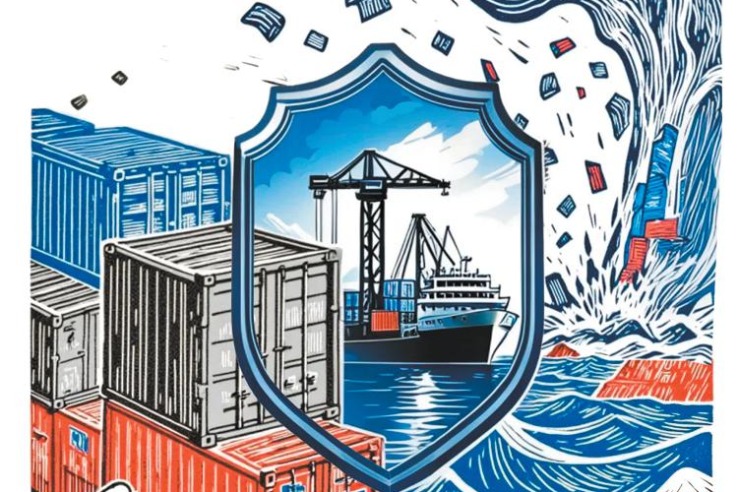
First, strengthening their economic and trade cooperation. While the EU emphasizes "de-risking", it will not follow the US approach of "decoupling" from China, due to the profound economic ties. The EU remains a major trading partner and a crucial destination for China. Especially against the backdrop of Europe accelerating its pursuit of strategic autonomy, significant space for cooperation exists in areas such as energy equipment, engineering machinery and critical materials.
Second, jointly addressing nontraditional security challenges, particularly in climate change and green energy transition. China and the EU should promote the global deployment of renewable energy and accelerate joint R&D and standards alignment in renewable energy, low-carbon technologies and the circular economy. European Commission President von der Leyen emphasized that China-EU cooperation will set standards for global climate governance. Furthermore, both sides should coordinate their positions on key issues such as public health, artificial intelligence and digital governance, jointly providing effective solutions to promote world peace, stability and prosperity.
Third, upholding the international multilateral system centered on the UN, including the World Trade Organization and the World Health Organization. Facing the erosion of the liberal international order and adjustments in US global strategy, countries worldwide should uphold the international system with the UN at its core, the international order based on international law, and the fundamental norms of international relations based on the purposes and principles of the UN Charter. As two major global forces, China and the EU must support and practice multilateralism and free trade, and resist unilateralism, protectionism and power politics. Only then can they better achieve their own security and development and jointly tackle global challenges.
The China-EU relationship is not only about converging interests but also carries the profound mission of civilizational exchange and mutual learning. The EU is a key bearer of Western civilization, while China, an ancient civilization of the East, boasts profound philosophies such as "harmony and coexistence" and "harmony under heaven". Looking back over the 50 years since the establishment of diplomatic relations, exchanges in trade, economy and culture have grown increasingly close, bringing benefits to the peoples of both sides. Looking ahead, against the backdrop of the profound transformation of the 21st-century international system and the challenges posed by unilateralism and protectionism to the existing order, China and the EU, as major representatives of Eastern and Western civilizations, can achieve global significance if their interactions transcend mere interest calculation and rise to the level of civilizational dialogue and value communication. On major issues such as economic and trade exchanges, climate change, technological transformation and peaceful development, integrating the wisdom of different civilizations holds the potential to explore a path for the international community toward a new world order that transcends zero-sum games — one that is more just, reasonable, inclusive and sustainable.


Wang Dong is professor at the School of International Studies and executive director of the Institute for Global Cooperation and Understanding at Peking University. Li Zongfang is a post-doctoral fellow at the School of International Studies at Peking University. The authors contributed this article to China Watch, a think tank powered by China Daily.
Contact the editor at editor@chinawatch.cn.