Chinese EV industry thrives on its endogenous advantages







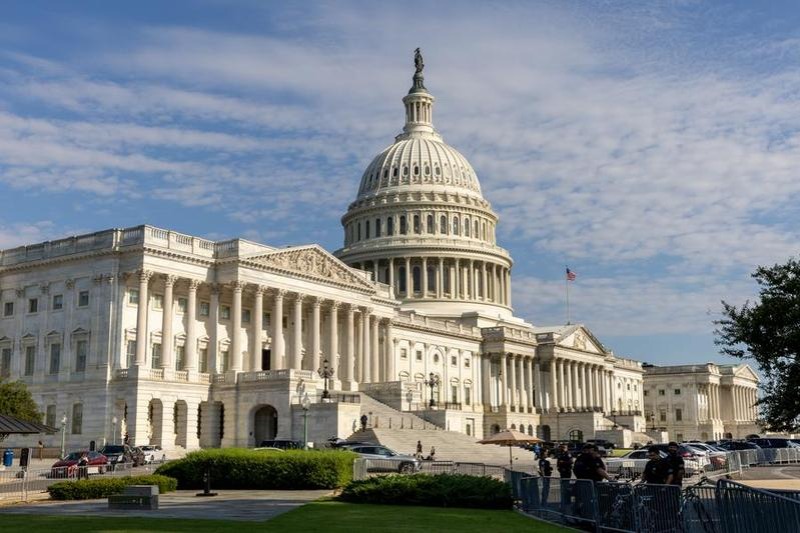
In a recent comment on the United States' Big Beautiful Bill Act's possible impacts on the country's clean energy sector, The Economist warned that the Act might help China achieve an unshakable dominance in the electric vehicle market and many other renewable energy technologies.
The media outlet observed there's no evidence that the US administration wants a more sustainable and efficient clean energy industry; rather, it prefers tighter restrictions on it.
Such logic might appeal to those who see the EV industry through a geopolitical prism. But the Chinese EV industry's competitiveness is not because of another country's discouragement of its own EV sector. Not to mention the 100 percent tariff the US has imposed on Chinese-made EVs, which has in effect kept the latter out of the US market.
It is the intense competition in China's supersized market that prompts its EV manufacturers to pursue rapid development, as only the enterprises undertaking constant tech innovation and having a well-established supply chain can survive in this market.
Early industrial layout, large industrial cluster effects, high management efficiency, increased research and development investment, and consumer preference for smart features are the critical reasons for the rapid development of China's EV industry.
China has been the world's top producer and seller of EVs for 10 years in a row as of last year. Its huge consumer market provides a testing environment for research and development and the upgrading of EV technology. Due to the higher level of EV acceptance among Chinese consumers, many automotive companies are prioritizing the launch of new products and technologies in the Chinese market.
China's EV industry has a full industry chain covering material research and development, engineering design, manufacturing and final assembly, forming a number of auto industry clusters that conform to the country's "dual circulation" development strategy, which takes the domestic market as the mainstay while allowing domestic and international markets to reinforce each other.
Globally, Chinese EV enterprises have shown advantages in mass production and upgrade speed, with faster and more efficient innovation cycles. Thanks to intelligent technology such as autonomous driving and intelligent cockpits, China's EV products have been recognized by the market.
Chinese-made EVs not only provide diversified choices for global consumers, but also help more countries achieve green and low-carbon transformation and sustainable development.
Rob de Jong, head of the Sustainable Mobility Unit at the United Nations Environment Programme, said that China is a leader in electrification and the promotion of EVs. He hopes that China will share its experience and technology with the world, especially the Global South, to improve the affordability of EVs around the world.
Only those refusing to recognize these facts tend to smear the Chinese EV industry with "overcapacity" or "State subsidy" charges, turning a blind eye to its huge contribution to the global emissions reduction endeavor.
Ironically, it's the US and some other developed countries that are now implementing robust subsidy policies in the EV domain. The US government, through the Inflation Reduction Act, is providing approximately $369 billion in tax incentives and subsidies for clean energy industries, including the EV sector.
The so-called "overcapacity" and "State subsidy" claims are merely protectionism in disguise that aims to curb China's technological development and industrial upgrading.
As experts at the Brookings Institution have argued, treating the EV sector as another battleground for "zero-sum competition" will disrupt global supply chains and undermine the global climate agenda.
Against the backdrop of technological advancements in new energy, some in the West need to objectively view capacity and subsidy issues and have more discussions on industrial, technological and sales cooperation with China in the EV sector.