Reciprocity in US-led global trade an illusion







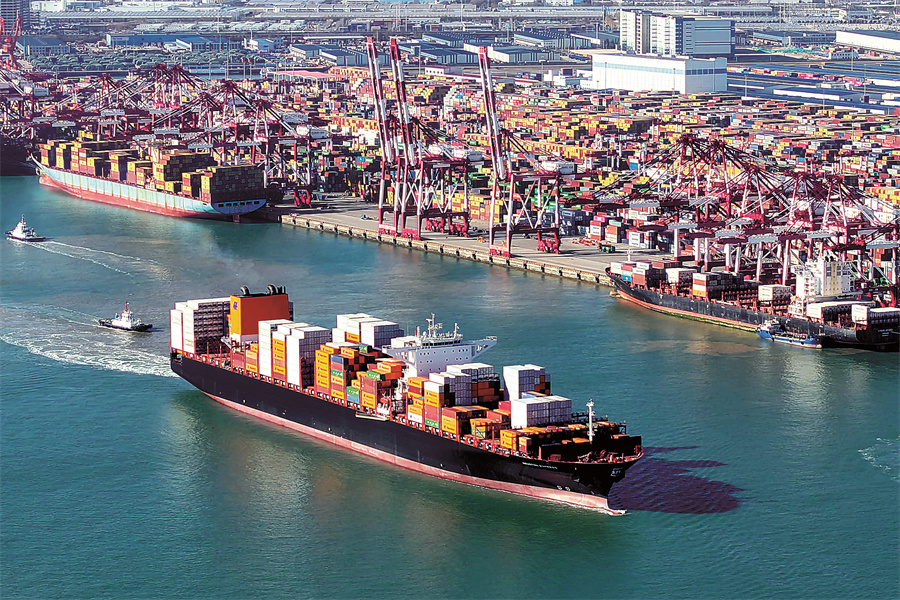
There have been moments in history when the veneer of fairness that underpins international relations has faded, and the crude mechanics of power re-emerged with startling clarity. Such is the case with the contemporary global trade architecture, which, for decades, has been championed by the United States as a virtuous system of open markets, a rules-based order and reciprocal gains.
However, as with all hegemonies, there comes a time when the existing superpower, faced with relative decline, resorts not to the principles it once espoused, but to the instruments it once condemned. The US economic model relies not only on domestic productivity and innovation but also increasingly on extracting value from the rest of the world — a form of 21st century economic imperialism cloaked in the language of national interest.
To understand this, one must grasp a peculiar but critical inversion: the US does not primarily produce wealth to sustain the living standards of the American people; it absorbs it. This is made possible by the central role of the US dollar, the enduring attractiveness of the US market, and, perhaps most crucially, the inability or unwillingness of other countries to challenge the structural asymmetry embedded in the international system. The US benefits from a disproportionate share of global wealth and resources, whereas other countries bear the cost of maintaining this imbalance, leading to a progressive loss of economic sovereignty.
What we have witnessed is essentially a systemic transfer of wealth masquerading as free trade. Developing and middle-income countries have been gradually drained of their productive value to sustain US consumption and geopolitical dominance. In this sense, trade has become a tool of extraction and control instead of a vehicle of mutual prosperity.
The trade war unleashed by the US leader is not an aberration, but the culmination of Washington's decades of economic frustration. It represents a blunt acknowledgement that the so-called "Washington Consensus" has not served the US as its architects had expected. China adheres to market economy principles under State guidance within the multilateral framework. Other countries, lacking the same strategic discipline, have embraced liberalization with fervour but without the necessary safeguards: they have opened their markets without building capacity, and deregulated without planning, hoping reciprocity would help build resilience. It has not.
The result has been a gradual erosion of agency among middle-level powers, whose economies are now exposed to punitive tariffs, extraterritorial sanctions and arbitrary restrictions — not as responses to violations, but as tools of coercion. Their competitiveness, rather than being welcomed as a sign of integration, has become a target for containment. Not sovereign but vassal nations are what the US administration is seeking to impose on the world — docile partners expected to comply, contribute and never contest.
This posture is emblematic of a broader failure to defend countries' economic sovereignty in a world still governed by core-periphery logic. Washington, despite its liberal democratic rhetoric, understands only the language of zero-sum gain — of dominance. The notion that the US might reduce its consumption, rebalance its fiscal architecture or increase its productivity is politically heretical. The easier course for it is to shift the burden outward: pressure partners, punish rivals, and coerce allies — all under the banner of "fairness".
What is required now is strategic clarity. Countries must stop mistaking access to the US market as a concession bestowed from above. They must see it instead as a transaction, subject to leverage, renegotiation and, when necessary, strategic decoupling. This involves investing in industrial capacity, diversifying trade relationships, restoring national development agendas, and asserting that sovereignty is incompatible with dependency.
The future of the global economy must not lie in perpetuating privilege, but in creating symmetry. To that end, the rise of new economic groupings, such as BRICS+, should be viewed, not as threats to stability but as corrections to an unsustainable order. These groupings offer a pathway to more horizontal cooperation — with China, India and other rising powers — where rules are not dictated but negotiated, and where growth is not extracted but shared.
The US has every right to pursue its interests. But others also have the right, and the duty, to pursue theirs. Only when this is understood can a truly multipolar and just international economic system begin to take form.
The author is a visiting professor at China Foreign Affairs University and a senior fellow at the Policy Center for the New South. The views don't necessarily represent those of China Daily.
If you have a specific expertise, or would like to share your thought about our stories, then send us your writings at opinion@chinadaily.com.cn, and comment@chinadaily.com.cn.