Free preschooling part of birth support policy portfolio







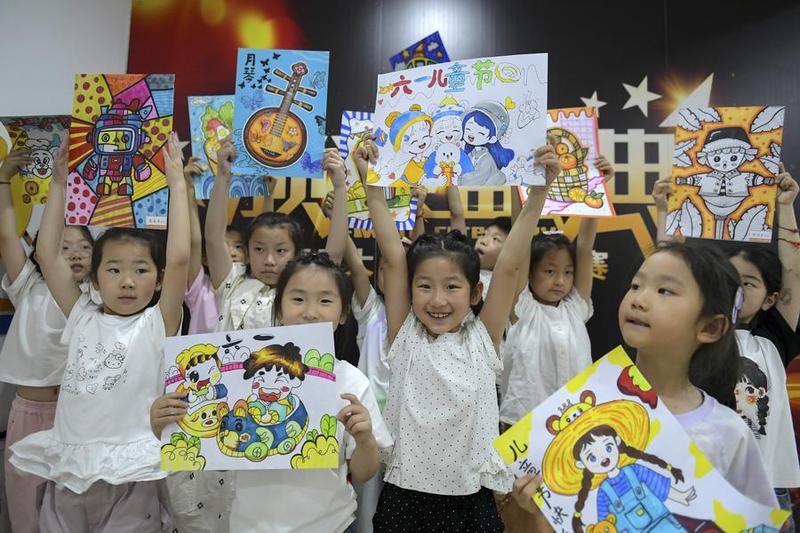
Editor's Note: Starting from the autumn semester, care and education will be free for children in public kindergartens for the year before they enter primary school. Private kindergarten fees will also be reduced in accordance with the amount exempted at local public kindergartens. The move aims to lower education costs and improve the country's public education services. Wang Jian, director of China National Academy of Educational Sciences' Institute of Education Finance, told the China National Radio website how the move will affect the preschool education sector in China. Below are excerpts from the interview. The views don't necessarily represent those of China Daily.
The cost of raising children, especially preschool education expenses, has become a burden for many families, particularly low-income households. To some extent, this has also discouraged families from having children. Providing free preschool education will reduce the financial burden of child-raising for families.
China is currently witnessing a declining birth rate, an aging population and regional population disparities. The school-age population for basic education has also been fluctuating. The preschool-age population peaked in 2023 but has gradually declined in the past two years.
The preschool stage is a critical period for child development. Numerous studies show that high-quality preschool education has a positive impact on children's cognitive, social and behavioral development. Free preschool education would especially benefit children from low-income families and underdeveloped regions by ensuring they have fair access to education. This in turn would promote social equity.
But the implementation of free preschool education requires a lot of financial, material and human resource support from both the government and society. Preschool education generally spans three years, from ages 3 to 6. In 2024, there were more than 35.83 million preschoolers in China.
Given the large number of children enrolled in preschools, implementing this measure at one go will put significant pressure on fiscal resources as well as the quality of education. Therefore, it will be implemented in a phased manner. This is also the approach that most countries adopt when introducing such measures.
There are four key dimensions of the policy: making one year of preschool education free, the total elimination of tuition and care fees, prioritizing disadvantaged groups and special regions, and gradually expanding the scope of beneficiaries.
To this end, prioritizing one year of free preschool education and then gradually expanding it to cover three years based on factors such as the school-age population, fiscal revenue and education investment would be a more practical and feasible approach.
Preschool education should be designated as a shared fiscal responsibility of the central and local governments. Subsidies for free preschool education should be jointly funded based on proportionate contributions, and a sound funding guarantee mechanism should be established to ensure sustainable financial support for its implementation.
It needs to be pointed out that "compulsory education" and "free education" are two distinct concepts. Compulsory education is mandatory, universal and free and aims to safeguard the children's right to education. It includes both the government's obligation to provide school placements and parents' obligation to ensure their children attend school.
In contrast, free education is a social welfare measure designed to eliminate financial barriers to participation in education. Under this, the children, parents or guardians are not charged any enrollment fee.
As China gradually promotes free preschool education, it is important to note that there is no legal requirement mandating preschool-aged children's enrollment in kindergarten. Also, the policy is being "gradually promoted" rather than "fully implemented".
The free preschool education policy should adopt a scientifically designed and rational prioritization strategy that is based on national and regional levels of economic development, fiscal capacity for education and the current state of educational development.