China releases mandate on natural assets at national parks
Unified and confirmed registration clarifies ownership, responsibilities







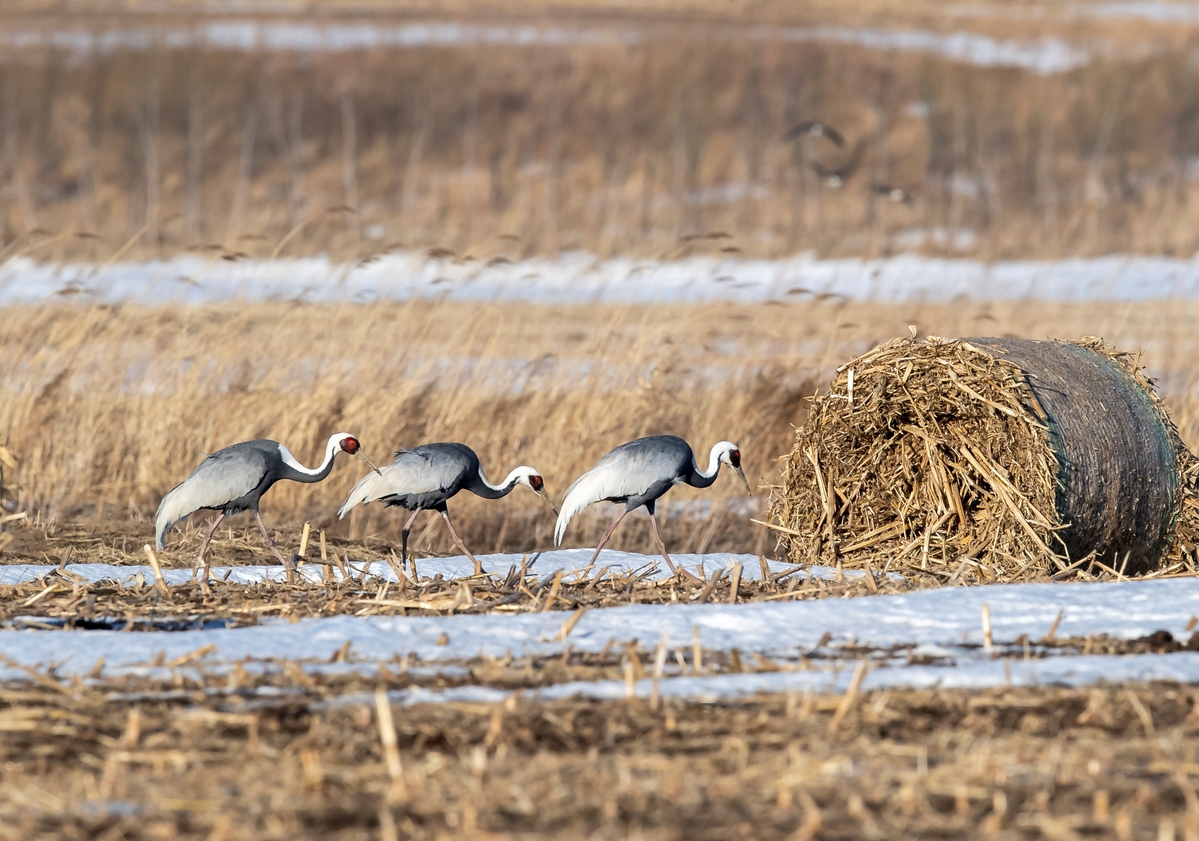
The Ministry of Natural Resources announced the outcome of the unified and confirmed registration of natural resources for the country's first batch of national parks on Monday. This step clarifies issues around ownership, management responsibilities and ecological boundaries to serve the protection and supervision of natural resources.
China declared the establishment of its first batch of national parks — the National Park of Hainan Tropical Rainforest, Wuyishan National Park, Giant Panda National Park, Northeast China Tiger and Leopard National Park, and Three-River-Source National Park — in 2021, with the aim of protecting the integrity of their ecosystems while making use of their valuable natural resources scientifically and rationally.
"The Civil Code mandates that the State Council (China's Cabinet) represents the State in exercising ownership of all publicly owned natural resource assets. However, for a long time, it was unclear which entities are responsible for managing the resources, how such management is carried out and what their rights entail," said Hu Shanshun, director of the ministry's natural resource rights confirmation and registration bureau.
This ambiguity has now been resolved through the unified and confirmed registration of natural resource rights. By upholding public ownership, strengthening property rights protection, and clearly outlining the roles of owners and regulators, such registration provides a robust legal foundation for national park management, Hu added.
"This approach not only solidifies the property rights foundation for ecological civilization construction, but also ensures the practical implementation of the concept that 'lucid waters and lush mountains are invaluable assets', also known as the 'Two Mountains theory'," he said.
The National Park of Hainan Tropical Rainforest took the lead in completing its natural resource rights confirmation and registration process in late 2022. Covering 4,268.54 square kilometers, with nearly 90 percent State-owned, the national park is abundant in forest resources, which account for more than 97 percent of its natural area.
Authorized by the State Council, the ministry has delegated the exercise of ownership responsibilities for all publicly owned natural resource assets within the national park to the Hainan provincial government.
On July 4, Three-River-Source National Park completed its confirmation and registration work, marking the completion of registration for all national parks. Covering 190,700 sq km, the national park is rich in grassland resources, with the exercise of ownership responsibilities delegated to the Qinghai provincial government.
"The confirmation and registration of natural resource rights has established a robust property rights framework essential for unlocking the ecological product value within national parks. It also provides a basis for the allocation of rights and responsibilities regarding the disposal, allocation, paid use and revenue management of natural resource assets owned by the public in the national parks," Hu said.
Hu added that the confirmation process resolved disputes over natural resource property rights by outlining ownership boundaries — be they governments at different levels, collective owners and the public.
He cited the Giant Panda National Park spanning Sichuan, Shaanxi and Gansu provinces as an example. The registration work has delineated the boundaries for State-owned and collectively-owned resources, assigning the national park's management bureau the responsibility for the ecological restoration of public natural resources. Meanwhile, the collectively-owned natural resources are utilized through a model involving village collectives and cooperatives for a forest-based economy, enabling the maintenance of the ecological redline for forests while allowing villagers to benefit from the protection.
From the pilot exploration of five national parks to full-scale implementation, the unified and confirmed registration of natural resources covered 1,057 key areas nationwide, totaling 320,000 sq km as of the end of July, he said.
"We will continue to enhance the legalization, standardization, normalization and informatization of the unified and confirmed registration of natural resource rights," Hu said.
"During the 15th Five-Year Plan (2026-30), we will systematically advance the registration of natural resource rights, including newly established national parks, internationally and nationally important wetlands, major rivers, mineral resources with proven reserves and uninhabited islands, striving to achieve a registered area of 1 million sq km," he added.





- Senior Xi'an official facing probe by China's anti-corruption watchdogs
- Philippines risks creating trouble for itself: China's defense ministry
- Newborn with congenital heart disease receives life-saving surgery in Yunnan
- Hong Kong charity signs diplomatic talent deal with Beijing university
- Aircraft carrier Fujian, commissioned
- Erdos offers 10,000 yuan subsidy for families having third child