Major beverage players enjoying high tea time







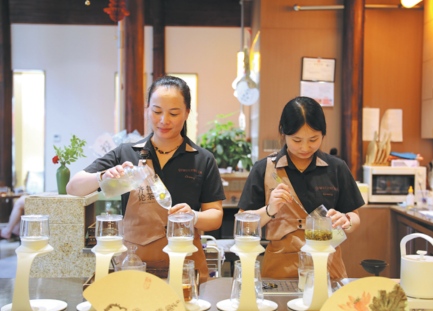
With consumers' pursuit of wellness, variety and refinement, China's tea beverage brands are exhibiting inspiring trends.
According to Coffee and Tea Observation, a market information platform on WeChat, in July, the top 10 tea beverage brands launched 43 products in total, including six relaunched products and 37 brand new items.
In terms of brands, Guming Holdings Ltd owns the most number of new products, with eight new products and one relaunched product hitting the market. ChaPanda ranked second, with four new items and four repeats.
In terms of timing, brands tend to roll out new products at the beginning and end of a month.
At the beginning of the month, brands typically launch monthly marketing strategies. By introducing new products, they attract both existing and new consumers and lay the foundation for the whole month. At the end of the month, brands adjust their marketing strategies according to market responses, and may launch more new products, experts said.
According to Coffee and Tea Observation, in July, the top three sellers among new tea beverage brands were fruit tea, light milk tea and vegetable tea, taking up a combined 73.7 percent of all drinks sold. As temperatures soar in the summer, consumers prefer lighter and healthier drinks.
From the survey, fruit teas are the top sellers, quenching thirst on scorching days. The popularity of fruit teas, light milk teas and vegetable teas suggests that consumers are increasingly aware of the health benefits of such beverages.
Specifically, Shuyi Grass Jelly and Tea sold 200,000 cups of its newly launched green grape and kale drink in a span of just three days, using over 10,000 kilograms of kale.
In terms of flavor popularity among new tea beverage brands, according to Coffee and Tea Observation, flower teas were the most common, followed by green teas, matcha and black tea.
Flower tea has become the most commonly used tea base with an absolute advantage of 20 new products launched, among which jasmine tea performs particularly well. A total of 15 new products use it as a tea base, accounting for up to 75 percent, while gardenia and camellia are less commonly used. Next is green tea, which has been applied to 17 new products. Matcha follows closely behind, with a usage of eight types of new products, with oolong tea and black tea trailing, having only two and one products represented, respectively.
Also, among new products launched, new tea beverage brands use large volumes of fruit — 30 types in total. There are significant differences in the frequency of application of different fruits. Lemon is the most frequently used fruit, with 11 new products using fragrant lemon flavoring. Green grape and apple are the second and third most often used fruits, followed by strawberry, blueberry, raspberry, orange, honey orange and cherry.
Zhan Junhao, founder of Fujian Huace Brand Positioning Consulting, said: "This summer, the new tea beverage industry has shown a trend toward better healthiness, variety and refinement. The launch of fruit tea, light milk tea and vegetable tea is the mainstream, taking up over 70 percent. This reflects consumers' dual pursuit of refreshing taste and healthy attributes.
"In the future, business opportunities for new tea beverages lie in deepening healthy innovations, such as developing functional ingredients, expanding categories such as dessert-based tea drinks, accelerating globalization through supply chain localization and product customization, deeply cultivating potential markets such as Southeast Asia and North America, and promoting sustainable and healthy industry development."
Gao Chengyuan, president and CEO of TY Marketing, said, "In the future, there will be less sugar used in new tea beverages, conforming to Gen Z's pursuit of health and wellness."
In terms of digitization, AI customization and full chain management will enhance efficiency and personalized experience. In addition, cultural empowerment and "China-chic" intellectual property can strengthen emotional connections. The sinking market — a Chinese concept referring to smaller-sized urban markets — and county-level shopping venues are also incremental spaces, and policy support can accelerate channel penetration, Gao said.





Today's Top News
- Poll findings indicate Taiwan people's 'strong dissatisfaction' with DPP authorities
- Xi emphasizes strong start for 15th Five-Year Plan period
- PLA drills a stern warning to 'Taiwan independence' separatist forces, external interference: spokesperson
- Xi, Putin exchange New Year greetings
- ROK leader's visit to help boost bilateral ties
- China's new plan, world's new opportunities