Cure that may be worse than the disease: China Daily editorial







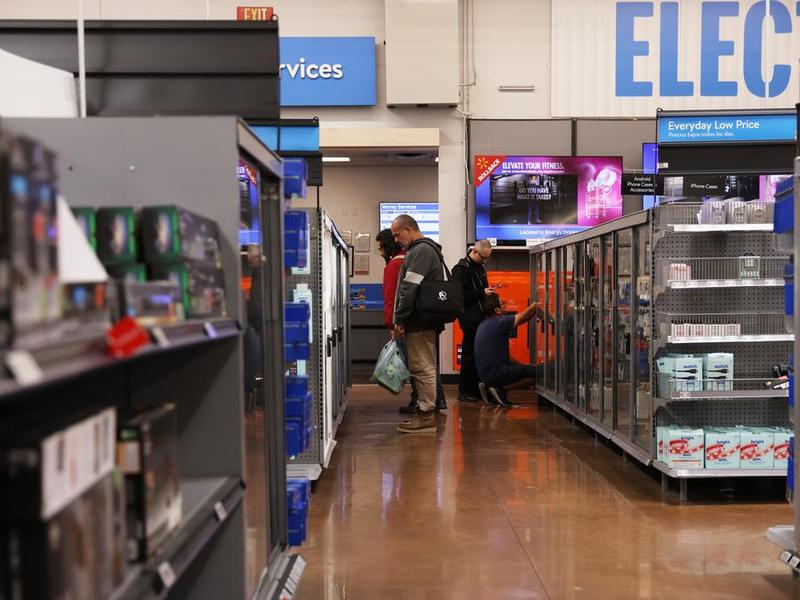
Beginning on Friday, the "de minimis" exemption, which allowed shipments of goods worth $800 or less to enter the United States duty free, will be eliminated, according to an executive order of the US president.
The "de minimis" rule, which had already been eliminated for China in May, is now being suspended for all the other countries, from which about half of the 1.4 billion taxable small packages entering the US annually are mailed.
The claimed purposes are to protect US manufacturing by pinching off what the US administration says is a popular trade "loophole" that allows US shoppers to buy low-cost goods directly from retailers from overseas and to help increase the country's tariff revenue.
However, the shock waves that have already been triggered by the move clearly indicate that it is the US consumers, particularly lower-income families, that are likely to bear the main brunt of the measures. A study published by the National Bureau of Economic Research, a nonpartisan think tank based in Massachusetts, concluded Americans will wind up paying $10.9 billion to $13 billion more for purchases each year after the small parcel tariffs are levied.
"We find that lower-income consumers take advantage of 'de minimis' shipments disproportionally more than richer consumers," Amit Khandelwal, a professor of global affairs and economics at Yale University, told US media.
Since the targeted packages mainly contain cheap consumer goods, from end tables and lamps to shoes and underwear, that are no longer made in the US in large quantities, even if US consumers don't buy them from overseas through e-commerce channels because of the additional tariffs, they have few made-in-the-US alternatives.
Senior US officials have also admitted the US administration's plan to bring back manufacturing jobs to the US does not cover those related to the lower-end consumer goods production, as the high labor price in the country will raise the retail prices of such goods to a level unacceptable to the average US consumer.
So the small parcel tariffs are irrelevant to creating jobs in the US. Rather the policy is likely to hurt small US businesses relying on small parcels for their operation and production. These are major job creators. The additional tariffs will necessarily push up their operating costs and eat into their profit margins, prompting them to reduce their payroll and pass on the extra burden to consumers through price hikes.
That might lead to price increases for goods other than daily necessities, putting additional inflation pressure on the US economy.
The other unanswered question is how the US customs and taxation departments will process, inspect and levy tariffs on the vast number of low-value taxable packages that are shipped to the US each day, about 4 million on average.
Data show that there are only a few thousand specialists capable of classifying and assessing imported goods at the 70 major ports of entry in the US. In other words, even if they worked more than 12 hours a day, they would still not be able to process all the packages.
Not to mention the fact that the tariff rate not only depends on the value of the goods in the package, but also varies from country to country. According to the latest executive order, businesses may face an $80 per item charge for a country with a tariff rate less than 16 percent, up to $160 per item for a country with a tariff rate of between 16 percent and 25 percent, and $200 per item for a country with a tariff rate above 25 percent.
It is foreseeable what kind of chaos the US Customs will be in on Friday, as some observers have warned.
The US administration attempted to close this same trade "loophole" as early as February, but had to backtrack because US Customs and Border Protection officials weren't prepared to handle the massive new workload.
Although White House officials claimed they're now "ready" to do so, the feedback from international logistics companies indicates otherwise.
Many major logistics companies have suspended their small parcel services to the US starting on Monday or over the past weekend as they are still in the dark about how the extra duties will be levied in practice.
"Key questions remain unresolved," writes DHL Group in a statement, particularly regarding how and by whom customs duties will be collected in the future, what additional data will be required, and how the data transmission to the US Customs and Border Protection will be carried out.
In France, La Poste says no time has been given for European postal operators to organize themselves, noting that the specifications and technical details are still "incomplete" on the US side.
As a result, France, Germany, Italy, Spain and other EU member states, as well as the United Kingdom and some Asian countries, have temporarily suspended small parcel postal services as of next week while they wait for the US to clarify the rules.
Like many other remedial measures the administration has adopted to address US maladies, the systemic impact that will be caused by the small package tariffs may show again that the cure can be worse than the disease.