Autonomous regions making good progress on multiple fronts







When the Xizang autonomous region recently marked the 60th anniversary of its founding, President Xi Jinping led a central delegation to the region's capital Lhasa to attend the ceremony. His presence in Lhasa to mark the occasion — the first of its kind — signifies the importance he and the central government attach to the development of Xizang, as well as the other four autonomous regions.
The leaders of the other autonomous regions must have been busy taking notes when Xi highlighted Xizang's four major tasks: ensuring stability, facilitating development, protecting the ecology and the environment, and strengthening the borders.
Empowering regions with large populations of ethnic groups with autonomy has been an important part of China's governance philosophy. The autonomous regions enjoy some special legislative powers and fiscal autonomy, which ensure that ethnic people's cultures, languages and religious practices are better protected and promoted.
China's first autonomous region — the Inner Mongolia autonomous region — was established in May 1947, more than two years before the founding of the People's Republic of China. The success of the policy in the Inner Mongolia autonomous region paved the way for the establishment of the other autonomous regions with Xizang being the youngest. The other three autonomous regions are Ningxia Hui, Xinjiang Uygur and Guangxi Zhuang.
Among all the autonomous regions, Ningxia is the only one which does not share a border with another country. The fact that four of the five autonomous regions share their borders with other countries makes them strategically important to China's security.

The five autonomous regions' combined land area is 4.35 million square kilometers, or more than 40 percent of the country's total. However, they face some unique economic development challenges. Given their mountainous topography, their environment and ecology are fragile, not conducive to developing agriculture and animal husbandry. As a result, the combined population of the five regions is relatively small — a little more than 110 million with about half of that contributed by the Guangxi Zhuang autonomous region alone. As for their combined GDP, it is equivalent to that of Zhejiang, a well-off eastern coastal province.
Realizing that the rejuvenation of the Chinese nation will not be successful without the development of the less-developed autonomous regions, the central authorities have been implementing favorable policies for the autonomous regions from family planning to college education.
The autonomous regions have been getting a large share of the central government's transfer payments for decades. The central authorities have been distributing billions of yuan among different local authorities for decades, in order to help them better protect the environment, promote higher education and deal with local fiscal difficulties. Last year's data show that Xizang topped the list for per capita transfer payment from the central government to local authorities, with Ningxia being fourth, Xinjiang fifth, Inner Mongolia seventh and Guangxi 13th.
During my four-decade journalistic career, I have visited all the autonomous regions, studied local people's living and working conditions and talked with hundreds of people from different ethnic groups. So I am shocked by the claim of some foreign media and politicians that China is carrying out "ethnic cleansing", running "forced labor camps" or restricting ethnic groups' religious activities. Their scandalous lies have convinced me that "objectivity" is no longer taught in journalism schools or stressed upon in media organizations in the West.
With the help of the entire country, the autonomous regions seem to have got onto the fast track to development. Data show that between 2020 and 2024, the combined GDP of the five autonomous regions increased by 5.6 percent, higher than the national average.
I can't wait to revisit the regions to see the progress they have made in terms of green development, prosperity and harmony.
The author is former deputy editor-in-chief of China Daily.




Today's Top News
- China to apply lower import tariff rates to unleash market potential
- China proves to be active and reliable mediator
- Three-party talks help to restore peace
- Huangyan coral reefs healthy, says report
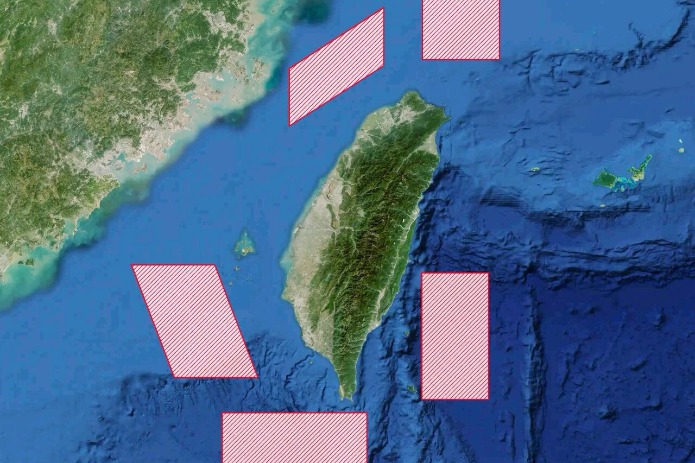
- PLA conducts major drill near Taiwan
- Washington should realize its interference in Taiwan question is a recipe it won't want to eat: China Daily editorial