'Freedom of speech' no excuse for opportunist's smearing profiteering







China's decision to impose sanctions on the China-born Japanese lawmaker Seki Hei, also known by his Chinese name Shi Ping, has drawn predictable protests from the Japanese government. Chief Cabinet Secretary Yoshimasa Hayashi called the move "an unacceptable attempt to stifle free expression", while Shi claimed China was "interfering in Japan's internal affairs" and "undermining universal values". But such excuses cannot obscure the truth: Shi has long spread fallacies about China to meet his own narrow ends.
Once a Chinese citizen, Shi turned his back on his motherland after acquiring Japanese citizenship. Instead of respecting his roots, he began vilifying China, making political capital out of it. He has written books smearing China's development, spread lies about Taiwan, Xinjiang, Xizang, Hong Kong and the Diaoyu Islands, and even joined right-wing politicians of Japan during their visits to the notorious Yasukuni Shrine, which glorifies Japan's wartime militarism by honoring war criminals, including 14 convicted Class-A criminals. These are not mere "personal opinions", as his defenders in Tokyo claim, but conscious acts intended to damage China's sovereignty, dignity and unity.
Shi has trampled upon the solemn commitments of the Joint Communique of the Government of Japan and the Government of the People's Republic of China signed in 1972 and the principles enshrined in the four political documents agreed between the two countries. He has also openly challenged the one-China principle, a political foundation of China-Japan diplomatic relations. These are not abstract issues of "free expression", but serious violations of trust, morality and international commitments.
Foreign Ministry spokesperson Lin Jian's words capture the essence of Shi's conduct. Lin said that Shi has "betrayed his roots, sold his conscience, and colluded with anti-China forces".
To many Chinese people, Shi's actions evoke a painful historical memory. During the Chinese People's War of Resistance Against Japanese Aggression (1931-45), some Chinese nationals shamefully placed short-term personal gain above the motherland and aided the invaders. Shi's words and actions rekindle similar resentment. Though the times are different, the essence is the same: a man who has abandoned his roots, and is trying to profit by taking up the cause of those hostile to his motherland.
History has repeatedly proven that such acts bestow not honor, but disgrace on the practitioner.
Japan's Foreign Ministry tries to dress Shi's actions in the cloak of "democracy" and "freedom of expression". But "freedom" cannot be a shield for spreading lies, nor can "democracy" be an excuse for undermining another country's sovereignty. Respecting history, honoring commitments and refraining from interference in another nation's internal affairs are exactly the values that Shi has trampled on. He has shown contempt for not only China but also historical justice and the peace that postwar Asia has struggled to preserve.
China's countermeasures are entirely justified. As Lin emphasized, these measures are not just a punishment for Shi, but also a stern warning to anyone tempted to follow in his path of betrayal to the motherland.
Given the nature of Shi's misdemeanor, the Japanese government should reflect on whether encouraging such provocations truly serves the Japanese people's long-term interests or regional stability.
Shi may claim "legitimacy" as an elected politician in Japan, but history uses a different standard. Those who betray their conscience and collude with forces hostile to their motherland can never escape condemnation. Shi's political opportunism may win him temporary personal gain, but it will consign his name to the same ignominious dustbin of history where collaborators of the past have been thrown. Those who turn their backs on these truths will ultimately find themselves isolated, condemned and remembered not as "champions of democracy", but as traitors to justice.




Today's Top News
- China to apply lower import tariff rates to unleash market potential
- China proves to be active and reliable mediator
- Three-party talks help to restore peace
- Huangyan coral reefs healthy, says report
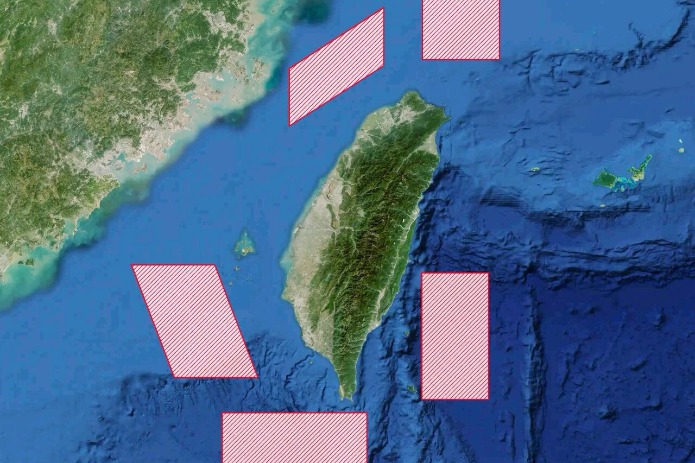
- PLA conducts major drill near Taiwan
- Washington should realize its interference in Taiwan question is a recipe it won't want to eat: China Daily editorial