Get the timing right to reduce 'debt cost' of natural disasters







Across Asia and the Pacific, floods, typhoons, heat waves and droughts now strike at a frequency unimaginable a generation ago. Rising temperatures and seas are fueling fiercer storms, while rapid urban growth is pushing more and more families into harm's way. When disaster strikes, it is the less-developed countries that pay the price, and twice at that — first in the form of destruction of property and crops, and loss of jobs, and then as invisible costs of higher government borrowing.
Rebuilding roads, hospitals and schools requires billions of dollars. Governments often raise the money for the purpose by issuing sovereign bonds. Yet lenders become cautious after a disaster, fearing tax revenue will fall and relief spending increase. To get compensation, they demand a "disaster premium" — a higher interest rate on new debt. For a country already struggling to balance tight budgets, every additional percentage point of money paid to bondholders means reduced amounts of cash for emergency shelters, social protection and small grants which, for instance, help shopkeepers resume business. In effect, a spike in sovereign borrowing costs can delay the investment required for helping communities stand back on their feet.
The Asian Development Bank's research for the Asian Bond Monitor tracked bond issuances worldwide over the past two decades. The pattern was clear: the larger the recent damage relative to national income, the higher the interest rate a government must accept. A damage bill equal to about 1 percent of GDP can increase the borrowing cost by about one-third of a percentage point. For low-income countries, it could be the difference between funding a new elementary school or paying creditors.
Markets have short memories. Disaster premiums peak when emotions run high and uncertainty clouds forecasts. Each passing day brings new information — relief funds arrive, revenue rebounds, rebuilding begins — and investor anxiety ebbs. On average, waiting three months after a major disaster reduces the additional cost by almost two-fifths.
This finding does not mean governments should always delay borrowing. People need water, food, power and healthcare immediately. But it highlights a trade-off: governments could issue bonds at once and pay more, or bridge the gap with cheaper stopgap financial arrangements and enter the market later at a lower cost.
Well-designed disaster insurance reduces the premium further. When investors realize a share of the losses will be covered by a payout — whether from "disaster bond" revenue, a regional risk pool or through a parametric policy — they are less worried about defaults, and settle for lower yield. In our dataset, the difference between extreme weather events against which entities have taken insurance and those against which little or no insurance has been taken often reaches several dozen basis points.
For poor families, those saved basis points matter. While insurance reduces borrowing costs, it comes at a premium, making it essential to balance coverage levels with fiscal realities. Lower interest payments, when achieved cost-effectively, free up funds for relief and rehabilitation operations that speed up recovery and protect hard-won gains in poverty reduction.
Developing countries and their partners can use the following strategies against extreme weather events:
They can use fast, concessional relief to buy time. Multilateral lenders and regional facilities can step in with quick-disbursing, low-interest loans or grants immediately after a disaster. This bridge finance meets urgent needs while allowing debt managers to wait for the markets to calm down before issuing large numbers of bonds.
Second, they can expand affordable insurance. Many countries in the Asia-Pacific region remain under-insured. Scaling regional risk pools, issuing "disaster bonds", and offering premium subsidies can reduce the disaster premium and protect public balance sheets.
Third, they can plan debt issuance calendars keeping disasters in mind. Just as farmers watch the skies, treasuries should closely monitor the disaster season. Keeping a part of annual borrowing requirements pre-financed, building modest reserves, and lining up contingent credit lines, reduce the pressure to tap markets at the worst moment.
Fourth, they can focus on public communication. Transparent damage assessments, clear reconstruction plans, and credible budget updates reassure investors and citizens alike. And confidence lowers borrowing costs and attracts private capital for rebuilding.
The debate on sovereign spreads can feel remote to many families which have lost both the roof over their head and livelihoods. Yet every basis point shaved off borrowing costs multiplies into classrooms rebuilt, vaccines procured, and micro-loans issued.
By timing debt wisely and protecting budgets with insurance, governments can turn financial choices into concrete relief for the most vulnerable. When storms and/or floods strike, people suffer twice if governments pay excessive amounts as post-disaster debt. Smart timing and insurance reduce financing costs, leaving more resources to help communities rebuild stronger than before.
Alexander Raabe is an economist at ADB's Economic Research and Development Impact Department; and Matteo Ficarra is a researcher in empirical macroeconomics and international economics at the Geneva Graduate Institute.
The views are those of the authors and don't necessarily represent those of China Daily, the Asian Development Bank, its management, its board of directors or its members.




Today's Top News
- China to apply lower import tariff rates to unleash market potential
- China proves to be active and reliable mediator
- Three-party talks help to restore peace
- Huangyan coral reefs healthy, says report
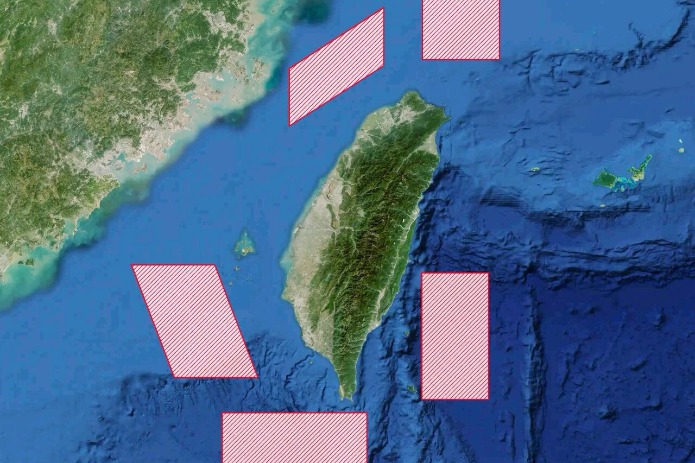
- PLA conducts major drill near Taiwan
- Washington should realize its interference in Taiwan question is a recipe it won't want to eat: China Daily editorial