AI medical system starts real-world testing







In July, a groundbreaking medical AI system developed by Tsinghua University accepted its first human "patient" in an internal test.
Instead of relying exclusively on human data, it employs an evolutionary approach in which AI "doctor agents" learn and refine their skills through a simulated clinical practice in a large-scale virtual hospital environment.
The doctor agents are continuously evaluated based on treatment success rates and patient feedback.
Those performing poorly are eliminated, while successful ones continue to learn and adapt. Through this method, each AI doctor can accumulate clinical experience equivalent to millions of patient cases — far exceeding a human doctor's lifetime capacity — thereby accelerating their evolution into highly competent practitioners.
The system is transitioning from virtual training to real-world application through a dedicated inference engine designed for deep integration into clinical workflows.
An inference engine applies logical rules to a knowledge base to deduce new information, make decisions, or infer relationships, enabling AI systems to simulate human reasoning, analyze data and solve problems.
In the Tsinghua system, the doctors' digital counterparts act as personal assistants learning from individual physicians. These counterparts automate time-consuming tasks like medical documentation and draft reports.
A typical interaction with Agent Hospital begins even before a physical appointment.
"Accessing the platform via its mobile client is easy," said one patient, surnamed Ye. "You log in, and are guided through a structured pre-consultation interview."
The patient inputs their symptoms and duration, and is prompted to upload their previous prescriptions, lab reports, and scan results. The system organizes the personal medical history into a timeline, summarizes the key clinical information, and generates a preliminary health assessment — all before the patient enters the hospital.
"It has continuous, easy access to personalized health insights and follow-up care, and that is what we want the most," said another patient surnamed Wang, who participated in the test run in July in Beijing. "This is a feature traditional hospitals seldom offer."
Feedback from physicians who participated in early pilot programs at Tsinghua University-affiliated hospitals indicates the system enhances diagnostic efficiency.
"It rapidly synthesizes a patient's history and auxiliary exam results, auto-generates records, and offers preliminary suggestions. It also alerts us to potential anomalies or high-risk factors, thereby reducing oversights and misdiagnosis," said Ma Weizhi, a participating doctor.
For less experienced clinicians, the AI's reasoning process provides valuable guidance, contributing to their professional growth, the developers said.
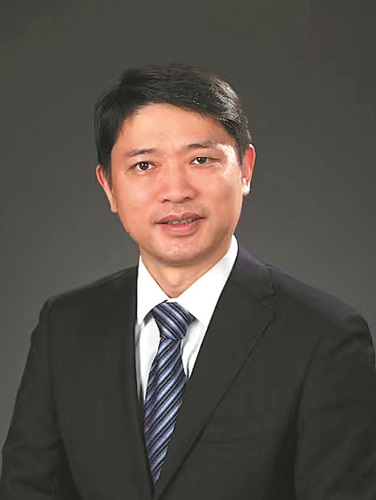
Liu Yang, executive dean of Tsinghua University's Institute for AI Industry Research and project leader of the system, said AI might even be able to address issues such as doctor-patient relationships.
"If AI develops well in the future, providing each family with a long-term service AI family doctor, it might make establishing a stable relationship easier," he said.
However, responsibilities must be clearly defined. AI assists, but final decisions and signing authority rest with the human doctor, Liu said.
Establishment of the platform is a complex process, involving policies, regulations, and privacy. "The Agent Hospital system strictly follows national regulations regarding data management," Liu added.
Ultimately, Agent Hospital is designed to augment rather than replace human doctors. Liu said, "By establishing a closed-loop system that includes intelligent follow-up and continuous learning, it introduces a new model of scalable, personalized, and efficient medical care."
However some clinicians and patients expressed reservations about such a system.
A doctor from a hospital in Beijing, who preferred to remain anonymous, said that "although AI can enhance efficiency, medical care often involves intangible factors — like subtle human expressions, contextual nuances, and emotional support — which algorithms may fail to capture".
One patient involved in early system testing voiced concerns over data privacy and overreliance on technology.
"It's convenient, no doubt, but I still worry about who can access my health records and whether machines truly understand the full story," said the patient, who also chose to remain anonymous.




- AI medical system starts real-world testing
- AI healthcare solutions make progress, but caution urged
- Minister calls for stronger efforts to defend peace
- Ten photos from across China: Sept 12 – 18
- Special program marks science month debut
- HKSAR photo exhibition showcases China, Russia WWII cooperation