Country provides platform for AI development







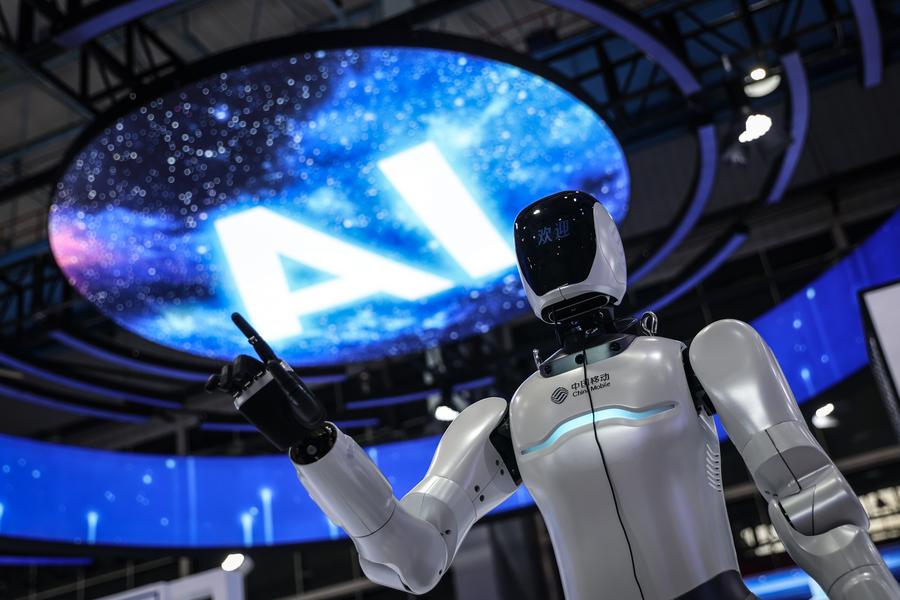
As the unveiling of the 15th Five-Year Plan (2026-30) draws nearer, how to manage rapidly evolving technologies such as artificial intelligence is one of the challenges that lies ahead.
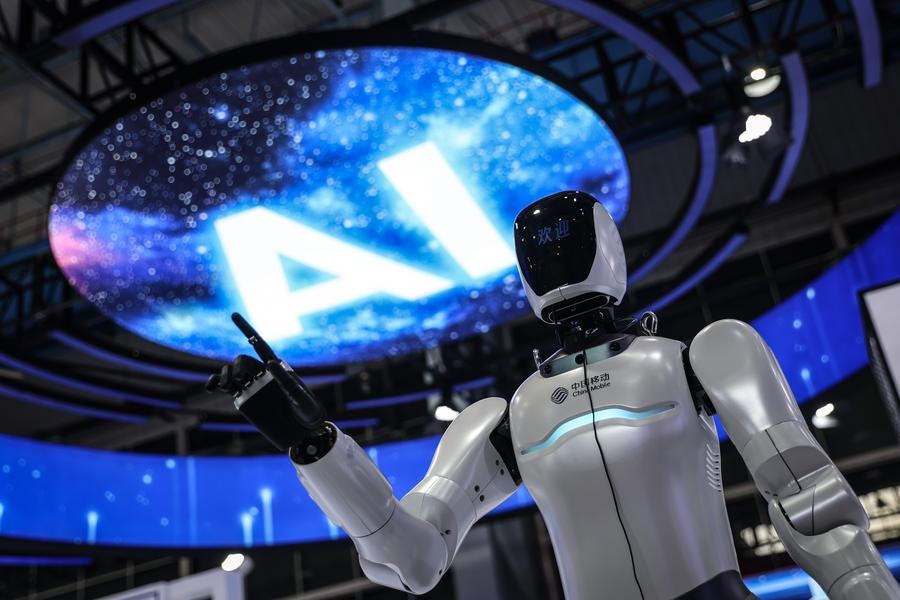
It's been an exciting couple of years for the evolution of AI. Not only have we seen the rise of powerful large language models; we've also seen the huge potential for the application of AI to address real world problems like making remote healthcare more accessible, more effectively managing cities, and enabling robotics to replace humans in particularly dangerous jobs.
China's unique ecosystem has supported this evolution through a number of vectors. China has developed a very strong talent pipeline with more than 77,000 doctorates in STEM (science, technology, engineering and mathematics) per year compared with about 40,000 in the United States. In addition, China's own internal domestic competition means that only the best companies survive, and under-performing ones are pruned.
This is in contrast to the US market which is generating serious concerns about overcapitalization in AI companies. And, perhaps less discussed but of vital importance, China has remarkably agile technology policymaking which allows for rapid experimentation and adaptation in terms of extracting the full benefit of these technologies.
However, this is a global technological shift, not a domestic one. And if we learned one thing from the last 50 years of digital revolution, it is that technology is only one part of the picture when it comes to extracting maximum benefits and better outcomes for humans. We already have, for example, plenty of technology to resolve cybersecurity vulnerabilities. But there are myriad human and organizational factors that continue to facilitate cybercrime. Technology transfers in themselves can be very powerful but technology alone will not solve human defined problems.
Although China and the US have emerged as clear leaders in AI technology, the implications of the next decade of AI technology are expected to be widespread and deep. That means that much of the world will be subject to changes that they will have little or no agency in bringing about unless we develop clear pathways for discussion and deliberation that expand beyond big tech powers.
Global dialogues can provide an opportunity for discussion on existing and future opportunities and concerns about AI governance — governance of data, applications and the algorithms that drive those applications. The Bletchley AI Safety Summit hosted by the United Kingdom in 2023 was a good initial step and has been followed by meetings in Seoul in 2024, and Paris in 2025.
At the World AI Conference, held in Shanghai in July, Premier Li Qiang recommended the establishment of an international body to support the coordination and development of AI globally. This could be an important step toward ensuring that voices from the global majority are amplified and heard in tandem with those of the Big Tech. China's experience with supporting developing and emerging states in the evolving international order will prove more important than ever as technologies such as AI take hold and shape our social, commercial and political systems.
Institutionally, China already has some experience in this. AI safety institutes have sprung up across the globe in anticipation of demands for rigorous and responsive research about how AI can enhance as well as undermine safety issues. The Chinese AI Safety Network provides a platform for various Chinese groups and institutes to engage in dialogue, mapping, interoperability and collaboration. Indeed, the Chinese AI Safety Network could provide some lessons in coordination and collaboration in this context.
Another useful way that China could facilitate productive dialogue is by encouraging academic exchanges. Science diplomacy is based on the understanding that scientists can maintain good lines of communication where others may struggle, because scientists tend to be apolitical and focused on sharing knowledge and advancing their field. China has much to offer in this regard and could use its convening power to keep a dialogue going between those working in this field.
But such efforts will require trusted and open multilateral mechanisms that can provide mutual benefit, positive outcomes, and an acceptance of diverse objectives. The essential element of a future which sees technologies such as AI integrated for the advancement of the human condition is good governance. And developing our thinking on how best to do that will require the same energy and effort that are needed in engineering labs.
The author is a professor of Global Politics and Cybersecurity at University College London. The views don't necessarily represent those of China Daily.
If you have a specific expertise, or would like to share your thought about our stories, then send us your writings at opinion@chinadaily.com.cn, and comment@chinadaily.com.cn.