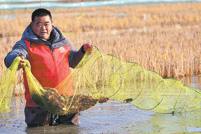
Adapting to local realities fuels new quality productive forces








The communique issued after the fourth plenary session of the 20th Central Committee of the Communist Party of China stated that we should achieve greater self-reliance and strength in science and technology and steer the development of new quality productive forces.
As China advances toward high-quality economic growth, the concept of "new quality productive forces" has become a pivotal proposition in the nation's modernization journey. This development model emphasizes that progress should not be uniform; rather, new quality productive forces can only take root when integrated with each region's resource endowment, industrial characteristics, and social demographics.
In this sense, "adapting measures to local conditions" is not just a policy tool but a development philosophy that ensures that new quality productive forces are effectively transformed into regional synergies, injecting lasting momentum into China's sustainable growth.
"Adapting to local conditions" does not seek to isolate a region. On the contrary, the goal is to enable regions to define their roles within the broader national strategy and integrate their strengths into the overall national competitiveness. When diversity aligns with direction, the outcome is synergy, not fragmentation.
The Beijing-Tianjin-Hebei region is a perfect example of this synergy. With strong policy support and abundant scientific resources, the region has become a powerhouse in frontier areas such as artificial intelligence and biomedicine. In 2023, Tianjin's AI industry exceeded 300 billion yuan ($42.1 billion) in scale. This growth has not only enhanced local competitiveness but also spurred broader regional development through technological spillovers and industrial collaboration. By tailoring industrial development to local advantages, the region has turned coordination into competitiveness.
Developing new quality productive forces according to local conditions requires a deep understanding of the distinct differences among regions in resources, industrial foundations and technological capabilities. Each area should identify its leading industries based on absolute or comparative advantages to avoid homogeneous competition and inefficient duplication.
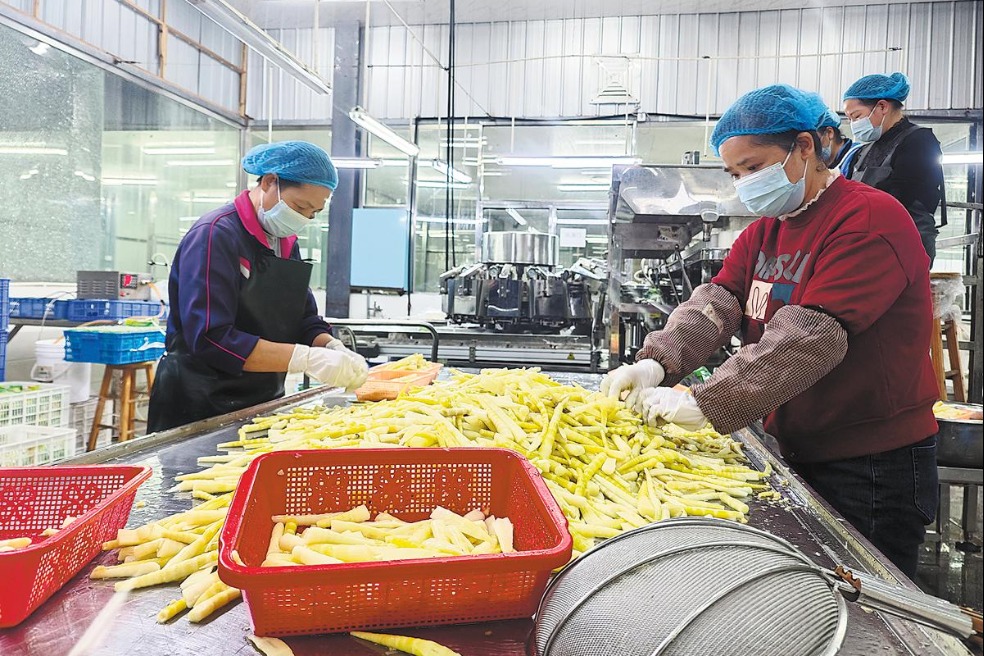
Yunnan province is a good example of how natural endowments can be transformed into sustainable industrial strength through innovation. Blessed with abundant sunlight and open land, the province has focused on renewable photovoltaic energy and plateau-featured agriculture. This has not only accelerated its green energy transition but also redefined its role in China's modern agricultural landscape. By 2023, Yunnan's centralized photovoltaic capacity was around 20 million kilowatts.
Adapting to local conditions is not just about utilizing static advantages but also about dynamically activating innovation ecosystems to turn local potential into unique competitiveness. This happens best when policymaking aligns with regional industrial characteristics and innovation capabilities. Zhejiang province offers a compelling example. With a thriving private sector and a robust manufacturing tradition, it has pushed its industries up the value chain toward intelligent equipment and new materials. Today, Zhejiang hosts several globally competitive industrial clusters, showcasing how combining local industrial foundations with innovation-driven growth can generate extraordinary value. The province is aiming for high-tech industries to account for over 67.5 percent of its total industrial output by 2025.
Adapting measures to local conditions is a bridge that connects innovation with reality, diversity with coordination and local potential with national progress. China's geography, industries, and cultures are remarkably diverse. By adapting policies to local conditions, the country aims to transform its regional diversity into a strategic advantage that will drive the evolution of new quality productive forces.
The author is a researcher at the Institutes of Science and Development, Chinese Academy of Sciences.
The views don't necessarily represent those of China Daily.





Today's Top News
- China to apply lower import tariff rates to unleash market potential
- China proves to be active and reliable mediator
- Three-party talks help to restore peace
- Huangyan coral reefs healthy, says report
- PLA conducts major drill near Taiwan
- Washington should realize its interference in Taiwan question is a recipe it won't want to eat: China Daily editorial