Integration is key for industrial upgrading







Editor's note: The 20th Central Committee of the Communist Party of China convened its fourth plenary session last week. Participants deliberated over and adopted the Recommendations of the CPC Central Committee for Formulating the 15th Five-Year Plan (2026-30) for National Economic and Social Development. Zhang Yuzhe, a researcher at the Chinese Academy of Macroeconomic Research, spoke to National Business Daily on the importance of making significant achievements in high-quality development over the next five years. Below are excerpts from the interview. The views don't necessarily represent those of China Daily.
High-quality development has remained the central theme of China's economic and social progress in recent years. So the focus on "making significant achievements in high-quality development" during the 15th Five-Year Plan period is a continuation and deepening of previous policy directions.
At a time when the economy faces slower growth and rising uncertainty, this goal also serves to address market expectations for "high-speed growth". This emphasizes that while maintaining a reasonable growth rate, greater focus should be on improving the quality of development.
High-quality development does not negate the importance of quantitative growth. On the contrary, it stresses the cohesion between effective qualitative improvement and reasonable quantitative expansion. As a key driver of high-quality development, the emergence of new quality productive forces fundamentally aims to enhance quality.
A modernized industrial system has multiple dimensions, including industrial structure, layout, scale, technology and the integration of scientific and industrial innovation. Building such a system is a concrete expression of high-quality development at the industrial level and crucial for advancing the high-quality growth of the real economy.
The session stressed the need to pursue smart, green and integrated development. Smart development aims to elevate China's position in the global value chain. Green development addresses the long-standing issue of extensive, resource-intensive growth. And integrated development seeks to align with the broader trajectory of the new round of technological revolution. China continues to face challenges in these three areas.
The essence of integration lies in making resource allocation more efficient to generate a strong synergy. The integration across industries, technologies and key stakeholders also remains insufficient in China.
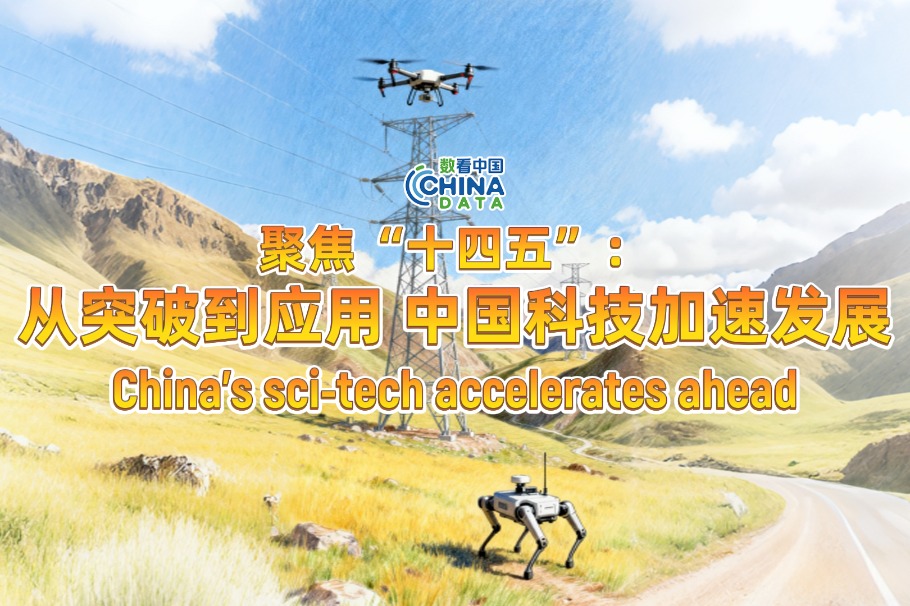
The development of new quality productive forces will undoubtedly be in sharp focus during the 15th Five-Year Plan period. Since the concept was first introduced, its connotations have continuously evolved. Yet at its core it remains closely tied to scientific and technological innovation. These can be achieved by advancing smart, green and integrated development in a solid and comprehensive way.
Innovations encompass both breakthroughs in cutting-edge technologies and the high-end upgrading of traditional industries, with the basic objective of improving total factor productivity. These advances are inseparable from the integrated development of technological and industrial innovation.
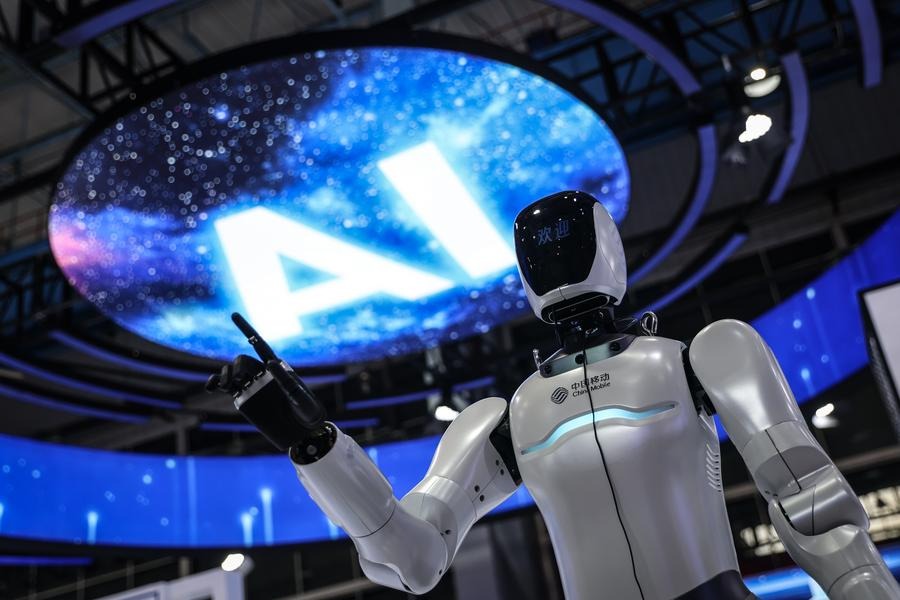
Basic research is the fundamental driving force of development, but it must align with applied research. This is particularly important in areas such as artificial intelligence. The technological gap between China and the United States is narrowing, and the key to future competitiveness lies in application. Therefore, while the importance of basic research is beyond question, the amount of investment and the pace of development must align with China's national conditions and overall capabilities.
To strengthen original innovation and core technologies, efforts should be focused on addressing bottlenecks in critical areas. There should be sustained strategic investment in frontier fields such as AI, quantum information and controlled nuclear fusion, while simultaneously progress needs to be advanced in new materials and high-end equipment.
These are not isolated but interconnected and mutually reinforcing fields. Only by strengthening integrated innovation can the country generate the synergy for breakthroughs. Of course, the approaches, organizational models and development priorities for traditional industries and frontier fields will differ to some extent.