Seamless cross-border payments critical for APEC economies







In a global economy racing toward digital transformation, cross-border payments — the basic infrastructure of global trade and investment — directly shape regional integration. But the Asia-Pacific Economic Cooperation faces stubborn bottlenecks: fragmented payment systems, divergent regulatory standards and incompatible technical protocols that raise costs and slow down commerce. Integrating digital payment rails across APEC, whose 21 member economies account for 48 percent of world trade, is therefore both urgent and strategically vital.
A partnership between China's Alipay and the Republic of Korea's Hana Bank offers a useful template. The technical connectivity alliance between them means Chinese users can pay in the ROK with Alipay while Korean users can transact in China with Hana Bank. By 2024, the network had covered more than 300,000 merchants in Korea and hundreds of thousands of acceptance points across major Chinese cities.
The collaboration delivers several benefits: a unified interface that allows information exchange between different systems; real-time settlement channels that shorten transaction time; a shared risk-control framework that ensures privacy; and an optimized foreign exchange mechanism that lowers the costs of small-value transactions.
The tie-up has led to concrete gains for users, but small and medium enterprises have been the biggest gainers. Digital rails cut fees by more than half compared with traditional wire transfers. Instant or same-day settlement improves cash flow, while electronic records simplify reconciliation and tax filing. These firms can "go global "without setting up complex financial infrastructure. In surveys of users, 82 percent reported faster cross-border payments, 76 percent got lower costs, and 68 percent expanded their international business because payments became easier.

Within APEC, advancing payment interoperability serves multiple strategic goals. First, it deepens regional economic integration. Since its inception, APEC has focused on freer and easier trade and investment. The APEC Internet and Digital Economy Roadmap calls for interoperable digital infrastructure to power the digital economy. Integrating cross-border payments is central to that ambition. The Asian Development Bank estimates that every 1 percentage point reduction in payment costs increases intra-regional trade by nearly 3 percent. Given the gigantic size of APEC trade, substantial gains can accrue if costs are lowered by the integration of cross-border payments. Second, it makes SMEs more competitive. SMEs underpin APEC economies, contributing over 60 percent of jobs and about 50 percent of GDP, yet they participate in cross-border trade far less than large firms due to hurdles in payments. Interoperable digital payments lower the threshold for internationalization and help SMEs plug into global value chains.
This is especially true when it comes to e-commerce, where convenient cross-border payments are a prerequisite. APEC's cross-border e-commerce volume has already surpassed $3 trillion, with SMEs making up the majority of participants. Further improvements in the payment ecosystem and greater integration can unlock even more growth.
Third, it advances financial inclusion. In many developing economies, traditional banking coverage is thin, leaving large populations outside the scope of formal finance. Mobile wallets and digital payments open a new path for these groups, even allowing them to conduct cross-border transactions. By pushing interoperability, APEC can make financial services more inclusive, narrow the digital divide and broaden participation in regional markets.
Fourth, it enhances financial security and regulatory effectiveness. Integrated payment systems create the technical foundation for regulatory cooperation. Shared standards and information-exchange mechanisms help economies detect and prevent cross-border money laundering, terrorist financing and other risks more effectively. The application of regulatory technology (RegTech) can reduce compliance costs and improve supervisory efficiency, aligning security with convenience.
Looking ahead, APEC should treat the integration of cross-border digital payments as a priority. Practical steps include establishing common technical standards, building regional settlement infrastructure, improving supervisory coordination, supporting SME capability building and launching pilot demonstrations. Together, these will help APEC move steadily toward frictionless cross-border payments. This will not only deliver faster and easier payment services for the region's multi-trillion-dollar trade and investment flows but also strengthen economic cohesion and competitiveness by laying a solid foundation for an open and inclusive Asia-Pacific community.
The views don't necessarily reflect those of China Daily.





Today's Top News
- China to apply lower import tariff rates to unleash market potential
- China proves to be active and reliable mediator
- Three-party talks help to restore peace
- Huangyan coral reefs healthy, says report
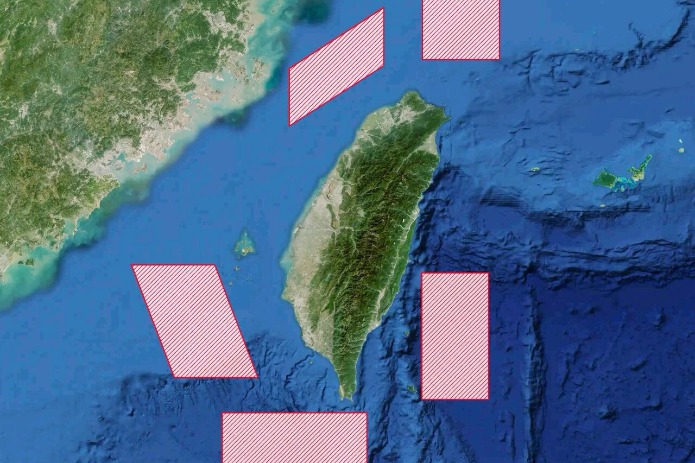
- PLA conducts major drill near Taiwan
- Washington should realize its interference in Taiwan question is a recipe it won't want to eat: China Daily editorial