Debunking rhetoric about 'Taiwan's undetermined status'







In response to recent inquiries from local media, the American Institute in Taiwan (AIT) asserted that neither the Cairo Declaration or the Potsdam Proclamation, nor the San Francisco Peace Treaty, could "determine Taiwan's final political status". This comment was subsequently endorsed as "accurate" by the US State Department.
The Democratic Progressive Party authorities in Taiwan didn't hesitate to follow up in claiming that "the Republic of China and the People's Republic of China are not subordinate to each other".
This egregiously false narrative is not only a blatant distortion of history since World War II, but also a dangerous attempt to undermine the current world order. It must be categorically refuted.
What really happened?
In 1895, Japan forced China's Qing Dynasty to sign the Treaty of Shimonoseki, under which Taiwan and the Penghu Islands were ceded. Although the treaty was unequal, the very fact of cession proves that, prior to 1895, Taiwan and the Penghu Islands were part of Chinese territory — and that Japan stole Taiwan from China, not from any other state.
In 1941, the Chinese government issued its Declaration of War on Japan, proclaiming that all treaties, agreements and contracts affecting China-Japan relations were null and void, and announcing the recovery of Taiwan and the Penghu Islands.
In 1943, the governments of China, the US and the UK issued the Cairo Declaration, which explicitly stipulated that territories stolen by Japan from China, including Taiwan, should be restored to China.
In 1945, China, the US and the UK issued the Potsdam Proclamation, which was subsequently recognized by the Soviet Union, reaffirming that the terms of the Cairo Declaration must be implemented. That same year, Japan signed the Instrument of Surrender, pledging to faithfully implement the obligations set out in the Potsdam Proclamation.
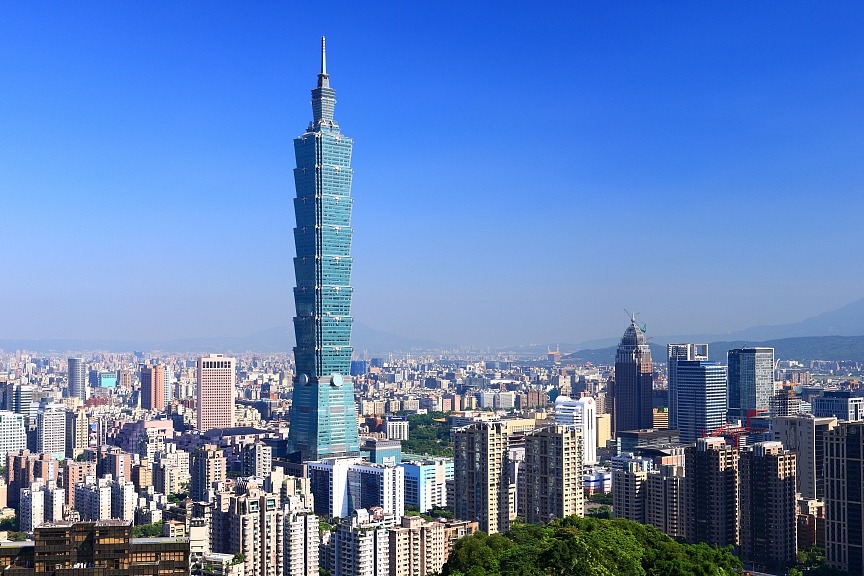
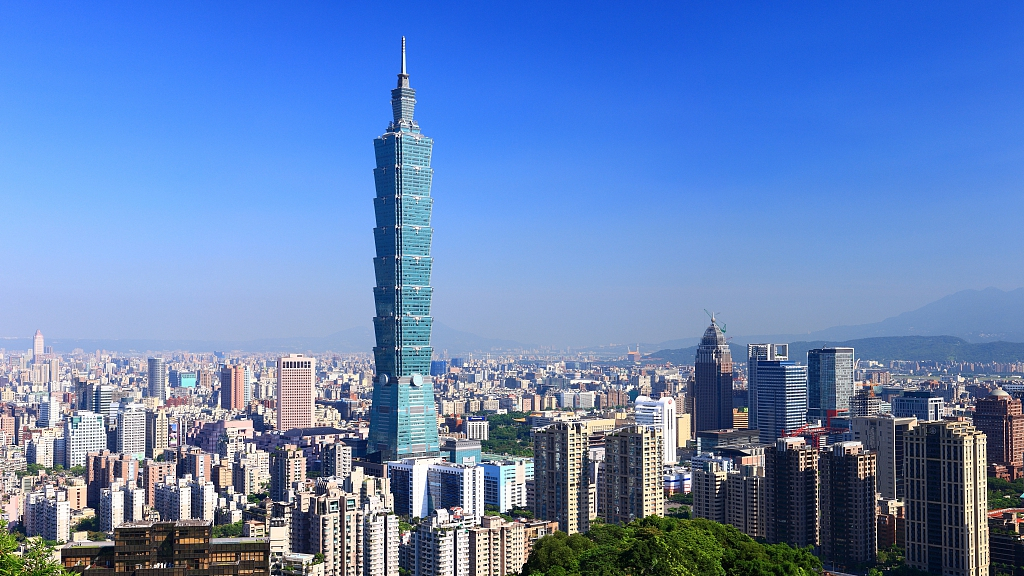
On October 25, 1945, the Chinese government announced the resumption of its exercise of sovereignty over Taiwan and the ceremony to accept Japan's surrender in Taiwan Province was held in Taipei. Thus, through a series of instruments recognized under international law, China resumed the exercise of sovereignty over Taiwan, in fact and in law.
Why arguments claiming otherwise are untenable
The San Francisco Peace Treaty (formally the Treaty of Peace with Japan) was a separate attempt at "peace" made by the United States in collusion with certain countries, which deliberately excluded China and the Soviet Union and left the sovereignty of Taiwan and the Penghu Islands undefined.
The treaty was an unlawful and invalid document, as it contravened the 1942 Declaration by the United Nations, which explicitly prohibited any signatory from concluding a separate peace with the enemy, and violated the UN Charter and the fundamental principles of international law.
The so-called 1952 Sino-Japanese Peace Treaty — concluded by the Taiwan authorities, who no longer represented China — was likewise unlawful and invalid and placed no binding commitment on China. China recovered Taiwan in law and in fact in 1945. By 1951, Japan had long ended its occupation of Taiwan, and had no right to dispose of or alter the legal status of a territory that was not its own.
How the US reneged on its commitment
On January 5, 1950, US President Harry Truman issued a statement on Taiwan, making clear that "for the past four years the United States and other Allied Powers have accepted the exercise of Chinese authority over the island".
In 1972, during his visit to China, President Richard Nixon told Premier Zhou Enlai in person that the United States would no longer issue statements suggesting that "Taiwan's status is undetermined".
Taiwan is a part of China. The question of Taiwan's status was conclusively settled in 1945 with China's victory in the Chinese People's War of Resistance Against Japanese Aggression and the global victory over fascism.
Taiwan's return to China is both a fruit of World War II and an integral part of the postwar international order — a victory won through the blood and sacrifice of the Chinese people, including compatriots in Taiwan.
No false narrative peddled by anti-China forces can overturn that fact.
The author is an observer of international affairs.
The views don't necessarily reflect those of China Daily.
If you have a specific expertise, or would like to share your thought about our stories, then send us your writings at opinion@chinadaily.com.cn, and comment@chinadaily.com.cn.