Experts: Decoupling disastrous for Japan







Japanese experts have warned that Prime Minister Sanae Takaichi's erroneous remarks on China's Taiwan region could inflict "fundamental damage" on Japan's economy, noting that "economic decoupling" between the two countries is nearly impossible and any forced rupture would be disastrous for Japan.
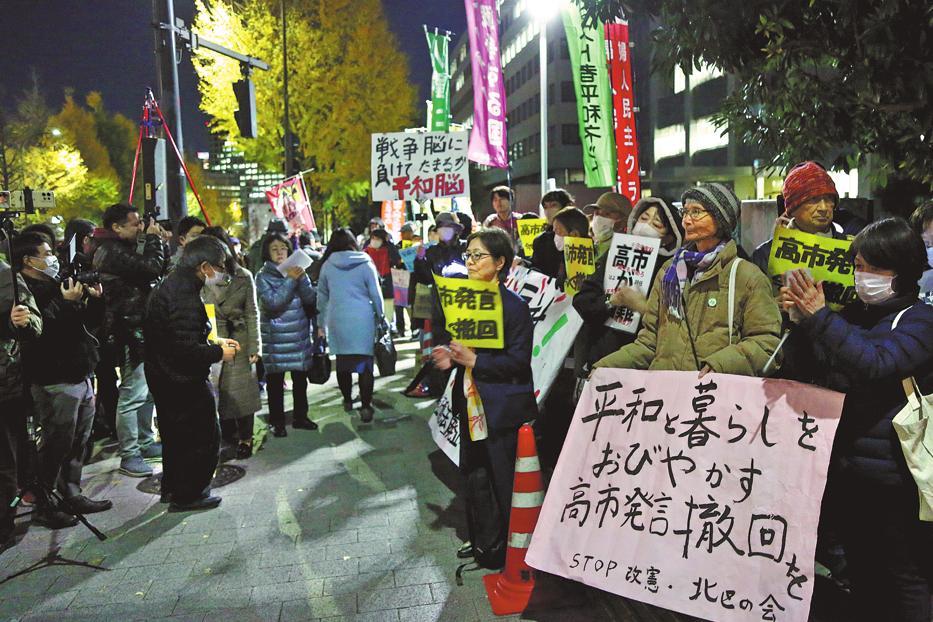
This warning comes amid heightened tensions between the two countries following Takaichi's claim that a Taiwan emergency constitutes a "survival-threatening situation" for Japan, and her subsequent refusal to retract the erroneous remarks.
China has halted imports of Japanese seafood while a number of major Chinese airlines have suspended services to Japan. The release of two Japanese films have been put off indefinitely while performances by a number of Japanese artists in China have been canceled.
The Japanese tourism industry has been the first to take a major hit, with experts warning that further restrictions on imports of Japanese products and disruptions in supply chains will threaten Japan's economic recovery.
"If trade and investment relations between Japan and China were completely severed, China would certainly feel the impact, but for Japan, the consequences would be a matter of life and death," said Hidetoshi Tashiro, a Japanese economist and CEO of Terra Nexus Project Management Services.
According to Tripla, a Japanese accommodation-reservation management system provider, bookings made by Chinese travelers for hotels in Japan have dropped about 57 percent since the Chinese government issued a travel alert on Nov 14 for its citizens traveling to Japan.
Tourism accounts for around 7 percent of Japan's overall GDP, according to the World Travel and Tourism Council. Visitors from China ranked first among all foreign tourists in total spending in Japan in 2024, data from the Japan Tourism Agency showed.
For Japan, Tashiro said, China has long been an economy it "cannot decouple" from.
Tashiro also emphasized that this dependence is not mutual, since Japan is far more reliant on China than China is on Japan.
Japan's biggest trading partner by total trade volume is China, followed closely by the United States. China serves as Japan's primary source of many imported goods, such as electrical components and raw materials, and a key market for Japanese products, while the US is a top destination for Japanese exports like cars and machinery.
Data from Japan External Trade Organization showed that imports from China accounted for 22.5 percent of Japan's total imports in 2024, the biggest share. Exports to China took up 17.6 percent of Japan's total export volume, second only to the 19.9-percent share of the US.
Japan depends far more heavily on China's supply chain than any of its Group of Seven peers do, said a white paper released by Japan's Ministry of Economy, Trade and Industry in July 2024. Overall, Japan relied heavily on imports for nearly 47 percent of its 4,300 products surveyed. Japan imported more than half the volume of 1,406 specific items from China.
Tashiro warned that the deeper risk posed by worsening Japan-China relations lies in supply chains, as nearly all Japanese industries are intertwined with China.
For this reason, Tashiro believes that a Japan-China "decoupling" is nearly impossible. "Cutting such deeply integrated links would lead to systemic collapse," he said.
Tashiro said that for Japan to sustain its economic vitality, it has no choice but to maintain close supply-chain cooperation with China, which possesses the world's largest and most comprehensive production system.
Undermining this structure, he said, would be tantamount to "suicide" for Japan.
Yangchoon Kwak, a senior professor at Rikkyo University's College of Economics, said that deteriorating Japan-China relations are likely to slow Japanese investment in China, especially as rising "reputational risks" will make companies more cautious.
This would hit industries highly dependent on China, leading to weaker corporate earnings and greater stock price volatility, Kwak said.
houjunjie@chinadaily.com.cn