Xinjiang forum discusses fostering career paths







The importance of career development was emphasized by both workers and enterprises at a forum held in Northwest China's Xinjiang Uygur autonomous region recently.
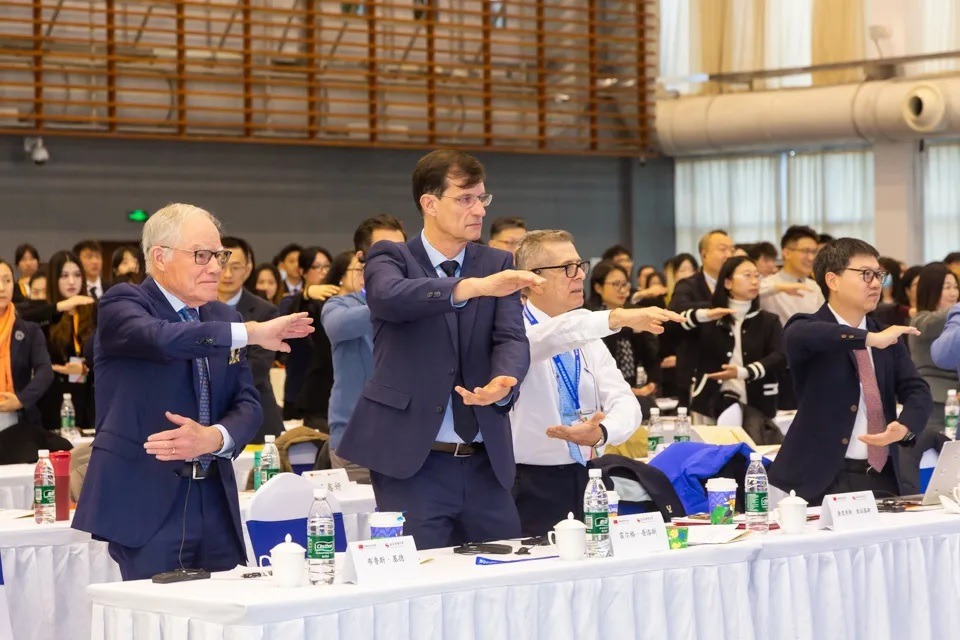
The event, named "Understanding Xinjiang: Belt and Road Symposium on Harmonious Labor Relations", was held in Urumqi on Nov 19, and coorganized by the China University of Labor Relations and the Xinjiang Uygur autonomous region's federation of trade unions.
Discussions focused on how skills training, career pathways and supportive workplace policies can contribute to stable employment and sustainable business growth.
One example was highlighted by Tohti Niyaz, an after-sales technician at Shaya Boshiran Intelligent Agricultural Machinery Co, a private manufacturer specializing in self-propelled cotton pickers.
After leaving a job at a State-owned oilfield to return to his hometown in Shaya county, Tohti Niyaz joined the company and spent seven years progressing from a novice technician to a recognized expert. In April, he was honored as a national model worker. He said he built his expertise through systematic training and hands-on practice, closely studying equipment schematics and operating manuals.
By repeatedly assembling and disassembling machinery, he developed a methodical approach to troubleshooting.
The detailed maintenance records he compiled over the years have since been used as training materials for new technicians. Some 20 technicians he mentored now form part of an expanded after-sales team, improving service quality and product reliability, the company said.
Another frontline worker, Amangul Eziz, is a team leader at a textile spinning mill in Yarkant county, Kashgar prefecture. She said most of her colleagues are local residents, many of whom were previously housewives. Flexible work schedules have been introduced to help employees balance work and childcare, a measure that has helped retain eight women of childbearing age in her mill alone.
The company has also established a mentorship system for new employees. New hires receive 15 days of basic training, followed by advanced instruction in smart equipment maintenance after becoming regular staff. Skilled workers are encouraged to learn from model workers in other regions, take part in skills competitions and apply for government subsidies.
Amangul Eziz said Mandarin proficiency played a key role in her career development, enabling her to read technical manuals and communicate more effectively at work. When she first joined the factory, her mentor, Yang Fang, helped her practice Mandarin after work, correcting her pronunciation character by character.
Within three months, Amangul Eziz was promoted and received a higher salary. She later traveled to Shanghai for further training, her first time flying. She now helps other ethnic minority colleagues improve their language skills and technical abilities. "In our company, about 130 ethnic minority colleagues, including myself, have transformed our careers by learning Mandarin and enhancing our skills," she said. "Many of us came from rural backgrounds, but now we have stable jobs, higher incomes and the ability to buy homes and cars."
A report released by the China University of Labor Relations during the symposium found that some 40 policy documents aimed at expanding career development opportunities and raising incomes for skilled workers have been issued in Xinjiang.
Enrollment in technical education has grown rapidly, with 118,000 students studying at more than 140 technical schools. Innovative technical contributions are increasingly being recognized and rewarded, the report said.
The labor relations report was based on field research covering government departments and more than 100 enterprises across all 14 prefecture-level areas in Xinjiang. It included consultations with government officials, trade unions, business owners, employee representatives, scholars and lawyers, as well as expert discussions held in Beijing and Urumqi.
The report examined issues such as the protection of workers' rights and interests, employer-employee negotiations and the development of a supportive environment for harmonious labor relations.
Wang Xin, director of the research center for fundamental trade union theories at the university's School of Trade Union Studies, said the report uses data and case studies to document working conditions and innovative labor practices in Xinjiang, offering a detailed reference for domestic stakeholders and counterparts in countries involved in the Belt and Road Initiative.
Contact the writers at fangaiqing@chinadaily.com.cn