Emerging technologies a potential game-changer for elderly, says expert







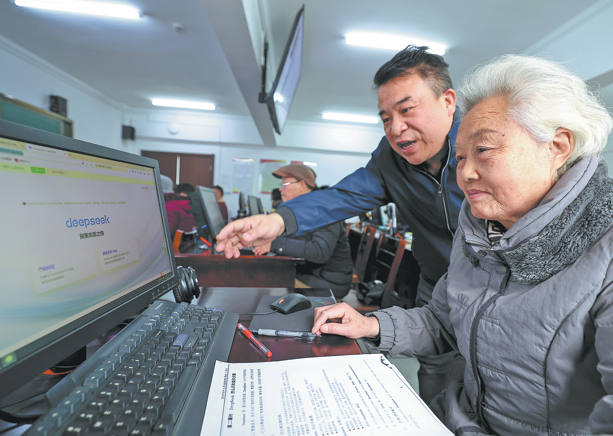
Technology, particularly artificial intelligence, can transform the challenges of an aging population into opportunities for innovation and progress, according to Guo Zhe, director of the China Science and Technology Museum.
"The current wave of technological transformation, led by AI, is introducing significant uncertainties. This shift affects not only the economic and industrial sectors but also every aspect of our daily lives,"Guo said.
"China has a large population base that is aging before becoming wealthy. This demographic shift affects consumer behavior and economic potential," he added.
China's population aged 65 and above was 220.23 million, making up 15.6 percent of the total population, according to the 2024 National Report on Aging Development released by the central government. That number was 139.02 million, accounting for 10.1 percent of the total population a decade earlier in 2014.
China has immense potential for age-friendly technology applications, according to Guo. Although the industry has been paying more attention to this area in recent years, there is still a significant gap in the innovation and development of these technologies, he said.
"It's not just about upgrading existing facilities. It's about prioritizing the needs of the elderly."
Current designs for architecture, furniture and equipment are traditionally universal, not considering age differences. Given these demographic changes, a systematic redesign will likely be needed within the next decade, the director said.
This transformation isn't just about technology for the elderly, it affects everyone, he said.
"We're all facing the challenge of coexisting with machines in this new era. Developments like humanoid robots are not just about mimicking human physical structures. They're evolving into entities capable of emotional companionship and basic communication," said Guo.
In the future, machines may gain the ability to communicate and develop basic consciousness through deep learning, he added.
"This will transform our perception of emotions and how we satisfy innate needs, offering new ways to address issues like loneliness among the elderly. These technological advancements will reshape our living spaces and social interactions.
"As technology reshapes our social spaces, we're entering what some describe as the compressed era. Changes that once took centuries are now happening within years or even months, bringing both uncertainty and a sense of urgency,"Guo said.
Future trends are reshaping the understanding of aging and biological boundaries.
Traditionally, ages like 65 or 70 marked aging, but with advancements in genetic technology and AI, this is changing. As gene sequencing becomes cheaper and more advanced, breakthroughs in biotechnology, such as new drug development and synthetic biology, are expected. This could potentially extend human life spans to 120 years.
"These advancements may redefine what it means to be elderly, possibly shifting the threshold to 80 years. As medical technology advances, diseases like cancer and chronic illnesses could see major breakthroughs, improving overall health and happiness," Guo said.
As of the end of last year, the national average life expectancy was 79 years.
Guo added that brain-computer interfaces are gaining attention. These interfaces enhance muscle nerve functions and help individuals with paralysis regain control of their limbs.
"We must also consider new roles, such as family data managers, who will navigate the influx of smart technologies in homes. These roles will be crucial in managing health data and facilitating remote healthcare.
"Addressing these challenges requires a collective effort. We need to embrace these changes and create inclusive environments that leverage technology for all age groups. By doing so, we can transform the challenges of an aging population into opportunities for growth and innovation," he said.
lihongyang@chinadaily.com.cn



- Beijing community leads the way in grassroots governance
- HKSAR govt extends thanks to various units for supporting people affected by residential complex fire
- Influencers barred from vulgar, false, or harmful content
- Hangzhou–Quzhou High-Speed Railway begins operations
- China records rise in survival prospects for child and adolescent cancer patients
- Ministry unveils draft revision of the national air quality standards