BIZCHINA> Wen's Lens

|
BIZCHINA> Wen's Lens
|
|
Related
The line forms ... where?
By You Nuo (China Daily)
Updated: 2008-07-07 15:00
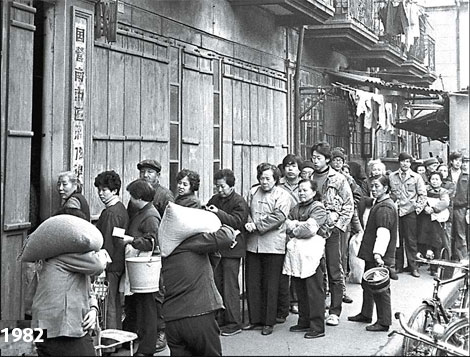
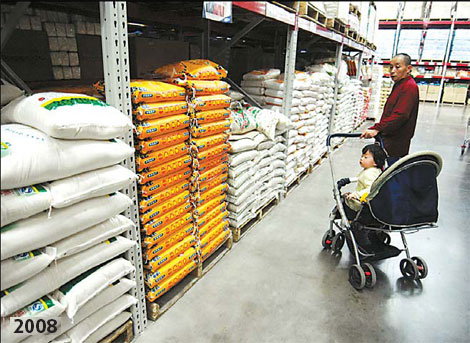
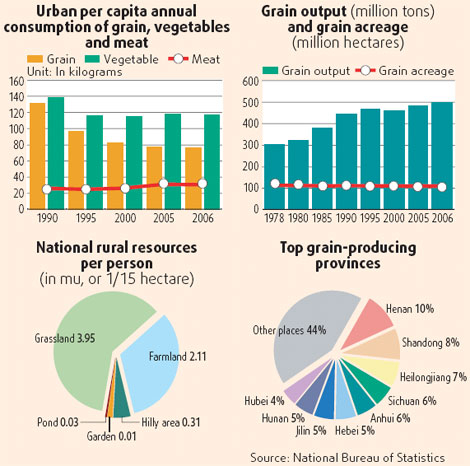
One Chinese habit that foreigners complain about, I've heard, is their reluctance to line up in an orderly fashion. In shops as well as on highways, they habitually crowd and cut in lines. Well, there might be an excuse: It's because they had to wait in long lines too often, for too many things, and for too long in the past. Their unruliness is perhaps a result of a defiant psychology formed under the planned economy. That is why the black-and-white photo that we have this week can be regarded as a classic. It contains a scene that used to be very familiar to all Chinese households but is hardly seen today, especially where the photo was taken in 1982. It was in Shanghai, now the largest modern business center in the Chinese mainland. But back then, right in the middle of the town, amid the 19-century-style wooden buildings, residents in the would-be most glamorous city in China were lining up patiently, if not obediently, to get their monthly ration of rice - in front of, as the Chinese characters read, the State-owned No 72 Grain Shop in (Shanghai's) Nanshi district. It was a rather cold day; the people with their chilled hands tucked in their pockets or in their sleeves. But the line was long, extending beyond our photographer Wang Wenlan's lens. And naturally, nobody was happy or chatting with each other to amuse themselves. What a typical day in China's pre-reform consumer life! In contrast, as seen in the color photo taken at the Beijing Sam's Club, the rice supply in the Chinese market has been abundant in the reform era. From 1978 to 2006, China's annual grain output changed from 305 million tons to 500 million tons, or an increase of some 60 percent. At the same time, because of greater supplies of meat and other kinds of food, urban dwellers' per capita consumption of grain has been on a steady decline. This is why China can so far manage to avoid spending massively on grain imports. Not many countries in the world can sustain their domestic food supplies while going through a period of unprecedented industrial growth. Some countries even turned from grain exporters into grain importers once they started their economic take-off. By producing 60 percent more than 30 years ago from roughly the same grain acreage, China has actually, over a fairly long period, helped the world stabilize its general food prices - though those prices are now being pushed higher, and unbearably so in some parts of the world, by the ethanol demand (with grain as raw materials) and climate changes. But the 1.3 billion Chinese are still fortunate in being able to enjoy not lining up for food supplies. Just last week, State Council, or the Chinese Cabinet, made some new decisions to beef up grain security for the nation at a time of worldwide inflation. May the scene of the State-owned No 72 Grain Shop never come back to this land!
(For more biz stories, please visit Industries)
|
主站蜘蛛池模板: 汶上县| 灌南县| 河津市| 呈贡县| 遂川县| 汶川县| 九龙坡区| 德昌县| 石台县| 巢湖市| 天镇县| 志丹县| 文水县| 绵竹市| 湘阴县| 托里县| 翼城县| 颍上县| 无为县| 桦甸市| 司法| 天峨县| 霍邱县| 方山县| 竹溪县| 江城| 河曲县| 卓尼县| 永康市| 钟山县| 静宁县| 靖江市| 肥城市| 宿松县| 永和县| 滨海县| 双辽市| 大城县| 建宁县| 黄龙县| 贵港市| 晋城| 和平区| 井研县| 望都县| 加查县| 霍城县| 绍兴县| 泌阳县| 栾川县| 荥阳市| 怀集县| 崇州市| 龙海市| 仁化县| 龙南县| 克拉玛依市| 卢龙县| 新乡市| 建水县| 凌云县| 自贡市| 扎兰屯市| 邹城市| 洪江市| 榆中县| 思南县| 高尔夫| 张家川| 岢岚县| 呼伦贝尔市| 喀什市| 会宁县| 宁海县| 扎囊县| 洪雅县| 托克托县| 寿光市| 红原县| 夏津县| 永州市| 来凤县|