|
|
 |
 Raymond Zhou:
By jingo, they're mad!  Op Rana:
Consumerism and politics of waste   Ravi S. Narasimhan:
Lessons from SARS have to be applied  Alexis Hooi:
Beyond the death and destruction  Italy toasts China
(China Daily/Agencies)
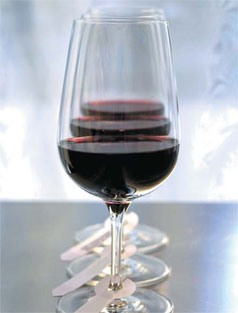
Updated: 2008-11-24 08:12 Only a couple of years ago producers from Tuscany, the wine heart of Italy, said China was not mature enough to embrace their top quality labels. Now, with recession hovering over their main markets in Europe and the United States, makers of premium Italian wines are turning to China where wine is becoming increasingly popular and the newly rich easily splash out on a top-price bottle. "The economic crisis hitting Italy and other traditional markets of our wine has been felt much less in China which, therefore, has gained more importance (as an export market)," Alessandro Mugnaioli, head of foreign relations at Italy's wine promotion body Enoteca Italiana, told Reuters. Enoteca Italiana and makers of famous Tuscan red Chianti and its upmarket cousins Nobile di Montepulciano and Brunello di Montalcino opened The House of Tuscan Wine in Shanghai in July to promote their output in China's major industrial center.
A 1.2 million euro ($1.55 million) investment put together by Tuscan administrative bodies, chambers of commerce and Italy's oldest bank Banca Monte dei Paschi di Siena would pay off as wine imports to China were set to rise after liberalization of import licenses in 2007, Mugnaioli said. Wine consumption in China has been growing by 8 percent a year over the past few years and is expected to hit 1 billion bottles in 2011, the Consortium of Brunello producers says. Industry experts say China may become the world's eighth largest wine consumer by 2012. Corking competition The French and other major wine producers have been faster than Italians in realizing the huge growth potential of the Chinese market. The competition is fierce for carving out market niches, Mugnaioli says. "It's good that there is competition. Every competitor, every wine producer is bringing Chinese consumers closer to wine," he says, fresh from taking a group of Chinese buyers and reporters on a week-long wine tour early this month. Italian winemakers have analyzed the Chinese market and changed their previous consumer target, which was in the age group between 40 to 60 years old and was considered to have the best purchasing power, Mugnaioli says. "Our new target is in a range of 20-35 years old: graduates with stable jobs, well-paid and with a Western model of lifestyle and food habits," he says. Red wine is a symbol of class and luxury in China where it accounts for 90 percent of consumed grape wine, experts say. Enoteca Italiana has started its promotional activity in China with Tuscan wines. However, it hopes other wine-making regions will join the initiative, overcoming their long-standing reluctance to work together, Mugnaioli says. Italian wine exports to China remain tiny at about $20 million in 2007 compared with total Italian wine exports of about 3.5 billion euros a year, according to industry data. But exports to China jumped 64 percent last year, making Italy the fourth-biggest wine exporter there after France, Chile and Australia. Sorting out US woes While export hopes are pinned on China and other emerging markets, Italian wine sales in the United States, one of the world's biggest wine markets, dropped 3.6 percent in the first half of 2008. Exports were hit by investigations into authenticity of wine made by some producers from Montalcino and Montepulciano. Italy has avoided a halt of wine exports to the United States after the agriculture minister and winemakers pledged to tighten quality and labeling controls. In October, Italian prosecutors cleared makers of well-known Brunello of Castello Banfi and released the 2003 vintage seized on suspicion that grapes other than Sangiovese, the only variety allowed under local standards, were used to make the wine. The US market absorbs a quarter of Brunello's 6.5 million bottle annual output, with total sales at about 120 million euros. About 12 percent of Montepulciano wines are sold in the United States. After the Brunello investigation made international headlines, some local producers talked about the need to ease stringent standards. But 96 percent of Brunello makers voted in October to keep the 100 percent Sangiovese purity, the Consortium has said. 
|
主站蜘蛛池模板: 桂阳县| 定襄县| 沂水县| 汤阴县| 仲巴县| 沁水县| 北宁市| 安国市| 安宁市| 怀来县| 青神县| 仙居县| 曲麻莱县| 洱源县| 广河县| 库尔勒市| 佛教| 通化市| 荥阳市| 罗城| 宁陕县| 泽州县| 阿克陶县| 萝北县| 巴楚县| 东城区| 盐津县| 德兴市| 昭平县| 松阳县| 浦县| 钟山县| 昔阳县| 松原市| 鹤岗市| 永修县| 河曲县| 襄垣县| 沁水县| 清远市| 连山| 大关县| 乐安县| 美姑县| 吴桥县| 西青区| 长乐市| 三门县| 进贤县| 金沙县| 巴里| 长岭县| 阳春市| 澜沧| 景洪市| 柞水县| 偃师市| 珲春市| 即墨市| 邯郸市| 永寿县| 永兴县| 兰州市| 山丹县| 辽宁省| 邓州市| 邮箱| 太谷县| 清流县| 化州市| 新丰县| 满洲里市| 磐安县| 平顺县| 津市市| 张家口市| 新田县| 明星| 安阳市| 陇川县| 藁城市| 鹤庆县|