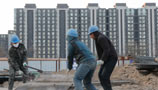
With the approval of these 25 projects, a new boom in iron and steel, cement, digital information and real estate sectors is likely. These multiple effects will bolster economic growth in those approved cities, said the report.
Local finance will shoulder 25 to 50 percent of the total 800-billion-yuan investment and the rest is likely to come from bank loans and land sales alongside the rails. Therefore, financing is key for implementing those plans, said the report.
"Urban rail construction will accelerate the free flow of population, logistics and information, and hence promote economic development," said Xu Fengxian, a research fellow at the Institute of Economics under the Chinese Academy of Social Sciences. "Right now, China is facing a slowing economy, and intensive rail construction will help related sectors to recover and further develop."
Concerns
The fact that 25 urban rail projects were approved in a day has not been without contention.
Some think the central government has "investment thirst" and is under the pressure of "sustaining growth", which could bring with it the same repercussions following the 4-trillion-yuan stimulus package. Back in 2008, in an effort to boost the economy amid the global financial crisis, the Chinese government injected 4 trillion yuan into the market. Side effects later arose, including inflation, skyrocketing housing prices and investment bubbles because the injected liquidity was used by some for speculative activities.
Others say approval of these projects is simply part of the 12th Five-Year Plan (2011-15), which by nature is different from the earlier stimulus. They say China's rail construction is lagging far behind and these approved projects are long overdue.
Regardless, a more important issue at hand remains: Where will the money come from?
These projects will have a limited effect in helping local governments sustain growth because of a lack of funds, said Zhao Qingming, a guest professor at the University of International Business and Economics in Beijing. Banks won't be as reckless as they were in 2008 when the 4-trillion-yuan stimulus package was rolled out. The assessment for loans will be stricter, making it difficult for some projects to come to fruition, he said.
Subway construction is costly. Take the city of Lanzhou for instance. The approved rail transportation network consists of six lines, with a total length of 207 km and investment of nearly 100 billion yuan. However, the yearly fiscal revenue in the city is only 10 billion yuan, among which less than 1 billion yuan is earmarked for expanding infrastructure.
Subway system projects are under way in 28 cities nationwide but are being built at a slow pace due to a lack of funds. Some cash-strained cities in central and western China run out of cash after completing one subway line or even sooner. Construction of the Zhengzhou subway was once halted because of capital shortage.
In the past, the central government was only responsible for approving projects while local governments wrestled with how to pay for them. Today, money comes from three sources: local governments, the central government and bank loans.
However, local revenue is shrinking as land sales, which accounts for 40 percent of the total income, have continuously dropped after the central government intervened to cool the housing market. In the first half of 2012, land sales nationwide totaled 1.14 trillion yuan, a 27.5-percent year-on-year drop, diminishing local government finances.
Among those 25 cities with approved urban rail projects, 23 face a combined pressure of 350 billion yuan to finance the lines, according to local government revenue reports.
With commercial banks taking a cautious stance to avoid the consequences of the 2008 stimulus spending spree, financing the projects will be an ongoing problem.
Even if financing is secured, paying back debts poses a further challenge. A report released by the Institute of Geographic Sciences and Natural Resources Research under the Chinese Academy of Sciences in March pointed out that almost all subway systems worldwide are running at a loss. The Beijing subway needs 2 billion yuan in subsidies per year while the Shenzhen subway has so far reported over 1 billion yuan in losses, according to the report.


Copyright 1995 - . All rights reserved. The content (including but not limited to text, photo, multimedia information, etc) published in this site belongs to China Daily Information Co (CDIC). Without written authorization from CDIC, such content shall not be republished or used in any form. Note: Browsers with 1024*768 or higher resolution are suggested for this site.
License for publishing multimedia online 0108263 Registration Number: 130349