IX. Strengthening International Cooperation in Energy
China's development cannot be achieved without cooperation with the rest of the world, and the prosperity of the world has need of China as well. With accelerating economic globalization, China has forged increasingly closer ties with the rest of the world in the field of energy. China's development of energy has not only satisfied its own needs for economic and social progress, but also made great contributions to world energy security and global market stability.
China is an active and responsible participant in international energy cooperation, and it has established bilateral dialogue and cooperative mechanisms in the field of energy with the US, the EU, Japan, Russia, Kazakhstan, Turkmenistan, Uzbekistan, Brazil, Argentina, Venezuela and many other countries and regions, and has strengthened dialogues, exchanges and cooperation with these countries regarding oil, natural gas, coal, electric power, renewable energy, technology, equipment and energy policy. China is also a member of or important participant in many multilateral organizations and mechanisms, including the energy working group of the Asia-Pacific Economic Cooperation Organization, Group of 20, Shanghai Cooperation Organization, World Energy Council and International Energy Forum. It is an observer of the Energy Charter, and maintains close relations with such international organizations as the World Energy Agency and the Organization of Petroleum-Exporting Countries. In international energy cooperation, China assumes a wide range of obligations and plays an active and constructive role.
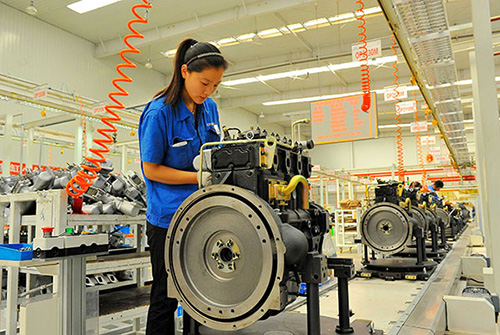
China upholds a policy of opening to the rest of the world in the field of energy. To provide a favorable environment for foreign investment and protect the legitimate rights and interests of investors, it has promulgated a series of laws and regulations in succession, like the Law on Sino-foreign Equity Joint Ventures, Law on Sino-foreign Cooperative Joint Ventures and Law on Foreign Investment Enterprises, and framed such policy documents as the Catalogue of Industries for Guiding Foreign Investment and the Catalogue of Advantageous Industries for Foreign Investment in the Central and Western Regions. The Chinese government encourages foreign investment to engage in the exploration and development of oil, natural gas and unconventional oil and gas resources, such as shale gas and coal-bed gas, by way of cooperation; invites foreign investment in the building of new-energy power stations, hydroelectric power stations, clean-combustion power stations, and nuclear power stations as long as the Chinese partners have control; and supports multinational energy corporations to set up R&D centers in China.
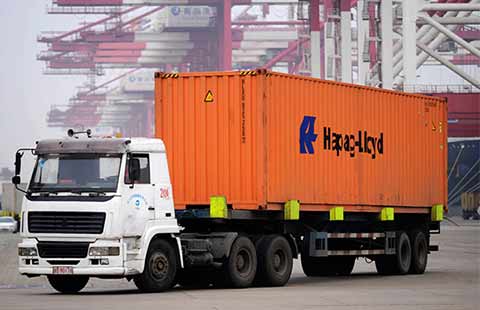
Following the principle of equality, mutual benefits and reciprocity, Chinese energy enterprises are actively involved in international energy cooperation, participating in overseas energy infrastructure projects and expanding cooperation in energy engineering and services. Ninety percent of Chinese enterprise-invested energy resources abroad are sold locally, thus increasing and diversifying supplies in the global energy market. When investing in foreign countries, Chinese energy enterprises abide by local laws and regulations, and respect the religious beliefs and customs of the local people. They actively make contributions to local economic and social development while achieving self-growth.
For a fairly long time to come, international energy trade will remain the major way by which China utilizes foreign energy sources. China will improve policies for fair trade and optimize the trade structure, and conduct energy imports and exports in accordance with the WTO rules. It will diversify the modes of trade and comprehensively use such methods as futures trade, long-term agreements, entrepot and barter trade. China will actively participate in global energy management. It will intensify exchanges and cooperation with other countries, addressing together the impact of the international monetary system, excessive speculation and energy market monopoly, thereby maintaining the stability of international energy market and energy price.
Energy is of vital importance to economic development and people's well-being. In order to reduce conflicts and inequality brought about over access to energy resources, achieve a stable growth of the world economy and make the economic globalization lead to a balanced, universally beneficial and win-win development, the international community should foster a new energy security concept featuring mutually beneficial cooperation, diversified development and common energy security through coordination. To jointly ensure global energy security, the Chinese government calls for international efforts in the following three aspects:
-- Strengthening dialogues and exchanges. Strengthening dialogue and communication among energy exporting, consuming and transiting countries is the foundation of international energy cooperation. The international community should further cement its bilateral and multilateral ties; increase dialogues and exchanges in the fields of efficient use of energy, energy conservation, environmental protection, energy management and energy policy; promote monitoring and emergency response mechanisms for the global energy market; and deepen the cooperation in the fields of information exchanges, personnel training and coordination.
-- Carrying out effective energy cooperation. Upholding the principles of reciprocity, mutual benefit and common development, the various countries should ensure mutually beneficial cooperation in international energy resources exploration, enrich and improve cooperative mechanisms and methods, increase the international energy supply, and diversify supply channels. They should work together to stabilize the prices of bulk energy commodities, secure the energy needs of various countries, and maintain the normal order of the energy market. For the sake of sustainable development, the developed countries should actively provide and transfer clean and highly efficient energy technology to developing and underdeveloped countries and together promote green development globally on the condition that intellectual property rights are protected. The international community should strive hand in hand to help the least-developed countries to eliminate energy poverty, increase energy services and promote sustainable development.
-- Working together to maintain energy security. A fair and rational international energy management mechanism is a prerequisite for a stable global energy market. The international community should work collaboratively to maintain stability in oil producing and exporting countries, especially those in the Middle East, to ensure the security of international energy transport routes and avoid geopolitical conflicts that affect the world's energy supply. The various countries involved should settle major international energy disputes through dialogue and consultation. Energy issues should not be politicized, and the use of force and armed confrontation should be avoided.


Copyright 1995 - . All rights reserved. The content (including but not limited to text, photo, multimedia information, etc) published in this site belongs to China Daily Information Co (CDIC). Without written authorization from CDIC, such content shall not be republished or used in any form. Note: Browsers with 1024*768 or higher resolution are suggested for this site.
License for publishing multimedia online 0108263 Registration Number: 130349