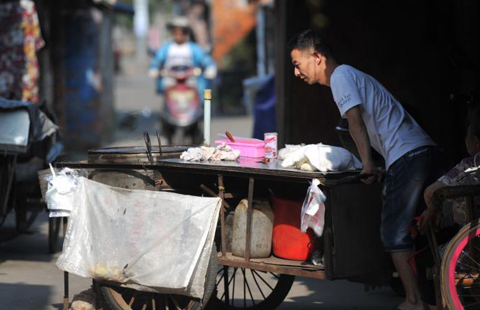
According to some experts' estimates, China's urbanization ratio will rise by one percentage point every year during the next 20 years. This would mean the country would have 65 percent of its population living in urban areas by 2025. Together with the estimated 200 million living in cities without an urban hukou, this would mean an additional 400 million urban residents in the next 10 years. According to the calculation that there is 100,000 yuan ($16,000) of investment in infrastructure and public services for each urban resident, China would need to invest an additional 40 trillion yuan as a result of urbanization in the coming decade, which is equivalent to its gross domestic product in 2011. Such a colossal investment is sure to have a positive and widespread influence on the national economy.
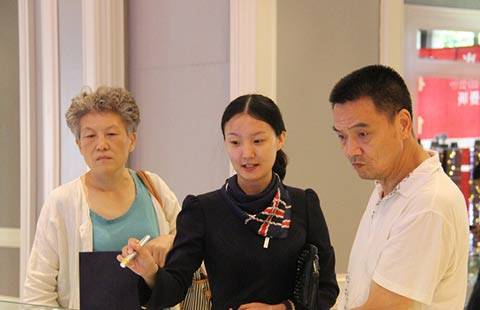
Aside from the huge investment potential it will create, urbanization will also play a positive role in boosting domestic demand. Statistics show that urban residents' consumption capacity is usually three times that of their rural counterparts. This means that an increase in the country's urbanization ratio of one percentage point will result in an additional 1.4 percent increase in the volume of consumer goods sold. The increased consumption resulting from a raised urbanization ratio will undoubtedly help change long-running imbalances in China's economic structure.
To promote the higher quality urbanization mapped out by the new leadership, China should reform its rural land system and raise the current levels of compensation for the expropriation of rural land. It should also establish a rural land shareholding system and promote the smooth transfer of collective rural land. The country should also try to reform its long-controversial dual urban-rural household residence system and forgo the long-held practice that closely links people's hukou to their eligibility for local welfare services. Without changing this, the efforts to convert migrant workers to city residents will go nowhere.
Promoting balanced development between urban and rural services and setting up a unified public service system are also expected to be on the new leadership's agenda. These demand practical measures be taken to tilt fiscal revenues from the central government to local governments.
China's remarkable economic achievements over the last three decades and its status as the world's second-largest economy are the result of reform and opening-up. It can be expected that new reforms to promote a new style of urbanization will lead the country to even greater heights.
Zhao Xiao is a professor with the School of Economics and Management, Beijing University of Science and Technology, and Teng Qizun is a member of the university's Research Section of China's Economy.


Copyright 1995 - . All rights reserved. The content (including but not limited to text, photo, multimedia information, etc) published in this site belongs to China Daily Information Co (CDIC). Without written authorization from CDIC, such content shall not be republished or used in any form. Note: Browsers with 1024*768 or higher resolution are suggested for this site.
License for publishing multimedia online 0108263 Registration Number: 130349