

 Comments
  Print
Print  Mail
Mail  Large Medium Small
China's hunger for natural gas has pushed its shipbuilding and energy industries to build more liquefied natural gas carriers and import terminals, to give the nation an edge over other countries.
"China will need more than 35 LNG carriers over the next two years to meet its surging demand for natural gas," said Bao Zhangjing, director of the China Shipbuilding Industry Research Center.
In 2012, the country consumed 147.1 billion cubic meters of natural gas and imported 42.5 billion cu m.
The Chinese government plans to raise the proportion of natural gas in the energy mix from 4.5 percent in 2011 to 8 percent in 2015, to further curb air pollution.
|
 |
|
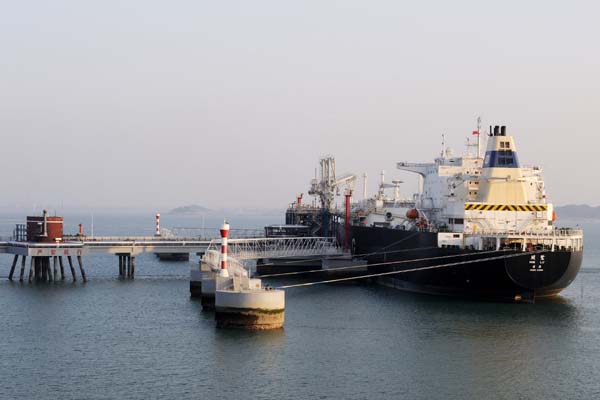
Liquefied natural gas is discharged from a ship to receiving stations in Meizhou Bay, Fujian province.[Photo/Xinhua]? |
As the domestic production of natural gas is still fairly limited, China may raise its natural gas imports to 80 billion cu m by 2015, the energy research institute of China's National Development and Reform Commission forecast in July.
Large energy companies such as China National Petroleum Corp and China National Offshore Oil Corp have all bought new LNG tankers to support their natural gas purchase overseas.
The Shanghai-based Hudong-Zhonghua Shipbuilding (Group) Co Ltd, a State-owned enterprise and China's only manufacturer of LNG carriers, delivered six LNG carriers to domestic and foreign buyers before 2010 and currently has 14 orders for different-sized LNG tankers, including orders placed in August by British Gas Services Ltd and CNOOC Ltd.
"As China and developed markets such as Japan and the United Kingdom are eager to obtain natural gas from abroad, LNG carriers are exactly what they need," said Lou Danping, deputy chief engineer of Hudong-Zhonghua. "Our LNG carrier-building capacity has grown along with their consumption demand and imports of natural gas."
The technical content and added value of LNG carriers are much higher than those of oil tankers, and they must be equipped with tanks that can resist extremely low temperatures. The average life cycle for a LNG tanker is between 40 and 45 years and its price range varies between $250 million and $450 million, depending on the functions and size of the ship.
"As China has become a hot marketplace for the consumption of natural gas, having the ability to build LNG tankers independently means that the country is capable of strengthening its energy security on the sea," Lou said.
To store the LNG from the international market, China is now operating six LNG import terminals and eight LNG terminals are being built. CNOOC said in September that it will build another five LNG terminals by 2015.
There are only 13 shipyards in the world that build such sophisticated vessels. In 2012, there were about 100 LNG tanker orders placed by a number of countries. South Korea gained 90 of them and China only won four orders.
To grab more market share, Japan's Kawasaki Heavy Industries Ltd plans to build LNG tankers in East China's Jiangsu province. The company has set up Nantong COSCO KHI Ship Engineering Co Ltd, a joint venture shipyard with China Ocean Shipping (Group) Co. It aims to have an annual production capacity of two LNG carriers by 2018.
Also, to boost economic growth in a sustainable way, China's shipbuilding industry is betting on LNG-powered ships amid rising concerns over the marine environment and "green" government initiatives.
Last month, Jiangsu-based Tsujiu Heavy Industries Co Ltd delivered two LNG ships to Nor Lines AS, a Norwegian shipping and logistics company. The deal, worth about $90 million, was the first overseas delivery of LNG ships by a Chinese company. The two LNG multipurpose cargo vessels will be used in Norway's coastal regions.
"The Chinese government now has a clear plan to introduce LNG as fuel, at 170 ships already got approval for conversion to LNG on the Yangtze River and they're planning to build more bunkering stations," said Tor Svensen, CEO of the maritime business at DNV GL, a major ship and offshore classification society.
 Model with modified Audi A5
 Model with German luxury cars
 Getting in the mood
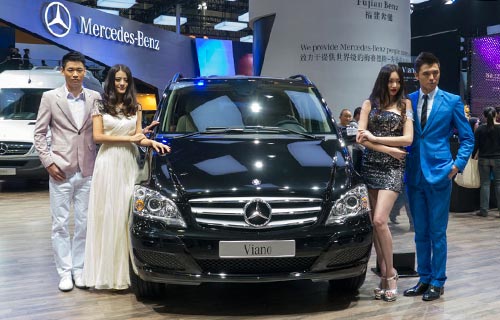 Models at Mercedes pavilion at 2013 Auto Guangzhou
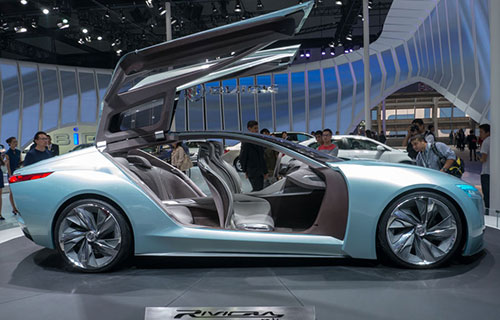 Buick Riviera concept car at 2013 Auto Guangzhou
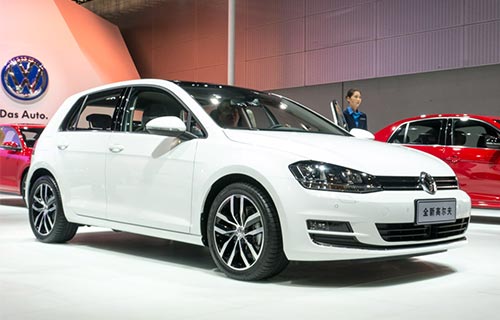 FAW-VW all-new Golf at Guangzhou auto show
 VW donates more than 5k child safety seats
 Honda models at 2013 Guangzhou auto show
Copyright 1995 - . All rights reserved. The content (including but not limited to text, photo, multimedia information, etc) published in this site belongs to China Daily Information Co (CDIC). Without written authorization from CDIC, such content shall not be republished or used in any form. Note: Browsers with 1024*768 or higher resolution are suggested for this site.
License for publishing multimedia online 0108263 Registration Number: 20100000002731