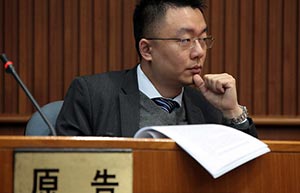
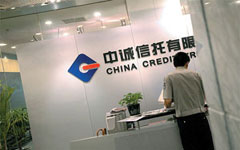
When in 1998 GITIC ran into serious liquidity problems, the central government refused to bail it out. GITIC and many other investment companies around China were wound up and the foreign lenders lost most of their money. But this valuable lesson about debt was lost after the 2008 credit crisis, when the Chinese government was forced to step in to provide huge amounts of liquidity and longer-term financial support to the economy to boost confidence. The budget constraint for Chinese companies, which had tightened after the GITIC default, was loosened once again, allowing innovation and risk-taking as the source of corporate growth to be replaced by almost unlimited access to credit.
|
 |
 |
The government has been unable to order the closure or limit the activities of State-owned companies that presently dominate large parts of the economy, from heavy and light industry, to telecommunications, retailing and financial services. The government knows, though, that if China is to reach its medium- and long-term goals of increasing living standards for everyone, against a backdrop of a fast-aging population, it has to increase productivity and efficiency in the economy. This is something the army of China's entrepreneurs is standing by to do, given the opportunity.
Thus Shanghai Chaori's default is a key moment in the evolution of China's search for a new model for its economy, one that relies on innovation and efficiency rather than massive investment to generate its sales and profits. The marketization of China's financial sector will promote true economic value as the main arbiter of corporate funding, rather than the self-interest of powerful lobbies or local governments that attempt to reach growth and employment targets while maintaining their own positions. Gradually, uneconomic, low-productivity enterprises will be forced to merge or close. Their roles in the economy will be taken by more efficient players, many of which will not be State-owned, but private.
The author is a visiting professor at Guanghua School of Management, Peking University. The views do not necessarily reflect those of China Daily.

Copyright 1995 - . All rights reserved. The content (including but not limited to text, photo, multimedia information, etc) published in this site belongs to China Daily Information Co (CDIC). Without written authorization from CDIC, such content shall not be republished or used in any form. Note: Browsers with 1024*768 or higher resolution are suggested for this site.
License for publishing multimedia online 0108263 Registration Number: 20100000002731