Comments
  Print
Print  Mail
Mail  Large Medium Small
The mass transit railway system in the Hong Kong Special Administrative Region is possibly unique, in that it's profitable. While those in other countries are largely subsidized by government funds, Hong Kong's MTR Corporation runs a significant surplus that is driven not by passengers or advertising, but instead by the fact that since it was established in the 1970s, the MTRC has also been a real estate developer.
The main characteristic of this model is the financing of a substantial portion of the capital costs with the proceeds from the sale of residential or commercial properties developed on top of the stations. The MTRC, which is now a publicly traded company controlled by the government, usually awards the development rights to property companies in private tenders.
In some developments, the MTRC retains the ownership and management of the properties, which provides it with a steady and significant source of income. Rental revenues and management fees from commercial properties owned by the MTRC amounted to HK$1.73 billion ($223 million) for the first six months of 2012, about 10 percent of the total in the SAR. Profit derived from property developments for the first six months of 2012 amounted to HK$524 million, although this was down more than 50 percent from a year earlier.
Of course, the MTR model makes the biggest impact at the early stage of development when the need for capital is most pressing. The initial phase of the construction of the first two lines in the late 1970s was financed mainly by seed capital provided by the government plus syndicated bank loans and bond issues.
At that time, Hong Kong was able to leverage its advantage of being an international financial center to raise funding, mostly in US dollar, from the many global banks that flocked to the city to do regional business. Hong Kong's tax system was particularly conducive to, among other things, the loan syndication business.
MTRC was able to take advantage of the growing competition among domestic and foreign banks to continually refinance its outstanding loans to gain the most favorable terms. But still, a debt burden of that size would present too big a drag on the corporation's finance, hampering it from expanding the railway network to meet the public's growing demand.
Sourcing revenue from property developments on top of the major stations has enabled the MTRC to pay down much of its long-term US dollar debt, clearing the way for it to become profitable enough to raise funds at competitive terms in the capital markets.
The first study for a mass transit railway system in Hong Kong was produced in 1967 and the first two lines were constructed in the late 1970s against the backdrop of an economic take-off. The resulting increase in average household income triggered a surge in demand for small-sized and mid-priced apartments and retail spending that fitted well into the MTRC's development model.
That opportunity was seized upon, not only by the MTRC, but also its master, the government, to boost its revenue from sales of public-owned land for private development. Since then, the government has come to count on land sale incomes for a large part of its total revenue.
Such reliance has raised the question of whether the government is bound in its own interests to pursue a high land price policy in collaboration with the property oligarchy and, to some extent, the MTRC. Public opinion is turning more and more against the MTRC, which holds the monopoly on all rail transport in Hong Kong, for consistently raising fares while posting record profits year after year.
In this respect, the Hong Kong model has its social issues. It works best under a certain set of preconditions, some of which may occasionally be seen to be in conflict with the public interest. But by maintaining a high standard of service and ensuring a high degree of transparency in its business as prescribed by law the MTRC still retains the confidence and support of the majority of Hong Kong people. That's the true essence of the Hong Kong model.
 Top 10 events between Shanghai and Beijing auto shows
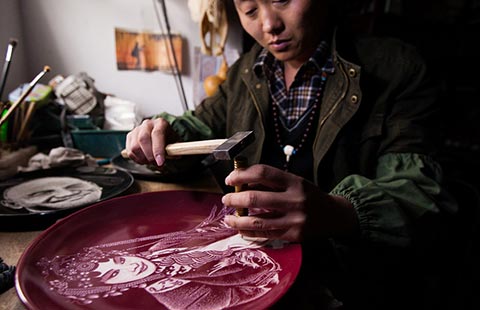 Intricate pictures carved on porcelain
 Top 5 expected highlights at CES Asia 2016
 Purr-fect store: Read books as cats nap on your lap
 Young golfers enjoy the rub of the green
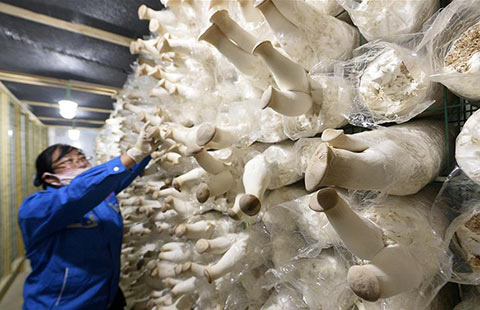 Mushroom cultivation bases established in Ningxia
 Shanghai Disneyland starts soft opening on Saturday
 Teapot craftsman makes innovation, passes down techniques

Copyright 1995 - . All rights reserved. The content (including but not limited to text, photo, multimedia information, etc) published in this site belongs to China Daily Information Co (CDIC). Without written authorization from CDIC, such content shall not be republished or used in any form. Note: Browsers with 1024*768 or higher resolution are suggested for this site.
License for publishing multimedia online 0108263 Registration Number: 20100000002731