Economy
Time for RMB appreciation?
(China Daily)
Updated: 2010-06-09 10:11
 |
Large Medium Small |
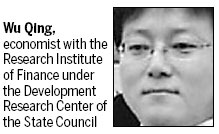
The European sovereign debt crisis has led to a significant rise in the yuan's effective exchange rates against non-dollar currencies, as this passive appreciation soothed pressure on its appreciation. Therefore, the crisis provides an accidental opportunity for reform of the yuan's exchange rate formation system.
It is no longer the optimal method for China to stick to a yuan peg to the dollar if it wants to reduce exchange rate risks for import or export enterprises and stabilize foreign trade.
From the macroeconomic point of view, the yuan's peg to the dollar means giving up independent monetary policy, making China's domestic liquidity directly subject to the impact of policies by the US Federal Reserve Board.
Notably, no matter whether it is pegged to a basket of currencies or a single currency, the yuan is in a position as a secondary currency. And no matter how well a secondary currency could perform, it is just a substitute for other currencies, which means it could only consolidate the international status of others but have little chance of becoming a major international currency.
If China wants to be a strong currency power, the ultimate goal of its currency system reform should not be pegging the yuan to a basket of currencies, but free floating of the yuan on the market, or the full convertibility of the yuan. Even if a free float of the yuan cannot be realized in the short term, it must be a long-term goal.
The biggest risk of a currency system shift from managed to free float is that the currency's value would be completely uncontrollable, probably fluctuating dramatically and causing an unpredictable impact on the country's economic and financial markets.
Thanks to a rise in the real value of the yuan against non-dollar currencies, its fluctuation would be reduced since it could be closer to real market levels and there would be less impact on the domestic economic and financial markets. In this sense, the European debt crisis has provided the opportunity for China to reform its currency system.
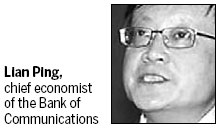
Nearly five years have passed since China adopted a more flexible exchange rate regime in July 2005.
Since then the yuan has appreciated about 20 percent against the dollar.
Largely due to that, China saw large sums of international capital inflows and abundant liquidity, the "dual surpluses" of international balance of payments, as well as rising foreign exchange reserves.
Seventy percent of China's $2.5 trillion foreign exchange reserves were generated during the past five years. A one percentage point appreciation of the yuan against the dollar will attract about $5 billion in capital inflows per month, according to studies based on data between 2006 and 2009.
Again, China is facing pressure from the United States and other countries to let the yuan rise, but no one has provided persuasive evidence on the alleged undervaluation of the currency.
Goldman Sachs' model showed the yuan was undervalued by about 20 percent five years ago but it has approached a reasonable level through previous appreciation.
However, an exchange rate regime lacking flexibility and solely fixed to the dollar was not in line with the purpose of China's exchange rate regime reform.
As soon as the external clamor fades away, the reform of Chinese currency is likely to restart and the yuan may move up again in the context of China's economic growth.
|
||||


Given the high capital inflows in China, a major exchange rate move of above 10 percent will lead to a large proportion of international capital quickly flowing out to profit from the currency gain.
The move will cause unusual fluctuations in China's capital and property markets, damaging the health of China's economy.
Expectations are growing stronger for yuan appreciation and international capital inflows are likely to move faster. The currency rate should remain relatively stable for a period while a small and gradual appreciation is in line with China's industrial and economic situation.