|
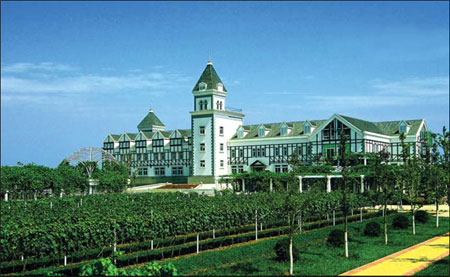
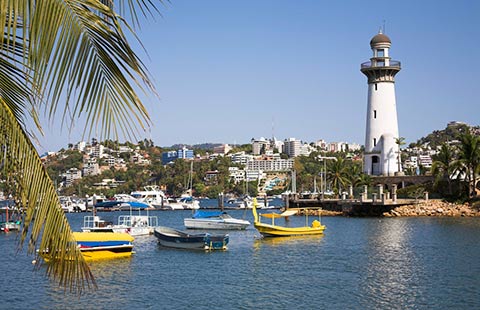
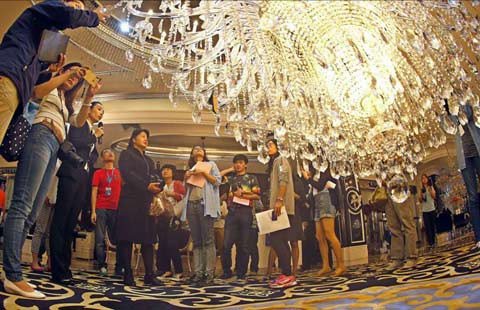
Chateau Changyu-Castel, China's first chateau built according to international standards, was established in 2002 in Yantai, Shandong province. |
|
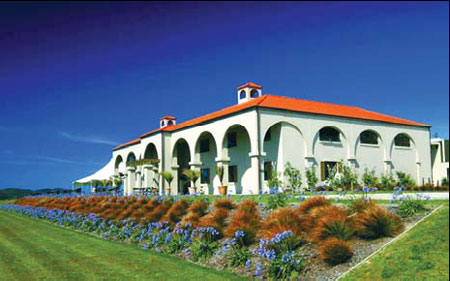
The Changyu Kely Estate of New Zealand was built in 2006 to increase sales of its high-end wines overseas. |
Changyu Pioneer Wine Co Ltd, China's oldest and largest winemaker, announced recently it will undergo a massive expansion of its existing vineyards and build another 20 high-end chateaus across the world's top grape-growing regions in the next five years.
"With 120 years of experience in viniculture and the wine business, Changyu has grown into one of nation's top producers and is on par with the best European winemakers," Zhou Hongjiang, general manager of the company said during a national Sugar and Wine Festival held in Chengdu from March 21 to 23.
"An ambitious plan is already in place as we look forward to more robust growth and a more important place in the global wine market," said Zhou.
Chateau alliance
Changyu began building its first chateau as early as 10 years ago. The Changyu-Castel chateau in Yantai, Shandong province, the company's hometown, was China's first to be built in accordance with international standards and was funded jointly by Changyu and the Castle Group of France, one of the largest wine manufacturers in Europe.
In 2006, the company built an ice-wine chateau in northeastern China's Liaoning province, which has become one of the world's largest ice-wine production bases. A year later, the Chateau Changyu AFIP Global Hotel opened to the public in Miyun county just outside Beijing. It serves not only as a winery but also as a hot tourist destination that provides a blend of services associated with wines.
Another three chateaus have been basically completed and will be open to the public in the second half of this year in Shaanxi province and the Xinjiang and Ningxia autonomous regions, which are considered China's top grape-producing areas.
In addition, the company teamed with four prominent chateaus in New Zealand, France and Italy to establish an international chateau alliance in 2009. Under the agreements, Changyu is the exclusive Chinese distributor of high-end wines produced from these overseas companies.
China's high-end wine market is expanding fast as the standard of living continues to improve.
The wine produced at the chateaus accounts for the majority of Changyu's high-end products, and its sales revenue has reported an average annual increase of more than 45 percent since 2008.
"Changyu will spare no effort to seize the opportunity by building 20 more chateaus in 17 major grape-growing areas all over the world, and it will look for more cooperation with overseas chateaus by 2016," said Zhou.
"With all these efforts, Changyu will be on track to play a vital role in the world's high-end wines market," he said.
Fine growing regions
Relying on the conventional wisdom that 70 percent of a wine's quality depends on the grapes, Changyu has always focused on its improving planting techniques and has constantly worked to expand its grape-growing bases.
As of the end of last year, the company had a total of 20,000 hectares of vineyards throughout the Xinjiang Uygur and Ningxia Hui autonomous regions as well as the provinces of Shandong, Shaanxi and Liaoning and a few around Beijing, said Li Jiming, Changyu's chief engineer.
Changyu's vineyards make up one-quarter of China's grape-planting regions.
"To meet growing demand, the company will continue to expand its vineyards and aims to have the world's largest grape-growing acreage in five years," said Li.
In Yantai alone, the company has more than 4,666 hectares of vineyards spread along the city's coastal areas, which lie on a latitude similar to that of France's renowned wine-producing region in Bordeaux, and Italy's Tuscany. And another 667-hectare growing area will be added within the year, Li said.
To maintain standards, Changyu has set up a quality-control system for its own vineyards and tightly manages subcontractors. The company contracts local farmers to grow grapes and provides them with the same resources used in its own vineyards, such as seedlings, fertilizer, techniques and regular training.
The company also has an information management system that allows every planter to coordinate fertilizer and pesticide use.
Every vineyard has a fermentation plant or chateau beside it to make sure that the grapes are sent to fermentation tanks within one hour of harvesting.
Meanwhile, a wine research and manufacturing plant designed to have an annual production of 250,000 tons of wines and brandy will be established in Yantai.
Promising brandy market
A recent report from the International Wine and Spirit Research Institution shows that China is now the world's second largest brandy markets and will become the largest by 2016, with a 47 percent increase in brandy consumption expected over the coming five years.
"The Chinese liquor industry generated an average annual sales revenue of over 300 billion yuan ($47.6 billion). There will be a huge market if just 5 percent of domestic consumers switch from liquor to brandy," said Zhou.
Changyu has a long history of making brandy. It produced China's first bottle in 1914 and now has a market share of more than 90 percent in the domestic low-end brandy market. However, the high-end brandy market is mainly occupied by overseas brands.
"Changyu will focus on producing high-end brandy and making it another pillar industry in the next few years," Zhou said.
Insiders say that China has become one of the seven top grape-planting areas in the world, along with France, Italy, Australia, and the United State.
"God will not always favor Bordeaux in France. In the next 30 years, China will become another ideal place for growing grapes, and the world's best wine will be made here." Richard Smart, a famous Australian grape-cultivation expert predicted at the second World Congress on Climate Change and Wine, held in Barcelona, Spain, in 2008.
The sound natural and investment environment have also encouraged lots of overseas winemakers to build branches and chateaus in China.
One of prominent examples is Chateau Lafite Rothschild. It began building a chateau and developed 25 hectares of grape-planting area in Penglai, a coastal city of Shandong province. The project is expected to produce 120,000 bottles of world-class wine each year.
Contact the writers at juchuanjiang@chinadaily.com.cn and wangqian2@chinadaily.com.cn
(China Daily 03/31/2012 page16)


Copyright 1995 - . All rights reserved. The content (including but not limited to text, photo, multimedia information, etc) published in this site belongs to China Daily Information Co (CDIC). Without written authorization from CDIC, such content shall not be republished or used in any form. Note: Browsers with 1024*768 or higher resolution are suggested for this site.
License for publishing multimedia online 0108263 Registration Number: 130349