|
|
|
 |
|
|
|||||||||
New offensive to restore American dominance uses 'fair trade' as pretext to bypass multilateral trade rules
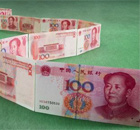
China and the United States are each the other's second largest trading partner, with two-way trade volumes exceeding $400 billion in 2011. Although the rising value of bilateral trade has to some extent increased the number of trade disputes, it is the adjustment of the US' trade strategy that is responsible for many of the trade frictions.
By shifting its strategy from free trade to so-called fair trade, Washington has stepped up efforts to regain the US' waning trade superiority.
On March 5, the US Senate passed an amendment draft to the Tariff Act of 1930, empowering the Department of Commerce to impose controversial countervailing duties on imports from China and Vietnam. This came just days after US President Barack Obama signed an executive order launching the Interagency Trade Enforcement Center, which is intended to coordinate enforcement of US trade rights and help the administration realize its ambition of doubling US export volumes to $3.14 trillion by the end of 2015.
The establishment of this special trade panel reflects a kind of super-protectionism. Through so-called green and technological barriers, anti-dumping, the protection of intellectual property rights and other non-tariff barriers, this new protectionism aims to bypass established multilateral trade institutions to protect domestic jobs and repulse threatening competition from other countries.
Super-protectionist practices are usually exercised by taking advantage of the current World Trade Organization trade rules under the "free trade" banner. But given that there exist some faults in the world's current multilateral trade system, some countries have sought to find "legal grounds" for additional protectionist practices such as Section 301 and Section 307 of the US Trade Act.
As the self-proclaimed role model for free trade, the US does not want to abandon the "free trade" banner it has long used to protect its trade, so it has chosen to make some adjustments to its international trade relations by calling for "trade fairness". The WTO's anti-dumping clauses have thus been frequently employed as a protectionist tool.
In contravention of WTO rules, the US has exercised excessive protection of its own strategic industries in an attempt to expand their share of the global market. At the same time, Washington has also accused other countries of adopting protectionist practices to distort market competition.
The "fair trade" concept advocated by the US is in essence a more offensive protectionist strategy. A typical example is its decision to file an investigative case against China's photovoltaic industry. In its ruling on this case, the US Department of Commerce said China's photovoltaic solar batteries are subsidized by the Chinese government. Yet the US also regards clean energy production as an important part of its "re-industrialization" strategy, and the government has given a lot of support to the sector through tax cuts, credit guarantees, export subsidies and other preferential measures.
The US has also worked together with Japan and the European Union to submit cases to the WTO against China's reduced exports of rare earth minerals. As part of efforts to promote protection of its resources and environment and realize sustainable development, the Chinese government has strengthened and improved export management of the country's resource products, especially those worked out with high pollution, and high energy and resources consumption.
The US, however, has criticized these actions, while conveniently ignoring the fact it holds enormous rare earth reserves and that China has suffered heavily from environmental damage in rare-earth production.
Moreover, the established multilateral WTO trade framework has failed to reflect the changing structure of world trade.
It is China's clear-cut stance that revisions should be made to the world's unfair trade rules to prevent countries from exercising trade prejudices under the pretext of "fair trade". It should actively try to promote such revisions and improvements in the international trade rules and frameworks.
The author is an economics researcher with the State Information Center.