BEIJING -- Nearly ten years after China started to relax some of its capital controls, the country is now making more aggressive steps toward that end.
The country's top economic planner on Friday unveiled a raft of measures targeted at South China's city of Shenzhen, including trials for cross-border loan issuances to boost the free conversion of China's currency, the yuan.
The measures also cover issues related to taxation, education, medical treatment, telecommunications, legal matters and the introduction of new talent, according to the National Development and Reform Commission.
China vowed in 2003 to gradually ease its grip on cross-border capital flow and ultimately open its capital account as part of the country's efforts to turn the yuan into a global reserve currency.
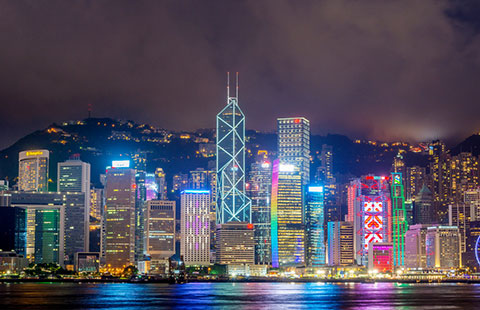
A cooperative zone in Qianhai Bay, approved in 2010 by the State Council, or China's cabinet, is part of the government's plan. The zone was approved to promote cooperation between Hong Kong and Shenzhen, the country's two most important financial centers.
The zone will provide new investment channels for Hong Kong's yuan deposits, boosting the region's status as an offshore yuan center.
Hong Kong banks will be able to conduct cross-border yuan financing, which will play a crucial role in promoting offshore yuan business in the city, said Xie Guoliang, a senior analyst for Bank of China Hong Kong.
"There will be new challenges concerning transactions of personal assets and derivatives. We must make sure that banks are ready for cross-border risks," said Pei Chuanzhi, president of the China Foreign Exchange Trade System.
In view of the current environment at home and aboard, both the timing and conditions are right for China to make the yuan freely convertible under the capital account, said Zhao Xijun, deputy dean of the School of Finance at Renmin University.
China's rise as a global economic power has made its currency more attractive than others, especially after the global financial crisis in 2008, which has led to a persistent economic slump in the United States and debt woes in the eurozone.
Some economies and regions have adopted the yuan as an official exchange reserve currency, while others are actively expanding the yuan's use in cross-border trade settlements with China.
The yuan has now become the world's third-largest trade settlement currency, with the share of yuan settlements amounting to 7 percent of China's goods trade and 15 percent of its service trade.
"Obviously, the yuan has a long way to go to become an international reserve currency. There is a mismatch between the yuan's global status and China's economic sent of its service trade.
"Obviously, the yuan has a long way to go to become an international reserve currency. There is a mismatch between the yuan's global status and China's economic strength," said Gao Guoxi, a professor at Fudan University in Shanghai.
The US dollar, the euro, the British pound and the yen are the major global reserve currencies, with 60 percent of global exchange reserves in dollars.
The technical barrier for the yuan to become a global reserve currency has been its inconvertibility, although China made its current account fully convertible in 1996.
China has stepped up reforms to open its capital account this year. The reforms have included the establishment of a pilot financial reform zone in the eastern city of Wenzhou to encourage the participation of private capital in reforms of local financial institutions, as well as the adoption of a wider floating band for the yuan against the US dollar.
The country's central bank in June also moved to boost market-oriented interest rates, allowing lenders to offer 10 percent more on deposit rates and a 20-percent discount on lending rates.
According to Hu Xiaolian, vice governor of the People's Bank of China, or the central bank, 75 percent of the items under the nation's capital account currently have a high degree of convertibility.
"Given that the super-sovereign currency can not replace sovereign currency as a reserve currency in the foreseeable future, any economic power, including China, will pursue the goal of making its currency globally accepted," Gao said.
With a narrowing trade surplus, diminishing pressure on a stronger yuan and a smaller interest margin between overseas and domestic markets, China is capable of fully opening its capital account by the end of 2015, said Ma Jun, chief economist at Deutsche Bank Greater China.
However, some foreign investors still worry about whether the reforms will suffer from the government's general reluctance to take economic risks.
At last week's Shanghai Lujiazui Forum, the opening of yuan capital accounts was in the spotlight. Participants from the government and trading centers pointed out that although China has largely maintained cautious economic policies, it is now determined to take action.
Zhou Yuan, chief advisor at the China Investment Corporation, said a new set of market mechanisms should be created to control trading risks.

Copyright 1995 - . All rights reserved. The content (including but not limited to text, photo, multimedia information, etc) published in this site belongs to China Daily Information Co (CDIC). Without written authorization from CDIC, such content shall not be republished or used in any form. Note: Browsers with 1024*768 or higher resolution are suggested for this site.
License for publishing multimedia online 0108263 Registration Number: 130349