After years of being in the doldrums, e-book marketing is going into an overdrive in China, with aggressive price cuts that are creating jitters among authors, publishers and e-reader makers.
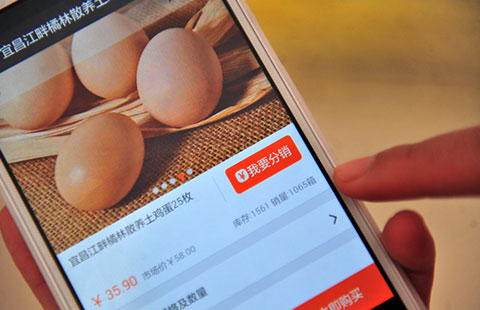
Recently, Jingdong Mall, one of the main e-retailers in the country, dropped a bombshell by announcing "Smooth Reading" specials lending 1,000 e-books for 30 yuan ($4.7) for three months, or less than half a cent per download.
The company executives say such give-away marketing is necessary because Chinese readers, long used to free content, need more time to accept the usual prices of 5-8 yuan a copy.
Obviously, Jingdong's low-price strategy to grab a higher market share will antagonize authors and publishers who fear cheap e-books will threaten their livelihood. At a time when the number of Chinese readers ready to pay for an e-book is on the decline - with the average reader reportedly willing to pay just 3.5 yuan per e-book - few would have imagined such bulk sales at dirt cheap prices.
But why should Chinese e-reader makers, too, worry about the aggressive promotion activity?
While the specially designed reading gadgets are hugely successful half the world away, they have never really taken off in China. Hanvon, the country's leading device maker, set out to emulate the success of Amazon but failed to do so because it couldn't replicate the US giant's wide catalog of e-books and collaborative relationships with major publishers.
Hanvon now depends on deriving its profit from the device and not the content. To encourage customers to purchase the device, it provides an e-bookstore of largely mundane and moldy reads, as well as a pre-installed library of thousands of trashy complimentary books.
In contrast, personal computers and cellphones have quickly caught up with the demand from the e-reading public. While online reading grows in popularity, mobile phone operators have started offering romances and "Time Travel" tales to many millions of users, mostly migrant laborers, for just several cents per read.
Authors and publishers seem more enthusiastic about digitalizing their works for them, thanks to the introduction of more trusty payment systems by e-retailers and telecom operators.
Official survey results show that in 2011, while the majority of Chinese adults still preferred buying printed books, 11.8 percent read books on the Internet and 9.4 on mobile phones. Only 2.5 percent favored e-readers.
While Hanvon helplessly watches the price war unfold and slips further, large e-bookstores that provide for e-readers will be worried about the erosion of their own market, too. They need to maintain prices at reasonably higher levels to subsidize the production and operation of the device.
And as e-reader users become an increasingly marginalized lot, some may renege on the device. Now most e-reader users will not benefit from the e-book sales unless they convert to reading on computers or cellphones.
When people buy books online, retailers like Jingdong require them to download a special app before they can access an e-book on their computer screen or smartphone. There is no e-book interoperability among different reading media.
In their search for compelling content, Chinese e-reader users often source free books from the Internet, or their device may end up like another rusty, dust-gathering electronic gadget. However, after repeated government crackdowns on pirated content on the Web, more e-reader users are buying e-books from e-retailers, without the e-reader's advantages such as the ease on the eyes, no glare or backlight, and text as crisp and clear as a printed page.
Some e-reader makers are praying for the market mavericks to run out of cash soon, which would end the price war. But even if that happens, it would be at best a temporary solution to a permanent problem for them.
The writer is editor-at-large of China Daily. E-mail: dr.baiping@gmail.com

Copyright 1995 - . All rights reserved. The content (including but not limited to text, photo, multimedia information, etc) published in this site belongs to China Daily Information Co (CDIC). Without written authorization from CDIC, such content shall not be republished or used in any form. Note: Browsers with 1024*768 or higher resolution are suggested for this site.
License for publishing multimedia online 0108263 Registration Number: 130349