Comments
  Print
Print  Mail
Mail  Large Medium Small
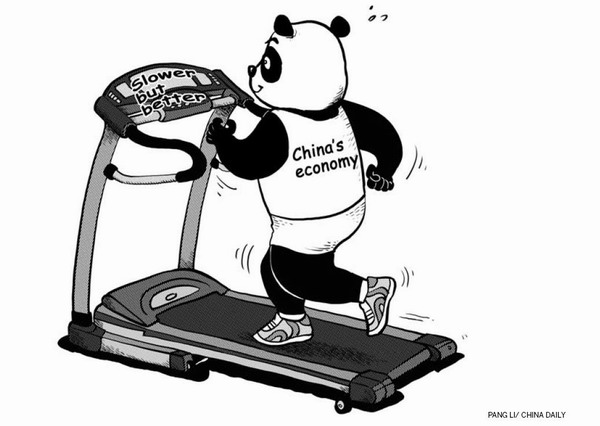
The once-in-a-decade leadership transition in China has triggered a lot of speculation over its possible impact on the country's economic policy. Starting with the macroeconomic policy stance, some observers think a major stimulus package is on its way after the new leadership is unveiled during the 18th National Congress of the Communist Party of China.
My colleagues and I at the Royal Bank of Scotland do not think so. In our view, a stimulus package has not come because policymakers are broadly comfortable with the growth outlook and now more concerned about the quality of growth. They are also still dealing with the negative consequences of the previous stimulus package and have somewhat greater tolerance for lower growth than in 2008.
Indeed, there are increasing signs that, after a steady economic slowdown through mid-2012, economic growth has bottomed out, even though we do not expect a rapid rebound in growth. Given this outlook, we do not expect a major economic stimulus ahead, although we think the macro-policy will remain supportive to growth.
In the monetary area, while we expect monetary conditions to be kept accommodative, we do not see much room anymore for interest rate cuts. In the fiscal area, we expect a continued constructive approach to infrastructure projects and some pro-consumption measures to be included in the 2013 budget.
While there is reasonable agreement among economic and financial reforms experts on the elements of the policy agenda, the question is what will be the impact of the leadership transition on its orientation, emphasis and speed.
The reform agenda includes a broad set combining economic rebalancing, industrial upgrading and sustaining growth. One set of reforms is meant to channel resources to new and growing sectors, products and services.
They include reforms to increase prices and taxes of industrial inputs to reduce the subsidization of industry, set a level playing field for SOEs and other companies, remove entry barriers to several service sectors, separate regulators from regulated entities, and delineate more clearly the roles of the State and the market. They also include increasing competition in the financial sector, allowing banks more freedom to set lending and deposit rates, expanding non-bank financing and granting small and medium-sized enterprises and service sectors access to finance, raising the role of interest rates in the conduct of monetary policy, making exchange rate more flexible, increasing State-owned enterprises' dividends and channeling them into the overall fiscal envelope, and fostering innovation.
 Top 10 cities in economic competitiveness
 Lighting view of Shanghai Disney Resort
 World's highest, longest glass-bottomed bridge takes shape in Hunan
 Top 10 listed property companies
 Robot-themed café debuts in Shanghai
 Science and technology experience items attract crowds in Beijing
 Nine new rules coming into effect from June 1
 Wanda opens theme park to rival Disney

Copyright 1995 - . All rights reserved. The content (including but not limited to text, photo, multimedia information, etc) published in this site belongs to China Daily Information Co (CDIC). Without written authorization from CDIC, such content shall not be republished or used in any form. Note: Browsers with 1024*768 or higher resolution are suggested for this site.
License for publishing multimedia online 0108263 Registration Number: 20100000002731